Zazzle Shop

Screen printing

Friday, November 7, 2008

700 Covers For Obama From Around The World


Thanks for reading. Thanks to Newseum.
Check out Electoral-vote.com for excellent election analysis.


Click Here to See All 700 Covers

Top Ten Musical Moments In Presidential History

10. John McCain sings "Bomb Iran"

9. Bill Clinton plays saxophone on The Arsenio Hall Show
We can't find any clips of that turning point in the 1992 election online, but here's a clip of him jamming on "Every Day I Have The Blues."

8. The Presidents of the United States of America release "Lump"

7. Marilyn Monroe serenades John F. Kennedy

6. Ronald Reagan stars in military musical This Is The Army

5. Franklin D. Roosevelt sings with the Little Orphan in Annie

4. Bruce Springsteen ceases and desists the Reagan campaign use of "Born In The U.S.A."

3. Sarah Palin gets funky on Saturday Night Live

2. Barack Obama says "Thanks But No Thanks" To Ludacris for "Obama Is Here"

1.George Bush sings "My Way"
Regrets? He's had a few.

--Pete Freedman, Jesse Hughey, Merritt Martin, Michelle Mathews, Patrick Michels

Research into medicinal marijuana grows up.

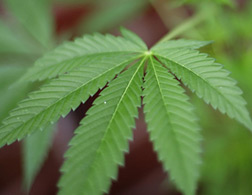
Marijuana. Click image to expand.

Marijuana

This summer, British and Italian researchers found that in a laboratory plate, molecules in marijuana can slay the superbug methicillin-resistant staphylococcus aureus, which recently infected seven babies and four employees in a Yonkers, N.Y., maternity ward, heightening fears of outbreaks in schools and locker rooms, as well as in its more familiar breeding grounds, hospitals and nursing homes. In theory, compounds derived from the cannabis plant could someday serve in topical creams for patients with MRSA or other antibiotic-resistant infections.

This isn't the first time marijuana has tantalized the world as a possible wonder drug. In recent years, compounds in cannabis or related molecules have been shown to slow the growth of lung tumors in mice, decrease hardening of the arteries in rats, and boost the egg-binding capability of tobacco smokers' sperm. Research on the receptors that THC and other cannabis compounds attach to—and the nitty-gritty mechanisms by which they exert their effects—has been booming. So has work on native molecules, called endocannabinoids, that bind to the same sites. These molecular interactions affect a wide range of functions, from appetite to inflammation to the perception of pain.

The onslaught of basic science has helped to separate cannabis from an association with hippies and recreational pot smokers. It has also spurred hopes that these molecules (or similar ones) might prove therapeutic for traumatic brain injury, inflammatory bowel disease, allergic contact dermatitis, atherosclerosis, osteoporosis, and Alzheimer's disease, among others. For all the razzle-dazzle, though, potential treatments frequently seem stuck in perpetual adolescence. Research on traumatic brain injury seemed promising but got mixed results in human clinical trials, while most of the others simply haven't gotten very far in the experimental process.

Still, a few prospects show signs of inching toward adulthood. The most enticing are aimed at lessening pain associated with nerve damage and improving some symptoms of multiple sclerosis. Between 2007 and this summer, several randomized clinical trials have found that smoking marijuana can relieve pain in patients with nerve degeneration caused by HIV or other disorders. Compounds in cannabis also seem to reduce nerve pain and possibly decrease spastic movements in people with MS. A drug called Sativex—which delivers two cannabis compounds in a spray under the tongue—is now in late-stage clinical trials in Europe for MS patients. Much as we've heard the hype before, these findings deserve some notice even from the jaded.

Studying the upside of marijuana can be a bureaucratic nightmare. In 1970, Congress deemed it a Schedule 1 drug, meaning that it has a high potential for abuse and "no currently accepted medical use"—making research on possible benefits a tough sell. In the 1980s, the Food and Drug Administration approved Marinol, an oral formulation of THC, the most psychoactive ingredient in cannabis, to treat nausea and vomiting associated with chemotherapy. Later, it also approved Marinol to boost the appetites of people with AIDS. But Marinol was never fully accepted by patients, says Donald Abrams, a professor of clinical medicine at the University of California-San Francisco. It took effect more slowly than smoked marijuana and was also more psychoactive. (When THC enters the bloodstream from the digestive tract, it is broken down by the liver into even more psychoactive molecules.) Nor has Marinol been approved in the United States to treat pain. Those who wished to push research further—whether by studying smoked marijuana, developing better formulations, or testing cannabis for other conditions—got no love from the federal government.

Some did get a boost, however, from the state of California, which paid for the recent work on cannabis smoking and pain. In 2000, the state funded the University of California's Center for Medicinal Cannabis Research, which vets research proposals with an NIH-style review process, pays for projects, and helps scientists navigate state and federal regulations. The center helps researchers obtain cannabis cigarettes, for instance, and deal with federal rules for record-keeping and security—like making sure the safe in which the drug is stored is properly bolted to the floor, says director Igor Grant.

The work has moved slowly, but it's finally paying off with a handful of publications. The first clinical-trial-based paper, which appeared in Neurology in 2007, was a randomized study of 50 patients with HIV-related nerve damage, which can cause discomfort often described as aching, painful numbness, or burning. Those who smoked cannabis each day reported a 34 percent decrease in chronic pain—an effect that's on par with medications often used for this condition, like anti-convulsants and antidepressants, says Abrams. Two other randomized clinical trials, published in June and August, found similarly clear benefits. The June study focused on patients with pain related to a range of neurological conditions, including spinal cord injury. The August paper focused again on HIV-related symptoms. Both found that patients who smoked cannabis reported significantly less pain than those who used dummy cigarettes. These studies were relatively small, but cumulatively they are persuasive.

Other recent research suggests that cannabis can relieve MS-related pain and may be able to help other symptoms, too. Sativex, which contains THC and cannabidiol, a nonpsychoactive compound, and is absorbed through the mouth, is already approved in Canada for cancer-related pain and nerve pain associated with MS. In 2007, this randomized clinical trial of 189 MS patients found that those who took Sativex self-reported a significant decrease in involuntary muscle spasms. (The study was funded by GW Pharmaceuticals, the British company that developed the drug.) Researchers are now conducting a late-stage clinical trial of Sativex in MS patients across five European countries. The company has also begun a Phase II/III clinical trial in the United States for patients with cancer-related pain. Sativex may offer particular advantages because it is neither smoked nor swallowed: It does not introduce toxins to the lungs, as smoking does. It enters the bloodstream rapidly but does not pass initially to the liver, as oral formulations do, which prevents it from getting broken down as quickly and may make it less psychoactive. (GW Pharmaceuticals says that patients who take Sativex tend not to experience psychoactive side effects at normal dosage levels.)

If these serious investigations and results continue, soon cannabis therapies may not, in fact, be bolted to the floor.


Suddenly, it may be cool to be an American again

Supporters of Democratic presidential candidate, Sen. Barack Obama, D-Ill.
AP – Supporters of Democratic presidential candidate, Sen. Barack Obama, D-Ill. celebrate during an election …

VIENNA, Austria – She was a stranger, and she kissed me. Just for being an American.

It happened on the bus on my way to work Wednesday morning, a few hours after compatriots clamoring for change swept Barack Obama to his historic victory. I was on the phone, and the 20-something Austrian woman seated in front of me overheard me speaking English.

Without a word, she turned, pecked me on the cheek and stepped off at the next stop.

Nothing was said, but the message was clear: Today, we are all Americans.

For longtime U.S. expatriates like me — someone far more accustomed to being targeted over unpopular policies, for having my very Americanness publicly assailed — it feels like an extraordinary turnabout.

Like a long journey over a very bumpy road has abruptly come to an end.

And it's not just me.

An American colleague in Egypt says several people came up to her on the streets of Cairo and said: "America, hooray!" Others, including strangers, expressed congratulations with a smile and a hand over their hearts.

Another colleague, in Amman, says Jordanians stopped her on the street and that several women described how they wept with joy.

When you're an American abroad, you can quickly become a whipping post. Regardless of your political affiliation, if you happen to be living and working overseas at a time when the United States has antagonized much of the world, you get a lot of grief.

You can find yourself pressed to be some kind of apologist for Washington. And you can wind up feeling ashamed and alone.

I'll never forget a ride in a taxi in Vienna when the world was waking up to the abuses wrought by U.S. troops at the detention center for suspected terrorists at Guantanamo Bay, Cuba.

My driver, a Muslim, was indignant. "You are American, yes?" he asked in that accusatory tone so familiar to many expats.

"Uh, no, Canadian," I said.

And it wasn't the first time I fudged where I was from. I speak three foreign languages, so I have a bit of flexibility when it comes to faking. At various times, I've been a German in Serbia, a Frenchman in Turkey, a Dutchman in Austria.

I'm not proud of it. But when you're far from home, and you're feeling cornered, you develop what you come to believe are survival skills.

Last spring, after the Bush administration recognized Kosovo's independence, a Serb who overheard my American-accented English lobbed a beer can at me in central Vienna. He missed, but spat out an unflattering "Amerikanac" and told me where to go.

On another occasion, an Austrian who heard my teenage daughter chatting with a friend pursued her, screaming, "Go Home!"

Physical attacks on Americans overseas are rare. Yet some of us felt vaguely at risk.

Maybe it was just the hostility we'd encounter even in friendly venues such as cocktail parties, when our foreign hosts would surround us and demand to know why U.S. troops were roughing up inmates at Iraq's Abu Ghraib prison. Or refusing to sign the U.N. Convention Against Torture. Or rejecting the Kyoto accord on climate change.

Maybe it was the State Department, which issues regular travel advisories urging Americans to keep a low profile even in tranquil Austria.

Often, of course, I've pushed back — reminding critics that most Americans are decent and generous souls, quick to respond with money and manpower whenever and wherever in the world catastrophe may strike.

My children came of age in Europe, and in a hostile post-9/11 world we had to teach them to avoid being too conspicuously American. Don't speak English loudly on the subway. Don't wear baseball caps and tennis shoes. Don't single yourselves out, guys, and even worldly wise Americans can unwittingly become targets.

We didn't overdo it, but there's always been that tension. That difficult-to-describe sense of vulnerability. That nagging instinct that maybe we'd better watch it, because our government is intensely unpopular and we're not entirely welcome.

I know Americans who at times have felt that way even in laid-back Vienna, where the greatest danger is probably eating a bad pastry.

That's what made Wednesday's unsolicited kiss so remarkable.

I don't want to read too much into an innocent smooch, but it didn't feel particularly pro-Obama, even though the new U.S. president-elect enjoys broad support here. No, it seemed to impart two sentiments I haven't felt for a long time: friendship and admiration.

Obama captured it in his acceptance speech — this sense that despite holding America's feet to the fire, the rest of the world is rooting for it and wants it to lead and succeed.

"Our destiny is shared," he said, "and a new dawn of American leadership is at hand."

Overnight, Americans did something their harshest critics in Europe have yet to do: elect a person of color as head of state and commander in chief. That gives U.S. citizens some bragging rights, even if a lot of us would just as soon eschew hubris and embrace humility.

I'm a marathon runner, and I have a red, white and blue singlet that I've seldom dared to wear on the Continent. Marathons are difficult enough without enduring catcalls and jeers from spectators.

But my best friend and training partner — who is French — just gave me his stamp of approval.

"Will you wear your Stars and Stripes shirt now? You're allowed!" he told me.

___

EDITOR'S NOTE — William J. Kole, AP's Vienna bureau chief, has covered European affairs since 1995.


The Most Ludicrous James Bond Supervillain Plots Of All Time


The villain's evil scheme in the new James Bond film, Quantum Of Solace, sounds pretty demented. But it can't possibly be as crack-addled as Blofeld's monstrous plan in On Her Majesty's Secret Service, as seen in this clip. Blofeld, played by Telly Savalas, wants to blackmail the world by hypnotizing a woman to love chickens. It totally would have worked, too. Bond films are known for their ridiculous Rube Goldberg villain schemes — here's our list of the most brain-dead, including a few Quantum spoilers.

What makes that clip even more awesome is that the woman has just had sex with James Bond, and now she's being hypnotized to adore chickens. That's got to be someone's exact fetish, somewhere on the internet.

So here are the most insane Bond villain schemes, starting with the one above and ending with Quantum Of Solace:

Blofeld's chicken allegy/virus scheme. Actually, Blofeld's scheme in OHMSS is a little more complicated than I let on above. He's pretending to be an allergy doctor, and he's gathered a whole bunch of beautiful allergic women in bikinis and harem pants. They're allergic to various things, mostly food items, and Blofeld is curing their allergies with the hypnotic power of his smooth silky Kojak voice. But he's not just curing their allergies — he's also brainwashing them to deliver the deadly Omega virus to plants or animals, on his command. The Omega virus causes instant sterility and spreads like wildfire. So, for example, if chicken lady (from the clip) infects her chickens with the Omega virus, we'll never hatch another chicken again, anywhere in the world. It'll be like 28 Chickens Later. How does Bond foil this dastardly scheme? I just re-watched this movie, and I'm still not sure. But it involves lugeing. And dancing bears. Best. Bond. Movie. Ever.

Goldfinger's nerve-gas-nuclear-gold scheme. The early Bold films often seem to revolve around nukes. For example, Dr. No plans to use a nuclear reactor to deflect American missile launches off course, eventually including the moon rocket, with the help of an evil geologist. (Mwa ha ha ha.) But Goldfinger's scheme is sheer elegance in its bug-brainedness. He wants to nerve gas all the soldiers guarding the gold depository at Fort Knox, and then set off a nuclear bomb inside the gold reserve, irradiating all the gold and making his own stash more valuable. Mostly, though, he just likes to laser people in the crotch.

Blofeld's spaceship kidnappings. In You Only Live Twice, Blofeld is at it again. This time, the white-cat-loving maniac is launching his own spaceship to space-nap U.S. and Russian spaceships. He also continues the food theme by disguising his liquid oxygen rocket fuel under the label LOX, thus making everyone think it's smoked salmon. Sheer genius!

Blofeld's shine-on-you-crazy-diamond satellite. You can't keep Ernst Stavro Blofeld down. He decides to build a deadly satellite and use it to attack Washington, D.C. Just launching a satellite and building a space-based weapons system would be fancy enough for most supervillains, but not the now-Vegas-based Blofeld. He makes the whole thing out of diamonds. Except for the coolant system, which is platinum. Liberace is his launch technician. Oh, and the satellite is controlled by cassette tape, which is the same way Blofeld controls his chicken-loving women slaves. He loves his Dolby noise reduction.

Scaramanga uses solar power for EVIL. Count Dooku has three nipples. (I just love saying that.) And he's building a deadly SOLAR GUN which harnesses the power of solar energy. He has a solar reactor, which is like a nuclear reactor, but SOLAR. Too bad Miss Goodnight accidentally makes the solar reactor go critical, which is like a solar flare, only on Earth.

Stromberg's Atlantis. Some guy who doesn't have a white cat or extra nipples wants to build his own undersea kingdom, in a seabase named Atlantis, in the Spy Who Loved Me. There's also nuclear submarines and stuff.

Hugo Drax's space-flower-power attack. Now this is more like it. In Moonraker, zillionaire Nazi Hugo Drax has crazy disco facial hair, and he wants to create a new master race of perfect blonde people in Speedos. So he builds a ton of space shuttles and finds some rare South American orchid that can be distilled into a poison that he can spray from the air, to commit flowery genocide. That's the kind of crazy supervillain lateral thinking we like around here.

Christopher Walken wants to smash Google. You'd expect Christopher Walken to have a totally derango plan, but his scheme in A View To A Kill is surprisingly dull. He just wants to set off some bombs and cause some earthquakes, destroying Silicon Valley and giving himself a monopoly on the zzzzzzzzzzzzzzzzz. Oh sorry. He doesn't even hypnotize Larry Ellison into deploying an exploding goat at the right moment or anything. Very disappointing.


Rupert Murdoch's crazy war agenda. In Tomorrow Never Dies, Jonathan Pryce plays Eliot Carver, a media baron who wants to start a war between the world's two great superpowers: China and Britain. To this end, he sinks a British ship in Chinese waters and steals its deadly payload to start an attack against the Chinese government that will eliminate politicians who are opposed to giving his media company broadcast rights. Plus he thinks World War III will be good for ratings.

Colonel Moon's solar-power minefield detonator. In the recent Bond films, satellite weapons have figured prominently, including GoldenEye's EMP weapon. But we don't get a truly bugfuck satellite scheme until 2002's Die Another Day, the last Pierce Brosnan film. Colonel Moon, an evil North Korean, disguises himself as a Brit named Gustav Graves, and builds a satellite called Icarus that can harness solar energy and then focus it to help grow crops. (Notice a running theme here: Solar power? Always EBIL.) In reality, Graves wants to use the satellite to blow up a ton of mines in the minefield between North and South Korea, allowing the North Koreans to take over. Because, of course, the minefield is the only thing preventing a North Korean takeover. Genius!

The faux-Gore eco-resort water grab. You know what else is evil, besides solar energy? Water management. In Quantum Of Solace, apparently the villain, Greene (Matthieu Amalric), is a fake environmentalist. He builds a fancy Eco-Hotel as a front for his vicious schemes. And he plans to help overthrow the government of a small South American country, in return for an apparently barren piece of land. But then it turns out that land secretly allows him to control most of South America's water supply. How does that work? I'm dying to see the movie and find out.


<