Zazzle Shop

Screen printing

Wednesday, October 22, 2008

Market Smacked in the Mouth Again- Down 600

NEW YORK (CNNMoney.com) -- Stocks tumbled Wednesday afternoon as weak corporate results and forecasts - and slumping commodity prices - amplified fears of a broad recession.

Global markets slid, with Asian and European stocks ending lower. Treasury prices rose, lowering the corresponding yields. The dollar was mixed versus other major currencies. Oil, gas and gold prices fell.

With roughly 20 minutes left in the session, the Dow Jones industrial average (INDU) had lost 667 points, or 7.4%.

The Standard & Poor's 500 (SPX) index lost 8.1% and the Nasdaq composite (COMP) lost 6.3%.

Lending rates improved, helping to reassure investors that the efforts of world governments to stabilize financial markets are starting to work. But any relief about the improvement in the credit market was overshadowed by recession fears.

In economic news, the number of layoffs impacting 50 workers or more rose to the highest level in September since the month of the 9/11 terrorist attacks.

Stocks fell Tuesday as weak quarterly results and forecasts underscored the depth of what many think is a recession. Wednesday's reports, including a big, surprise quarterly loss from bank Wachovia, added to those worries.

There is an increased focus on results this week because 140 of the S&P 500 companies are reporting, giving investors the best sense yet of the health of corporate America.

With 21% of S&P 500 companies already having reported results, third-quarter profits are currently on track to have fallen almost 10% from a year ago, according to the latest estimates from Thomson Reuters.

"Pound for pound, the reports and especially the guidance have been disappointing," said Terry Morris, senior equity manager at National Penn Investors Trust.

Morris said that it's not surprising that companies are giving conservative guidance, in light of the uncertainty about the economy. However, the weak or sometimes non-existent forecasts are adding to the bigger worries.

Earnings: Wachovia (WB, Fortune 500) reported a huge $24 billion quarterly loss versus a profit a year ago. Analysts expected the bank to report a slim profit, despite the turmoil in financial markets. Wachovia is being bought by Wells Fargo (WFC, Fortune 500) and part of the big loss is related to charges associated with that merger. Shares dropped 4%.

Dow component Boeing (BA, Fortune 500) reported lower quarterly earnings that missed forecasts on weaker sales that managed to top estimates. A strike and supplier problems hurt profits. Shares fell 7%.

Fellow Dow component AT&T (T, Fortune 500) reported higher earnings that were short of estimates, though higher revenue met forecasts. The company also said it added almost 2 million new wireless subscribers, at the high end of analyst estimates. Shares fell 6%.

Merck (MRK, Fortune 500) reported lower quarterly earnings that topped estimates on lower quarterly revenue that missed estimates. The drugmaker also said it will cut 7,200 jobs as part of a restructuring program. The Dow component also lowered its full-year 2008 earnings forecast. Shares fell 5%.

Late Tuesday, Yahoo (YHOO, Fortune 500) reported lower quarterly earnings that met estimates on higher sales that missed. The company also said it will cut at least 10% of its workforce, or around 1,500 people, through the end of the year as a result of the weak economy.

Looking forward, Yahoo warned that 2008 revenue won't meet its earlier forecasts. Shares gained 5% Wednesday.

Also late Tuesday, Apple (AAPL, Fortune 500) reported fourth-quarter sales and earnings that jumped from a year ago due to strong sales of its new iPhone. Earnings beat forecasts, while sales missed expectations. Apple also forecast fiscal first-quarter sales and earnings below analysts' earlier projections. Shares gained 5%.

Market breadth was negative. On the New York Stock Exchange, losers beat winners by over five to one on volume of 870 million shares. On the Nasdaq, decliners topped advancers by over four to one on volume of 1.74 billion shares.

Commodities: U.S. light crude oil for November delivery settled down $5.43 to $66.75 a barrel on the New York Mercantile Exchange, a 16-month low.

Oil prices have been dropping since crude peaked at an all-time high of $147.27 a barrel on July 11. But the decline has been a mix of speculators leaving the market and investors betting that a slowing global economy means weaker oil demand. As a result, the falling oil prices haven't helped stock investor sentiment much.

Gasoline prices fell another 3.1 cents overnight, to a national average of $2.858 a gallon, according to a survey of credit-card activity by motorist group AAA. It was the 35th consecutive day that prices have decreased. During that time, prices have fallen by nearly $1 a gallon.

A variety of oil services, metals and mining shares fell in tune with the drop in commodity prices. Dow components Chevron (CVX, Fortune 500), Exxon Mobil (XOM, Fortune 500) and Alcoa (AA, Fortune 500) all tumbled.

Baker Hughes (BHI, Fortune 500) reported higher quarterly earnings that topped estimates and higher quarterly sales that missed expectations. Shares of the oil and gas services firm slumped 17%.

The decline in commodity prices and the underlying stocks is essentially "forecasting a recession," Morris said. "

Credit market: Lending rates continued to improve Wednesday, extending the recent recovery. (Full story)

Libor, the overnight bank-to-bank lending rate, fell to 1.12% from 1.28% late Tuesday, according to Bloomberg.com. That kept the rate below the Fed's benchmark lending rate of 1.5%, a good sign for the credit market. Libor hit a record 6.88% earlier this month at the height of the market panic.

The 3-month Libor rate, which banks charge each other to borrow for three months, fell to 3.54% from 3.83% late Tuesday.

The TED spread, which is the difference between what banks pay to borrow from each other for three months and what the Treasury pays, narrowed to 2.51% from 2.63% late Tuesday. The spread hit a record 4.65% earlier this month. The narrower the spread, the more willing banks are to lend to each other.

The improvement in bank lending over the last week is seen as key to stabilizing financial markets. However, analysts say rates must continue to come down in the months ahead. Credit froze up in the wake of the housing market collapse, subprime fallout and contraction in the bank sector.

The lack of available credit has punished the already weak economy, making it hard for businesses to function on a daily basis and for consumers to get loans.

Treasury prices rose, lowering the yield on the 10-year note to 3.62% from 3.70% Wednesday. Treasury prices and yields move in opposite directions.

The yield on the 3-month Treasury bill, seen as the safest place to put money in the short term, slipped to 0.98% from 1.19% late Tuesday. However, the yield remained above recent lows as investors began to pull money out of the safer investment and put it back in stocks.

Last week, the 3-month fell to below 0.2%. Last month, it reached a 68-year low around 0% as investor panic hit its peak.

Other markets: COMEX gold for December delivery fell $24.10 to $743.90 an ounce.

First shots of tigers swimming with humans

An animal park in Florida has found a unique way to develop bonds between humans and tigers.

Traditionally, trainers have struggled to build an attachment with the largest of the big cats because the sheer bulk of the animals limits the potential for physical interaction.

But the Institute of Greatly Endangered and Rare Species, or TIGER, near Miami, claims to have overcome the problem by encouraging both tigers and humans to swim together in a specially adapted pool.

Tigers are known as the best swimmers of all the big cats with modified webbing between their toes to make their feet more like flippers.

Although a number of wildlife parks have encouraged the animals to swim for exercise, the routine has usually consisted of little more than trainers throwing lumps of meat into the water for the tigers to collect.

Bhagavan Antle, director of the centre, said he wanted to give the 200lb, two metre long creatures an opportunity to exercise properly without giving them meat.

He also wanted the public to be able to appreciate the grace and power of the big cats in the water so he built a giant outdoor swimming pool expressly for the purpose.

Filled with 100,00 gallons of water, one side of the entire pool is made of glass, so the public can see the handlers and the animals up close swimming together.

"There are other pictures out there of tigers underwater but people have never been able to get this close to a tiger because it is so dangerous," said Mr Antle.

Mr Antle, who has about 200 animals at the TIGER park including "actor tigers" that have appeared in films like Forest Gump, said the animals love to play in the water.

The hand-reared tigers are introduced to the water a few months after birth and the trainers then give one-on-one tuition to each of the animals while they are in the water.

"At the institute we feel that swimming with the big cats gives them a closer bond between the animal and their human companions," said Mr Antle.

But despite the apparent danger, he said his trainers are never at risk.

"We found that in the water people and tigers were on a more equal footing when the tiger was swimming around on the top.

"As they were floating around we could manipulate them more easily because they don't stand up on their back legs."

With a potential to grow to over 500 lbs and eight feet in length, it is often considered that handlers will only swim with the tigers when they are no more than a year old.

"I personally have had full grown 15 year old adult tigers that I swam with," Mr Antle said. "But that is me and I wouldn't put my staff at the same risk."

Click here for the Picture Gallery

Latest Sarah Palin Interview


Crazy Protester Interrupts Palin Interview - Watch more free videos

10 Great Film Cameos from Politicians

10 Great Film Cameos from Politicians


Christopher Campbell
By Christopher Campbell posted 1 day ago


This past weekend, Saturday Night Live received a huge ratings boost thanks to the appearance of vice-presidential candidate Sarah Palin. But as much fun as it was seeing her act the good sport next to a jokingly critical Alec Baldwin, it only made me anticipate her inevitable feature film debut. I mean, did you notice she was the only person who didn’t need to keep reading from the cue cards? She’s a natural. And whether her ticket wins or loses the race on November 4, it’s certain that one day Palin will at least make a cameo in some kind of fictional movie, whether she means to or not.

So, as we wait for her to show up in a small part in the Coen brothers’ adaptation of Michael Chabon’s The Yiddish Policemen’s Union (both because she’s from Alaska and reminds me of Frances McDormand in Fargo), let’s take a look at some other politicians who’ve made interesting film cameos, some intentionally and some not.

John McCain in Wedding Crashers (2005)

Few of us noticed or thought much of it when Senator McCain appeared as himself, shaking hands with Christopher Walken and Jane Seymour, in this romantic comedy. But so far this year you’ve probably seen the cameo, or a photo from it, more times than you’ve seen the rest of the movie. I wonder if McCain and Walken had time to chat about the latter’s role in The Deer Hunter.

Christopher Dodd in Dave (1993)

When I was in high school, I had no idea who my state’s U.S. Senators were. Fortunately, I saw Dave and saw Dodd’s cameo, complete with a caption telling who he is. Other state’s youth who might have had similar experiences include Iowa, Ohio, Illinois and Wyoming, as the political comedy also featured cameos from Senators Tom Harkin, Howard Metzenbaum, Paul Simon and Alan Simpson. Representative Tip O’Neill also appears, but everybody knew who he was, right?

Patrick Leahy in The Dark Knight (2008)

What’s a U.S. Senator doing in a comic book movie? More importantly, what’s a Democrat politician doing in a Republican’s wet dream? Well, Vermont’s Leahy is apparently a huge Batman fan and has also appeared in Batman and Robin and lent his voice to an episode of Batman: The Animated Series.

Al D’amato in The Devil’s Advocate (1997)

There’s no more appropriate place for a politician to make an appearance than a movie about the Devil. Right? Well, D’amato’s cameo is unfortunately a little more innocent than it seems, though he is still seen cavorting with employees of Satan.

Rudy Giuliani in The Out-of-Towners (1999)

It’s definitely appropriate for an NYC mayor to make an appearance in a movie that promotes Manhattan tourism, but Giuliani picked the wrong movie to be associated with. Possibly one of the worst remakes ever, it’s more likely to dissuade viewers to come to the Big Apple.

Ed Koch in The Muppets Take Manhattan (1984)

Koch, on the other hand, is a huge cinephile (he even moonlights as a film critic) and has appeared in a ton of NYC-set films, good and bad. When I was a kid, nothing made me think Koch was cooler than his appearance alongside the Muppets.

Jim Garrison in JFK (1991)

It’s typical for people to have cameos in films about themselves, so it’s not too surprising to see the former District Attorney show up in Oliver Stone’s film. Not only did he get to make a small appearance, though, he actually got to portray someone as famous as Earl Warren. And he kind of did a better job of it than Kevin Costner did of portraying Garrison.

John F. Kennedy in Forrest Gump (1994)

Thanks to movie magic, the former President of the United States was able to make a cameo opposite Tom Hanks sixty 31 years after he’d been assassinated. Of course, another actor provided his line for him, but I’m sure the real JFK would have been down to knowingly costar with an Oscar winner and memorably say, “I believe he said he had to go pee.”

George W. Bush in Death of a President (2006)

Thanks to similar movie magic, the current U.S. President was able to be seamlessly edited into this movie so that it truly appears as though the real G.W. Bush has been shot. To think, back when Forrest Gump was made, there were such innocent ways of featuring a deceased or unauthorized personality in a movie or TV commercial (remember John Wayne hawking Coors?), but now they’re killing presidents and employing dead child stars (that controversial new Poltergeist Direct TV ad). I wonder how far the ethics will be stretched in another decade.

Gerald Ford in The Bees (1978)

This is another cameo that probably wasn’t authorized, but it’s even more innocent than putting words into Kennedy’s mouth. Plus, it’s not a very good movie, and so the former U.S. President’s uncredited appearance probably wasn’t a very big deal. Even if the filmmakers try to make it seem that a swarm of killer bees are a threat to Ford as he’s riding on a Rose Bowl Parade float. If Hollywood ever remakes this film, they’ll probably use effects wizardry to make it look like the President actually gets stung and dies.

Harrison likely out for season and could see career end

Report: Rodney Harrison Out For Season

FOXBOROUGH, Mass. -- Rodney Harrison's career is almost certainly over after the hard-hitting but injury-plagued safety of the New England Patriots tore his right thigh muscle.

"It appears as though the rehab could take 8 to 10 months," a person familiar with the injury told The Associated Press on condition of anonymity because the team has not made an official announcement.

"For all intents and purposes, his career is over," the person, who confirmed the nature of the injury, said in an e-mail Tuesday.

The Patriots officially placed Harrison on the injured reserve list Wednesday, ending his season.

Harrison, a 15-year veteran, two-time Pro Bowler and two-time Super Bowl champion, tore the quadriceps muscle without being hit while chasing scrambling quarterback Jay Cutler on the last play of the third quarter of the Patriots' 41-7 win over the Denver Broncos on Monday night.

Harrison has had persistent thigh problems as far back as last season's playoffs.

"He's had a slight tear all [this] season," Bill McLaughlin, a marketing representative for Harrison, said Tuesday. "He was getting treatment on it."

Harrison was listed on the Patriots' injury report with a thigh problem before their first two playoff games last season. The injury kept him out of practice two days before New England's 21-12 win over San Diego in the AFC Championship Game. He was not on the injury report for the Super Bowl, won by the New York Giants 17-14.

Harrison played in all three of those games.

The NFL Network first reported Tuesday that Harrison had a torn quad. The Boston Globe later reported he had a torn right quad. During the game, it was announced he had a knee injury.

Harrison played in all six games this season and was not listed on any injury reports but "was injured the whole time," McLaughlin said. "He's played through injuries before."

Harrison, in the final year of his contract, might have retired anyway after this season following a succession of serious injuries in two of the three previous years.

After being injured Monday, Harrison pointed to his teammates and waved to the crowd as he was driven off the field on a cart.

Coach Bill Belichick gave no update on the injury during his conference call Tuesday, but said after the game that it didn't look good.

"It was difficult for all of us to watch Rodney be carted off like he did," Belichick said Tuesday. "We hope that all goes well for him."

The Patriots (4-2) already are without quarterback Tom Brady, who suffered a season-ending knee injury in the opener, and running back Laurence Maroney, whose season ended when he went on injured reserve Monday with a shoulder injury. Belichick refused to say if Maroney would need surgery.

Sammy Morris rushed for 138 yards in his place but hurt his knee and didn't play in the second half. Belichick said his status was day to day.

The injury to the 35-year-old Harrison is his fourth in four years.

In 2005, he tore three ligaments in his left knee in the third game and missed the rest of the season and the playoffs. The next season, he sat out six games with a broken right shoulder blade and returned for two before suffering a strained right knee in the final regular-season game and missing the playoffs.

He was healthy last season but missed the first four games for violating the league's substance-abuse policy. He said he used the substance, believed to be human growth hormone, to speed up his healing process.

This season, he started all six games and had one interception.

Harrison made five tackles Monday before the injury.

"Rodney is one of the leaders on the defense from experience and from his playing style and production," Belichick said. "He's a good player. He's been a good player [for the Patriots] just going on six years now.

"It was hard to watch him go through what happened last night. That's tough. I feel badly for him. You hate to see that with any player, but that was very unfortunate for him and we all feel badly for him."

Safety Brandon Meriweather, a first-round draft choice last year, got his third interception of the season Monday and likely would move into a starting role.

Harrison made the Pro Bowl in 1998 and 2001 during his nine-year stint with San Diego. The Chargers cut him after the 2002 season when he was slowed by an ankle injury.

The Patriots signed him as a free agent in March 2003 and they won Super Bowls in each of their first two seasons with him. In six seasons with New England, he had nine sacks and eight interceptions.

The aggressive Harrison, the target of complaints by some opponents of dirty hits, has been fined more than $200,000 by the NFL. He was suspended for one game in 2002 for a helmet-to-helmet hit on Oakland's Jerry Rice that cost him a game check of $111,764.

But Harrison also has been a mentor to players like 24-year-old James Sanders, the Patriots' other starting safety.

"He is a future Hall of Famer. He is one of the best to play this game. He has taught me a lot," Sanders said in the locker room after Monday's victory. "I am going to go to the training room and see how he is doing and let him know I am here for him."

Information from The Associated Press was used in this report.


7 Wii tricks Nintendo doesn't tell you

Smart trickery to get more from your console

nintendo-wii

The Nintendo Wii reinvented consoles

The more complex consoles become, the more weirdy-beardy secret functions are squirreled away inside of them, and Nintendo's latest is no exception.

While most of the Wii's Easter Eggs are specific to certain games - there's a whole trove of 'em in Wii Sports alone - here's seven of the best for the console itself.

1. Email a chum's Wii

You'll need to have a record of those damnably unmemorable friend codes for anyone you want to mail, but once you do it's simple: just drop a message to w[friendcode]@wii.com. For instance, w1234567891011@wii.com.

2. Add a smooth, constant blue glow to your Wii

The blue lighting around the disc slot normally only glows when the Wii's got some sort of announcement for you, and disappears once you've read it. However, you can lend your lounge a sci-fi feel by making that tastefull glow permanent. Just email your own Wii - using the system in the tip above - but never read the message (which can take up to an hour to arrive, incidentally). As long as it stays unread, that cheeky light will keep on twinkling.

3. Mario attack

If you're downloading something from the Wii shop - be it a new channel or a virtual console title - have a gander at what the Mario animation in the progress bar is wearing. If he's dressed in red and white (as opposed to his traditional red and blue togs), you can make him chuck fireballs with the A button.

4. Puzzle puzzle

Unlock a hidden hardcore mode in the Photo Channel's jigsaw mini-game. Move the cursor over the number of pieces you want to split your photo into, but hold down the 1 button before you select the option. The resulting jigsaw will be split into 194 pieces, which makes for quite the pictorial challenge.

5. Restore MP3 playback

Speaking of the photo channel, you were probably narked to discover that last year's update to do it inexplicably removed MP3 soundtrack support, lumping us with AAC tracks only. Yeah thanks, Ninty. Fortunately, you can downgrade to the original version by heading to Wii Settings then Data Management, then selecting the Channels tab and choosing to delete the Photo Channel entirely. Don't worry, it won't disappear - instead, it'll revert to sweet old version 1.0, replete with MP3 support.

6. Fix stubborn Wiimotes

If you're having trouble getting a new or borrowed Wiimote to synch with your console, there's a way to make the Wii completely forget about all the remotes it's paired with so that you can start afresh. Turn the Wii off and unplug it from the wall. Wait 30 seconds, then plug it in and turn it on again. When the Health & Safety warning pops up, open the flap on the front of the Wii, then press and hold down the red SYNC button for 15 seconds. And that's it - all the synced controllers will be forgotten. Then pair all your Wiimotes with the console using the standard method.

7. Use your Wiimotes with your PC

Yep, the Wiimote uses standard Bluetooth wireless tech to talk to the console - which means it can also work with a PC. So your Wii controller can double up as a remote control for movie watching, or you can even play any game with it. You'll need either built-in Bluetooth support or a USB adaptor in your PC, plus free app GlovePIE to get it working. There's a little bit of faff involved, but the instructions at the GlovePIE site will talk you through it. You can also download pre-made profiles for specific games.

More console tricks below!

10 Xbox 360 tricks Microsoft won't tell you

Seven more Xbox 360 secrets Microsoft doesn't tell you

10 PS3 tricks Sony doesn't tell you

Eight more PS3 tricks Sony doesn't tell you

Knight Rider GPS...Now Tell Your Not Gonna Get One of These

There are lots of GPS units out there, talking to lots of drivers. Some people may even enjoy the voices produced by their GPS units. But only the Mio Knight Rider GPS can speak to you in the voice of William Daniels, the original voice of KITT from the Knight Rider television show.

Sure, it’s gimmicky, but it’s also a lot of fun to hear Daniels’ voice giving you turn-by-turn driving directions. I’ve been using this GPS for a short while now, and even once the novelty of pretending to drive KITT wears off — especially when your car doesn’t respond when you say “Kitt, I need you pal!” into your wristwatch — the voice of KITT is surprisingly pleasant and enjoyable. If for some reason you do grow weary of William Daniels giving you directions, you can select the generic Male and Female voices.

The unit itself is extremely light. The plastic case is shiny, and not uncomfortable to hold. It slips easily into shirt and jacket pockets, as well as the back pocket of your pants. It’s not bulky or awkward, so it’s easy to take the Mio Knight Rider GPS with you when you exit your vehicle. In addition to a power button on the top, there’s also an SD slot so that you can load new maps.

The user interface is easy to use, and the touch screen is responsive. I never felt the need to stab the screen to make it recognize my input. Battery life is acceptable, though not stellar, which is to be expected from a device that is intended to be plugged into your car’s power outlet for most of its use. Satellite acquisition is reasonably fast, as is route calculation, and most of the routes it plots are acceptable. It doesn’t usually take me the way I would choose to go to some of the destinations I selected, but it never led me astray.

You can select from four screen modes: 3D, 2D, route, and turn-by-turn (thelast two only available when you’ve actually defined a destination). Several preset zoom levels are available for quick use, as well as manual incremental zoom. You can have the top-right widget display the distance to go, time to go, speed, estimated time of arrival, or just a plain old digital clock. The bottom right widget can display a compass, battery life, satellite signal strength, or a speaker icon telling you whether you’ve muted the voice or not.

This GPS is not without its faults, of course. The user interface is a little sluggish, especially when typing in location names as it tries to provide a list of auto-complete matches for you. If you keep this sluggishness in mind, you won’t have any problems. If, like me, you forget the sluggishness, you’ll type in extra characters and find yourself pressing the backspace key a lot.

My other big gripe about this unit is the mechanism for finding locations nearby. The destination search screen has three big buttons: City/Area, POI Name, and Search Nearby. I know where I want to go, so I usually press the POI Name. This takes me directly to a text input window, where I can start spelling out the name (and pressing the backspace key a lot, because I’m impatient). That searches the entire state though, so when looking for Wal-Mart the first suggested match is in Akron, Ohio, rather than Columbus, Ohio, where I am. What I need to press is that “Search Nearby” button, and then press “Search by name” at the top of the following screen: then I can start spelling out my destination and get the list of Wal-Marts in my city. I’m sure a lot of time was spent deciding that that button configuration was best for the Mio users, but it just doesn’t make sense to me. It’s aggravating that I need to press an extra button to move past an extra screen to start typing my destination name.

Finally, it took me a while to get the AC power adapter properly settled in the windshield suction mount in such a way that I could easily and quickly dock the GPS in order to charge it. This is hardly a reason not to buy the device, but it’s worth knowing about, in order to be prepared.

Overall, I enjoyed using the Mio Knight Rider GPS. It’s not a top-of-the-line GPS, and it’s not a bottom of the barrel, either. It works well, does what it purports to do with no other fuss, and the included software is perfectly adequate. All in all, a decent product. Now, if only someone would get Peter Cullen to record a GPS voice, so I could live my fantasy of riding around inside Optimus Prime…

Bottom Line
Great fun with some good functionality. A must for KITT fans.

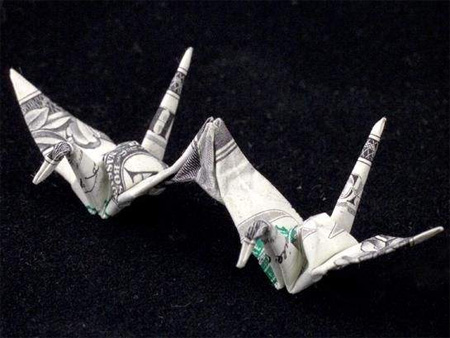
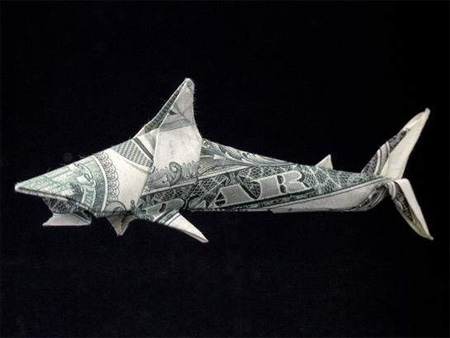
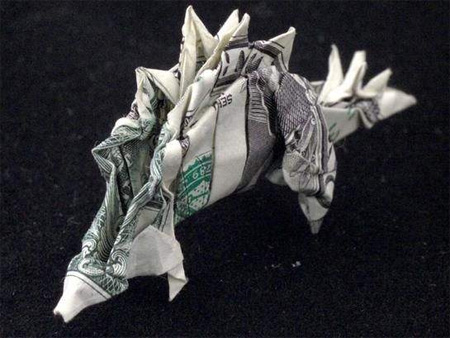
Creative Dollar Bill Origami

Creative Dollar Bill Origami

Origami is an ancient Japanese art of paper folding.

The goal of this art is to create a representation of an object using geometric folds and crease patterns preferably without the use of gluing or cutting the paper, and using only one piece of square paper.

Dollar Bill Origami (or money origami) is a type of origami that uses money instead of paper. We hope you enjoy this collection of creative dollar bill origami.

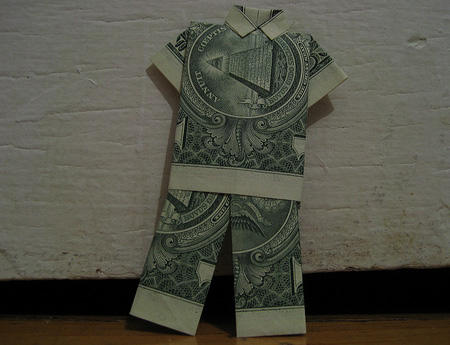
Origami Money Shirt With Tie

Here is an origami shirt with tie folded from a dollar bill. [link]

Origami Money Shirt With Tie

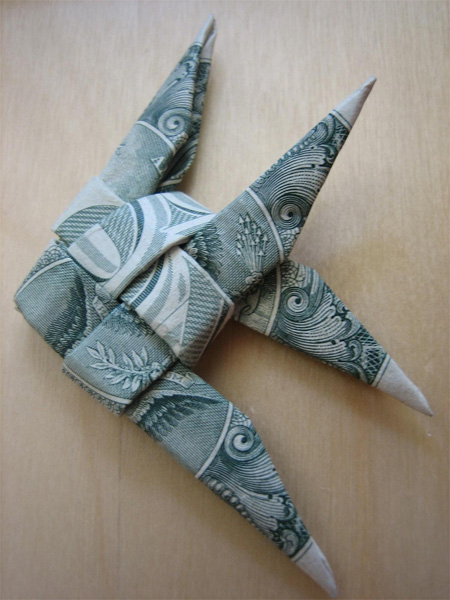
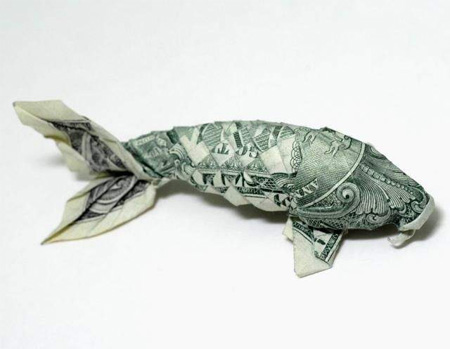
Origami Fish

Origami fish - made by June. [link]

Origami Fish

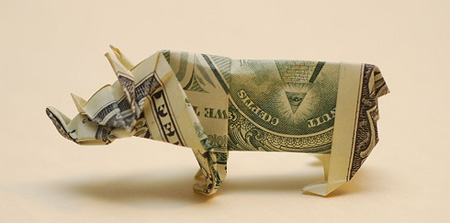
Origami Rhino

This is Montroll design From his Dollar Bill Animals book. [link]

Origami Rhino

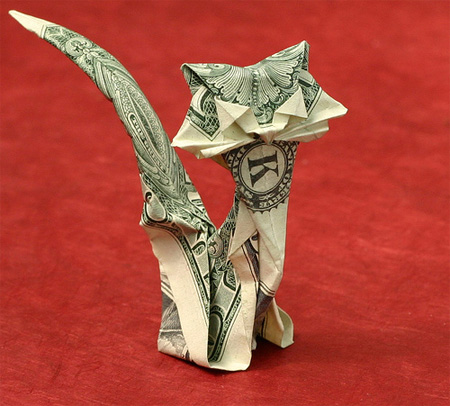
Origami Cat

Designed by Roman Diaz. [link]

Origami Cat

Dollar Dude

A little guy made out of two dollar bills. [link]

Dollar Dude

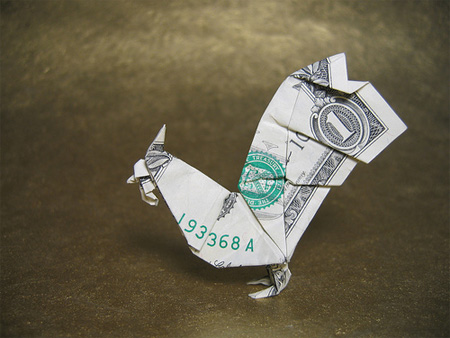
Origami Rooster

Designed by John Montroll. Folded by Phillip West. [link]

Origami Rooster

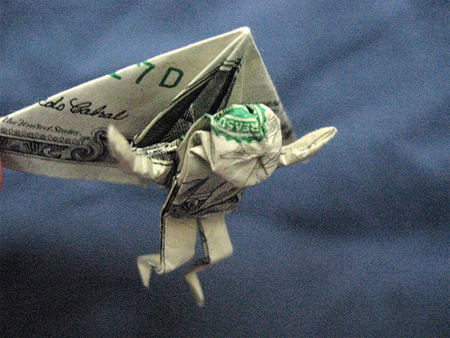
Hang Glider

Folded from a dollar bill. With a new money-folding site popping up, [link]

Hang Glider

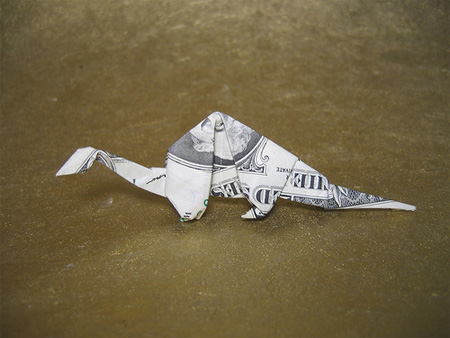
Origami Apatosaurus

Designed by John Montroll. Folded by Phillip West. [link]

Origami Apatosaurus

Origami F-14 Airplane

Dollar Bill Origami F-14 Airplane [link]

Origami F14 Airplane

More Creative Dollar Bill Origami

Creative Dollar Bill Origami 2

Creative Dollar Bill Origami 3

Creative Dollar Bill Origami 4

Creative Dollar Bill Origami 5

Creative Dollar Bill Origami 6

Creative Origami Links

- Dollar Bill Origami

- Money Origami

- Dollar Bill Origami by Bob Nienhuis

Mobileye develops a third eye for your car

The Media Line (Special to the Jerusalem Post) , THE JERUSALEM POST

Motor vehicle "accidents" are the leading cause of "death by injury" in the world today and are recognized as a major and growing global health burden.

According to World Health Organization (WHO) estimates, in 2002 nearly 1.2 million people died in road crashes worldwide and between 20 and 50 million were injured.

In 2004, more than 40,600 people were killed in traffic accidents in the United States alone.
So when new technology is developed that promises to lower traffic death rates, it attracts serious attention.

A computer chip and a tiny camera not much bigger than a dime installed on the windshield behind your car's rear-view mirror may now make the difference between life and death.

The Netherlands-based Mobileye Vision Technologies has developed an inexpensive hi-tech driver assistance system called Mobileye AWS (advance warning system), which can provide drivers with early warnings of potential road hazards.

Founded by an Israeli, with its R&D based in Israel, the company says the system has the potential to lower accident rates and teach people how to be "smarter" drivers.

The images generated from a front-facing camera are analyzed by the system's computer chip, which has been "taught" to recognize potential hazards such as cars, buses, trucks, motorcycles and pedestrians, and uses audio warnings to aid the driver in recognizing and maintaining safe distances from these threats.

The chip, roughly the size of a Zippo lighter, has the processing capability of two Pentium computers but comes at a much lower price.

The aftermarket product line works day, night and in inclement weather, and features Forward Collision Warning that prevents collision with vehicles ahead by alerting drivers to both moving and stationary vehicles while filtering out cars in adjacent lanes that pose no threats.
Alerts are provided up to 2.7 seconds before collision - enough time to safely stop and avoid an accident.

It also features Headway Monitoring and Warning, providing distance indication to drivers and Lane Departure Warning that alerts drivers when they inadvertently drift from their lane due to drowsiness or other factors.

Other technologies in different stages of development include lane change assist that monitors the speed and distance of overtaking vehicles and tells you when it is safe to switch lanes, and pedestrian protection that identifies people in the vehicle's path as well as those on the sidewalk who may enter the roadway.

For example, the system detects the distance to the vehicle immediately ahead - generally targeted as posing the primary threat. As the driver nears the vehicle in front of him, an image on the display panel changes progressively from green to orange to red.

Upon advancing beyond a minimal safe following distance, the driver will hear an audio warning announcing that he or she must reduce speed and fall back. The audio caution will cease the moment the driver steps on the brakes.

Though there is a small display panel mounted on the vehicle's dashboard, most of the warnings are audible and the driver need not remove his or her eyes from the road in order to make use of the system.

"Studies by auto makers, government and non-government organizations have shown that giving sufficient warning can prevent up to 80 percent of all traffic accidents," Iftah Amit, VP for Sales and Aftermarket Products for Mobileye Vision Technologies told The Media Line.
"Mobileye is the only technology developer that provides the broadest range of accident prevention alerts in a single system," he said.

The company aims to provide optimal safety for every vehicle and not just for luxury cars. It uses inexpensive components to make it attractive both to automotive manufacturers and to the average car owner.

The final retail cost to the consumer is under $1,000. The company is not disclosing figures on how many units of the product it has sold to date.

The system is the result of a challenge thrown out to Mobileye co-founder and chairman of the board Prof. Amnon Shashua. After giving a lecture to one of the leading car companies in Japan, Shashua was asked if he would be able to develop an automotive vision system using two cameras.

He accepted the challenge, went back to his lab and soon discovered that he was able to do the job with just one camera.

Road testing of the system was conducted in Israel, Europe and the United States.
During development, Mobileye found there were no existing cameras that could deal with the complications posed by road travel, such as strong glare and rapidly moving shadows. The company was forced to develop its own camera and accompanying software.

The company is currently running a pilot program with the Dutch government in which the camera has been installed in 2,000 trucks, with a view to having it fixed in an additional one thousand.
As of 2007 Mobileye's systems have been installed in production vehicles on selected automakers' assembly lines in the hope it will eventually evolve into a standard auto safety feature.

The system has been installed into several models of BMW, Volvo and GM.

Mobileye Vision Technologies is also cooperating with insurance companies to bring down insurance costs because it does in effect prevent or at least reduce the number of traffic accidents.
Much like seatbelts, the company's product could one day be a compulsory safety feature required by insurance companies.

The product is currently sold in several countries, including the United States, The Netherlands, the United Kingdom, Australia and Chile, and is installed in both commercial and passenger vehicles.

Making sophisticated safety systems such as these a regulatory feature is probably just a matter of time, but whether Mobileye's development will be the leading product on the market depends on how much of an edge the company can maintain over its competitors, analysts in the motor industry say.

Nitzan Avivi, a technology writer for the Israeli Auto motor magazine, said the concept behind Mobileye's warning system was to create a cheaper alternative to radar-based safety systems, which up until 10 years ago were very costly.

"Today, the radar systems are not as expensive, and Mobileye's system isn't as low-priced as they thought it would be, although still cheaper than the radar system," Avivi says.

"So the economic justification has somewhat diminished, but it still has features that the radar system doesn't have and it does have a technological justification." In terms of user-friendliness, Avivi praised the system as being "idiot-proof." He reckons that eventually the safety systems that will most likely catch on will be those that combine both radar technology and imaging, such as a system that Volvo has already installed into some of its models.

"Ten years ago no one believed the electronic stability program (ESP) would be regulatory and now it's mandatory in the United States and in Europe. In light of trials that have been carried out on both heavy vehicle fleets and private vehicles, I believe this system will be regulatory," he said.

"Its impact on safety is significant and Mobileye will benefit because they'll be one of the alternatives."

Here's what a $170 million hotel restoration looks like

Take a look inside the $170 million restoration of Chicago's historic Palmer House hotel. How else are you going to catch a glimpse of the 11-room, $1.5 million penthouse? Unless you're Brad Pitt, that is.

Palmer House chic gets early unveiling

When the Great Chicago Fire destroyed the original Palmer House just 13 days after dry-goods merchant Potter Palmer built the hotel in 1871 as a gift to his bride, the State Street developer quickly plunged into rebuilding. It reopened in 1873.

The inn has remained open ever since through various remakes, a longevity record in the U.S., and now it's emerging from its latest, and biggest, face-lift.

Coming to market ahead of the credit crisis, the project escaped the financing drought likely to choke new large-scale projects for some time.

A private-equity firm headed by Joseph Sitt, a Brooklyn native with a penchant for urban development, bought the down-on-its-heels French Empire-style inn for $240 million in 2005. Sitt's firm, Thor Equities, bet another $170 million on restoring the 1,639-room convention hotel. Now 15 months ahead of schedule, the wraps are coming off 17 E. Monroe, and so far observers like what they see.

"That hotel was showing its age, to say the least, and now it's much more functional; the retail offerings are better … it's fresher," said Brian D. Flanagan, president of Property Valuation Advisors in Chicago.


But with the economy in a tailspin and Loop redevelopment still a work in progress, it may take a while to know whether Sitt's wager will pay off.

Still, the restoration "brought back a lot of the luster and historic character to the building," said Jim Peters, president of Landmarks Illinois, which next month will give its annual real estate industry award to Thor.

More than 1,000 guest rooms got makeovers, with French baroque touches, and $1.5 million was spent on the 11-room penthouse. A spa and fitness center were added, as was an elegant restaurant, Lockwood, whose bar extends into the ornate lobby.

Eyesore fire escapes on the State Street exterior were replaced with interior fire escapes, though the metal-grate fire escapes remain on the Wabash Avenue side. A new ballroom was created after ornate ceiling moldings, dating to the 1920s, were uncovered.

The latest hotel restoration hasn't been the only catalyst to the commercial redevelopment starting to sprout along State and Wabash. Sitt cites the return of auto traffic on State, the growth of the theater district, the rise of residential development and the creation of Millennium Park as key triggers too. The quickened pace of the hotel's restoration was critical, he said. "If we didn't get the Loop area going with the hotel, it was in danger of falling into a permanent rut."

Given today's economic climate, hotel industry consultant Ted Mandigo said the restoration is significant because "we're not going to see any more major convention hotels of the size and caliber of the Palmer House again, at least in the near term.

"That kind of property is almost an irreplaceable landmark in Chicago," Mandigo said, "and it's going to be a big contributor to keeping the Chicago market active and competitive in the convention area."

kbergen@tribune.com

6 of the World's Greatest Missing Treasures

They were fantastic examples of opulence, decadence, and splendor. People marveled at their beauty, drooled over their excess, and cowered at their power. And now they're gone.

But where are they? And what happened to them? Explore our list of six of the world's greatest missing treasures. We'll start with one that would be worth an estimated $142 million today.


amber room
The Amber Room was reassembled by the Germans
in the Königsberg Castle during WWII.

1. The Amber Room

Described as the eighth wonder of the world by those who saw it, the Amber Room is certainly the most unique missing treasure in history.

It was an 11-foot-square hall consisting of large wall panels inlaid with several tons of superbly designed amber, large gold-leaf-edged mirrors, and four magnificent Florentine mosaics. Arranged in three tiers, the amber was inlaid with precious jewels, and glass display cases housed one of the most valuable collections of Prussian and Russian artwork ever assembled.

Created for Prussia's King Friedrich I and given to Russian czar Peter the Great in 1716, it was located at Catherine Palace, near St. Petersburg. Today, the Amber Room would be valued at more than $142 million.

When Adolf Hitler turned his Nazi war machine toward Russia, the keepers of the Amber Room got nervous. They tried to move it, but the amber began to crumble, so they tried to cover it with wallpaper. They were unsuccessful and when the Nazis stormed Leningrad (formerly called St. Petersburg) in October 1941, they claimed it and put it on display in Königsberg Castle during the remaining war years.

However, when Königsberg surrendered in April 1945, the fabled treasure was nowhere to be found. The Amber Room was never seen again. Did the Soviets unwittingly destroy their own treasure with bombs? Was it hidden in a now lost subterranean bunker outside the city? Or was it destroyed when Königsberg Castle burned shortly after the city surrendered?

We'll probably never know for sure. But fortunately for lovers of opulence, the Amber Room has been painstakingly recreated and is on display in Catherine Palace.

2. Blackbeard's Treasure

The famous pirate Blackbeard only spent about two years (1716-1718) plundering the high seas. Within that time, however, he amassed some serious wealth. While the Spanish were busy obtaining all the gold and silver they could extract from Mexico and South America, Blackbeard and his mates waited patiently, then pounced on the treasure-laden ships as they sailed back to Spain.

Blackbeard developed a fearsome reputation as a cruel and vicious opportunist. His reign of terror centered around the West Indies and the Atlantic coast of North America, with headquarters in both the Bahamas and North Carolina. His end came in November 1718, when British Lieutenant Robert Maynard decapitated the pirate and hung his head from the bowsprit of his ship as a grisly trophy.

But what happened to the vast treasure that Blackbeard had amassed? He acknowledged burying it but never disclosed the location. But that hasn't stopped countless treasure hunters from trying to get their hands on it.

Blackbeard's sunken ship, Queen Anne's Revenge, is believed to have been discovered near Beaufort, North Carolina, in 1996, but the loot wasn't onboard. Possible locations for the hidden stash include the Caribbean Islands, Virginia's Chesapeake Bay, and the caves of the Cayman Islands.


3. Treasures of Lima

In 1820, Lima, Peru, was on the edge of revolt. As a preventative measure, the viceroy of Lima decided to transport the city's fabulous wealth to Mexico for safekeeping. The treasures included jeweled stones, candlesticks, and two life-size solid gold statues of Mary holding the baby Jesus. In all, the treasure filled 11 ships and was valued at around $60 million.

Captain William Thompson, commander of the Mary Dear, was put in charge of transporting the riches to Mexico. But the viceroy should have done some research on the man to whom he handed such fabulous wealth because Thompson was a pirate, and a ruthless one at that. Once the ships were well out to sea, he cut the throats of the Peruvian guards and threw their bodies overboard.

Thompson headed for the Cocos Islands, in the Indian Ocean, where he and his men allegedly buried the treasure. They then decided to split up and lay low until the situation had calmed down, at which time they would reconvene to divvy up the spoils.

But the Mary Dear was captured, and the crew went on trial for piracy. All but Thompson and his first mate were hanged. To save their lives, the two agreed to lead the Spanish to the stolen treasure. They took them as far as the Cocos Islands and then managed to escape into the jungle. Thompson, the first mate, and the treasure were never seen again.

Since then more than 300 expeditions have tried -- unsuccessfully -- to locate the treasures of Lima. The most recent theory is that the treasure wasn't buried on the Cocos Islands at all but on an unknown island off the coast of Central America.

4. Pharaohs' Missing Treasure

When Howard Carter found the tomb of Tutankhamen in Egypt's Valley of the Kings in 1922, he was mesmerized by the splendor of the artifacts that the young king took to the afterlife. Attached to the burial chamber was a treasury with so many jewels and other artifacts that it took Carter ten years to fully catalog them.

However, when the burial chambers of more prominent pharaohs were unearthed in the late 19th century, their treasure chambers were virtually empty. It is common knowledge that tomb robbers had been busy in the tombs over the centuries, but the scale of the theft required to clean out the tombs of the kings is beyond petty criminals. So, where is the vast wealth of the pharaohs buried in the Valley of the Kings?

Some scholars believe that the treasures were appropriated by the priests who conducted reburials in the Valley of the Kings during the period of the early 20th and late 21st Egyptian dynasties (425-343 B.C.). Pharaohs were not averse to reusing the funeral splendors of their ancestors, so this may have been carried out with official sanction.

One particular ruler, Herihor, has been the focus of special attention. Herihor was a high court official during the reign of Ramses XI. Upon Ramses' death, Herihor usurped the throne, dividing up the kingdom with a co-conspirator, his son-in-law Piankh. Herihor placed himself in charge of reburial proceedings at the Valley of the Kings, affording himself ample opportunity to pilfer on a grand scale.

His tomb has never been found. When and if it is, many scholars believe that the missing treasures of many of Egypt's pharaohs will finally see the light of day.

5. The Ark of the Covenant

To the ancient Israelites, the Ark of the Covenant was the most sacred thing on Earth. The central and paramount object of the Hebrew nation, this ornate chest was, according to the Bible, designed by God.

Measuring 44 inches long, 26 inches wide, and 26 inches high, the chest was made of acacia wood, overlaid inside and out with pure gold, and surrounded by an artistic gold border. Mounted on the solid gold cover were two golden cherubs, one at each end of the cover facing each other, with heads bowed and wings extending upward.

The Ark served as a holy archive for the safekeeping of sacred relics, including the two stone tablets of the Ten Commandments. As a historical and religious treasure, the Ark and its contents were absolutely priceless.

In 607 B.C., Jerusalem, the capital city of the Israelite kingdom of Judah and home of Solomon's Temple, where the Ark was housed, was besieged and overthrown by the Babylonians. In a terrible slaughter, more than a million people were killed, with the survivors driven off into captivity.

Seventy years later, when the Israelites returned to rebuild the city, the Ark of the Covenant was gone. What happened to this priceless relic has been the subject of intense speculation ever since.

It is widely believed that the Ark was hidden by the Hebrews to keep it from the Babylonians. Possible locations for its hiding place range from Mount Nebo in Egypt to Ethiopia to a cave in the heart of Judah. Yet, if the Ark was hidden, why was it not recovered when the Israelites returned to Jerusalem and rebuilt the temple?

Others believe that the Ark was destroyed by the rampaging Babylonians. Still another explanation put forth by the faithful is that God miraculously removed the Ark for safekeeping by means of divine intervention.

6. Montezuma's Treasure

The Spanish decimation of the Aztec empire in Mexico came to a head on July 1, 1520. After mortally wounding Emperor Montezuma, Hernando Cortés and his men were besieged by enraged Aztec warriors in the capital city of Tenochtitlán.

After days of fierce fighting, Cortés ordered his men to pack up the vast treasures of Montezuma in preparation for a night flight, but they didn't get far before the Aztecs fell upon them. The ensuing carnage filled Lake Tezcuco with Spanish bodies and the stolen treasures of Montezuma.

The terrified army had thrown the booty away in a vain attempt to escape with their lives. The hoard consisted of countless gold and silver ornaments, along with a huge array of jewels.

Cortés and a handful of his men got away with their lives and returned a year later to exact their revenge. When the inhabitants of Tenochtitlán got wind of the approaching invaders, they buried the remains of the city's treasure in and around Lake Tezcuco to prevent it from falling prey to the gold-crazed Spanish.

Today, a vast treasure trove remains hidden beneath nearly five centuries of mud and sludge on the outskirts of Mexico City, the modern day incarnation of Tenochtitlán. Generations of treasure seekers have sought the lost hoard without success. A former president of Mexico even had the lake bed dredged, but no treasure was found.

CONTRIBUTING WRITERS:

Helen Davies, Marjorie Dorfman, Mary Fons, Deborah Hawkins, Martin Hintz, Linnea Lundgren, David Priess, Julia Clark Robinson, Paul Seaburn, Heidi Stevens, and Steve Theunissen

FBI agent details life on Gambino crew

By Timothy O'Connor • The Journal News

A day at the office doesn't involve an office when you're a Westchester mobster.

Joaquin

Joaquin "Jack" Garcia, a native of Cuba, is an FBI agent who posed as an Italian mobster and infiltrated a Gambino crime family crew led by Gregory DePalma. Garcia's investigation led to the indictment of more than 30 members and associates of the Gambino family. (Submitted photo)

What it does involve is food.

Lots of food.

But, like other professions, it is high stress. The ability to make money for the company is highly prized. It's not a 9-5 gig.

And, as FBI Agent Joaquin "Jack" Garcia found out when he infiltrated the Westchester-based crew of the Gambino crime family capo, Gregory DePalma, mob violence in the suburbs isn't a back-alley affair. It can be meted out in high-end department stores, can be visited upon poor performers in the swankest of locales.

Garcia, posing as a Florida jewel thief named Jack Falcone, spent more than two years with DePalma, a veteran and admitted gangster, gaining his trust and getting close enough to him that DePalma wanted to put him up for formal induction in the mob. DePalma was the top mobster, the chief gangster executive, in the affluent county.

"If you had any reason to be in contact with organized crime in Westchester County, you knew Greg DePalma," he writes in his new book, "Making Jack Falcone."

For DePalma, his crew and mobsters in the suburbs, crime was a 24/7 business, Garcia said in a recent interview. The boss was aging but still demanding. There was only one family that mattered to him. The Gambino crime family. Your own family came second.

"Greg had a hair-trigger temper," Garcia said. "He would go off. Just the way he carried himself, he was a very menacing type of guy."

Garcia's work was largely responsible for taking down DePalma and the entire reputed hierarchy of the Gambino crime family. More than 30 reputed leaders, members, and associates of the family were indicted by a federal grand jury in March 2005. All of them pleaded guilty, except for DePalma. He went to trial and was convicted of racketeering.

But he spent every day of the two years before his arrest committing crime. And Garcia was there to document it:

Breakfast of wiseguys

9 a.m., breakfast meeting, Eastchester Odyssey Diner.

DePalma liked to start each day at the Eastchester Odyssey.

Made members or associates, sometimes extortion victims, would come to meet DePalma.

And they would eat.

"Eggs, sausage, everything," Garcia said.

Breakfast would last two hours. The conversation usually centered around current events.

"Talking about what's in the paper," he said.

The gravel-voiced DePalma was desperate to regain his standing as a capo when he was released from prison in February 2003 after serving a 70-month sentence for racketeering. He was all about the money when he came out. The feds thought he was washed up; he'd been caught talking on tape and that had led to his conviction as well as that of John Gotti Jr. in the Scores strip-club extortion case.

"They thought he was a 'brokester,'" Garcia said using the gangland term for a mobster without the means to make money.

But DePalma, even at 72 and saddled with a host of ailments, soon proved everyone wrong. Within days of his release, he was reclaiming his old shakedown schemes - construction companies and a Bronx strip joint. Within a month of his release, he had regained his "stripes" as a captain.

They switched locations after DePalma spotted an FBI surveillance van near the diner. They moved to Bentley's in Tuckahoe.

But the routine didn't change.

There was never a problem until the check came.

Mobsters hate to pay.

For anything.

"When the bill comes, they all become T-Rex," Garcia said. "They all had the little hands, nobody's going in their pockets. So everybody's a dinosaur, it's like Jurassic Park."

Family visit

11 a.m., United Hebrew Geriatric Center, New Rochelle.

DePalma visited the home every day. That's where his son Craig, also a reputed member of the Gambinos, was in a persistent vegetative state, the result of a prison suicide attempt in 2002.

The father made sure the son had music in the room, mementos and pictures all around. Gregory DePalma's wife, Teri, blamed the father for the son's suicide attempt. Garcia said she thought Gregory DePalma was the one who had gotten his son into the mob life. The father tried everything to get his son out of the coma, even bringing in a voodoo practitioner and injecting him with Botox.

But his son's well-being wasn't his only reason for visiting the home. DePalma thought his son's room was a safe place to meet extortion victims and co-conspirators - from construction to sports memorabilia and gambling.

"Greg conducted business as if, you know, he was at a regular diner," Garcia said.

The way it worked in the construction industry was pretty simple, DePalma told Garcia.

"He would say every construction job in New York, they got to pay a mob tax," Garcia said. "Two percent."

Envelopes full of cash were passed to DePalma by construction executives and contractors who came to "visit" Craig.

At the center, Garcia said he saw some of the criminal menace of the father. He would berate and taunt sick, elderly patients.

"That's when I really felt the worst," Garcia said. "Being there and being around these poor people who were subjected to that."

Garcia said he was never sure if DePalma cared for Craig because he was a fellow mobster or because he was his son. For DePalma, the Gambinos came first. He told Garcia that early on.

After the business was done, it was time to eat again.

"'Hey Jackie Boy,' he'd say, 'Where we gonna eat?'" Garcia said.

'Mob school'

1:30 p.m., La Villetta restaurant, Larchmont.

Food was dangerous for Garcia. And not just because he was 390 pounds. Cuisine is serious business for mobsters. Garcia was a native Cuban pretending to be Italian. He had the benefit of attending a "mob school" under the tutelage of veteran FBI Special Agent Nat Parisi where he learned the proper pronunciation of Italian dishes. But he knew one misstep, even one as simple as not pronouncing menu items correctly, could be his undoing.

DePalma loved La Villetta, he said.

"The chef was great," Garcia said.

DePalma also had his car washed every day at a place on Route 1. He went through three cars in the two years Garcia was with him. First was a PT Cruiser, then a Ford Thunderbird convertible and finally a Chrysler 300. Scratches were immediately buffed out at a body shop in Port Chester. The outside was immaculate.

"But the inside looked like a bomb went off," Garcia said.

They conducted some business at the restaurant. If DePalma met with another "made" or official member, they'd leave Garcia and go to a separate table. Garcia knew not to raise an eyebrow at what would seem to be rudeness.

"Basic courtesy, you would say, what the hell is that?" he said. "All these little nuances that the mob does."

The strip joint

5 p.m., The Mirage strip club, the Bronx.

Garcia, whose cover was that he was a jewel thief and stolen-goods fence, headed to the strip club to meet with other wiseguys and their associates.

DePalma went back to the nursing home. Both men left the restaurant with plates of food.

But there were nights when they had other business to conduct and didn't part company.

Ugly argument

6 p.m., Bloomingdale's, the housewares department, White Plains.

DePalma, reputed acting capo Robert Vaccaro, and Garcia went to Bloomingdale's looking for another reputed Gambinos member, Peter "Petey Chops" Vicini of the Bronx. Vicini, an allegedly successful gambling racketeer, wasn't making his visits - and payments - to his capo, DePalma.

A couple of weeks before federal authorities arrested the 32 reputed Gambinos, DePalma, Vaccaro and Garcia caught up with Vicini in Bloomingdale's, where he liked to eat dinner with his girlfriend in the restaurant. Vicini and DePalma started arguing. Vaccaro, Garcia said, grabbed a $95 crystal Kosta Boda candleholder and bashed Vicini in the skull.

DePalma was acquitted of that assault at his trial. It was the only act of physical violence he was charged with in the case.

Food addict

1 a.m., City Island, the Bronx.

The night often ended at a restaurant on City Island - unless someone ordered in food at the club, Garcia said.

DePalma spent a lot of his nights at Pasta Per Voi in Port Chester, owned at the time by reputed associate Joseph Fornino. There, federal authorities said, he met with people like reputed Gambino underboss Anthony Megale and conducted more mob business.

And they ate.

Garcia, already a big guy, gained 80 pounds during the investigation.

What made it worse, he said, is that while other agents might drink to relieve stress, Garcia uses food. And being an undercover FBI agent in a Gambino crime crew does bring some stress.

"Instead of Johnny Walker," he said. "I go for the Entenmann's."

9 Tricks for Getting a Table (and Being a VIP) at Hot Restaurants


How do you skip the line and get the corner table? (photo: Thomas Hawk)

An evening out should be special, especially if it’s an expensive evening.

But too often it’s a disappointment. Does the following scenario sound familiar? After weeks of trying to score a reservation at that new restaurant that just got a great review, you finally get one – only to find yourself waiting until 9pm for the table you were promised at 8pm. When you’re finally seated, you find yourself waiting – for a drink, for your food, for your check, even for your coat.

It might be somewhat tolerable if you looked around and saw that everyone was treated the same, but that’s rarely the case.

There always seems to be at least one table getting the VIP treatment. It’s like a little oasis: The diners aren’t kept waiting; the waiters are particularly attentive; and the chef may even come out to say hello or send over some extra desserts at the end. Who doesn’t want to be treated like that?

I’m not fussy and I’m not high maintenance. I think those are two reasons I stumbled upon the secrets of being treated like a VIP…

For years, I was editor in chief of a publishing house and edited cookbooks by some of the world’s best chefs – so my friends always assumed that’s why I got treated so well. But the truth is – the restaurants where I was treated best never knew what I did for a living. Trust me: If you get pitched books all day, the last thing you want is to be pitched books over dinner.

Here are 9 tips for becoming a VIP who skips lines and gets tables. Test even a few and you’ll almost always get amazing treatment at the very restaurants others can barely get into.

1. Start at the bar. Try having a meal there. Chat with the bartender a bit; introduce yourself to the Maitre d’ and get her or his card. Ask if the owner is around and introduce yourself to her or him.

2. Ask the waiter to ask the chef two questions: First, What does everyone order, and Second, what does almost no one order but the chef thinks everyone should. Then order them both. Chefs want to show off their popular dishes, but often have an item on the menu they are really proud of, and really want people to try. I first did this at The Slanted Door in San Francisco. A cook actually came out to say hello because he thought it was so unusual.

3. Be one of the first customers. If you read local food-blogs, or visit sites like chow.com or zagat.com, you’ll know what’s opening and who’s opening it. If it sounds good, go. Businesses frame their first bucks and treasure their first customers.

4. If you like it, come back for two more meals that very week. I went to a great NYC restaurant called Union Pacific for lunch the week it opened. I loved it and came back for dinner that night, lunch the next day, and dinner later that week. They never forgot me. After Union Pacific became white hot, I could score a reservation any time I wanted – even if I hadn’t been there for months. Even though the restaurant is sadly gone, I’ve kept up with some of the alums – and they now work in some of the city’s best restaurants.

5. Be forgiving. Even VIPs sometimes have to wait, get spilled on, or get the wrong dish. VIPs are often simply people who were good sports when all didn’t go as planned. You don’t have to be a milquetoast – but if the restaurant knows it messed up, you can score major points by not making a big deal about it or using it as an excuse to try to score freebies.

6. Send compliments to the chef – especially when you are specific about what you like. I know it sounds dorky – but it’s almost always appreciated. If you really love the place, send a note to the chef. Very few people do this.

7. Tip 25% if you like the place and got pretty good service. At very fancy restaurants, tip the Maitre d’ too. If you can’t afford to tip properly, then you can’t afford that restaurant. Go someplace you can afford.

8. Choose the cheapest wine. Or choose a wine you know and like. Or one that intrigues you. Or just ask for help. But don’t choose the second cheapest wine, unless it’s a wine you know and like. (The cheapest is often a good, smart value; the second cheapest is sometimes a sucker’s play – a bad deal put specifically on the wine list for all the people who don’t know wine, don’t want to ask, but don’t want to look cheap by ordering the cheapest).

9. Ask to be treated like a VIP. Okay, I saved the most obvious for last. But it works. There’s a restaurant called Matsuri in New York. I went and loved it. So I called the manager, told her that I was crazy about the place, and would entertain there a lot if I could be pretty sure that I would be nicely looked after. I’ve been treated like a prince there ever since. And I do entertain there whenever I can – both for business meals and with friends. There may be new restaurants cropping up all the time, but Matsuri is still one of NYC’s best and has me for life.

About the author: Will Schwalbe is the former editor-in-chief of Hyperion Books, one of the powerhouses of New York publishing