Zazzle Shop

Screen printing

Monday, October 20, 2008

Tableau Visual Analytics Software

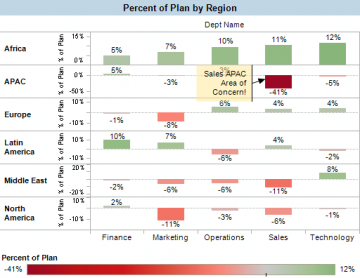
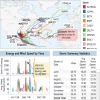
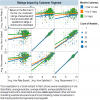
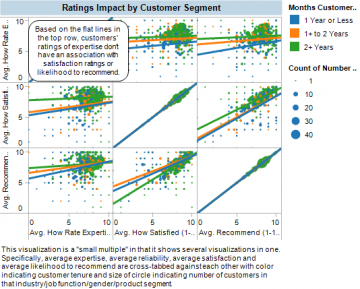
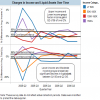
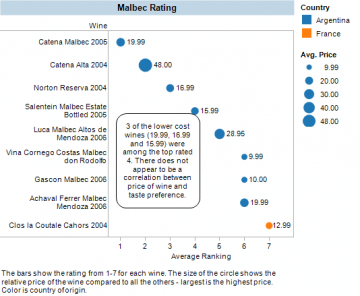
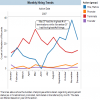
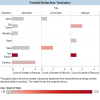
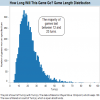
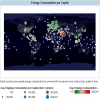
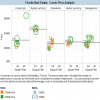
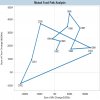
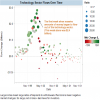
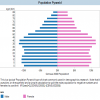
Tableau is a software product suite for visual analysis and web-based analytics. It’s for discovering, visualizing and publishing data. Do you have databases or spreadsheets? If so, download and try Tableau software in minutes with your own data. With Tableau as your database front-end, you’ll have the freedom to answer questions on your own. This product tour shows you how.


Porsche Calendars and Planners make handy Gifts


STUTTGART, Germany — For 2009, Porsche is offering three calendars and a planner that detail the evolution of Porsche design and modern technologies in their cars.

The official 2009 Porsche calendar is themed "Engineering and Efficiency" and features twelve close-up images of Porsche technology, including Porsche's double-clutch gearbox, Variocam Plus and direct fuel injection. The calendar also includes a collector's coin.

A historical calendar is titled "Mathematics 2009: Game of Numbers" and traces the origins of Porsche's current design language back to the 1939 Porsche Type 64. Featured photos are of the Type 64 body that was recently reconstructed for the new Porsche museum. The calendar will be available in two formats: a standard printing and an exclusive run on larger, high-quality matte paper that will be limited to just 2,009 printings, with each calendar sequentially numbered.

The third calendar, known as the style calendar, also focuses on the Type 64. Titled "Affinities/Verwandtschaften," it features twelve sketches inspired by the Type 64 body shell. Porsche Design also offers a planner that tracks the rally history of the manufacturer from 1950 to 2008. The 2009 calendars will be available for purchase at Porsche's Web site.

Inside Line says: The images of Porsche history and technology are so striking that few enthusiasts will want to write on these calendars. —

Quantum of Solace Reveiws- So Far, So Dark

Bang


If the collection of early reviews is any reliable sign (and the consistent tone in each would indicate it is), the next James Bond movie, Quantum of Solace, is an aggressive, tight, grim and moody thriller that leads directly into the next film in the decades-old series.

So far, reviews out of U.K. sources such as the BBC and The Daily Mirror praise the film and the performance of Daniel Craig as 007 for exploring the lead character's depth and motivation in a manner not seen in a previous Bond flick.

While celebrating Solace's tight pacing and effective action sequences, critics also question the film's heavy, moody tone as the grieving, vengeful 007 seeks out the deadly international criminal organization that killed his lover and threatens the world. It seems the fun, flippant Bond of Sir Roger Moore (and even Pierce Brosnan) is long gone.

Quantum of Solace premieres on Halloween in the United Kingdom and Nov. 14 in the United States.

Image Courtesy Sony, MGM

Pelosi a Wack a Loon


Windfall Tax on Retirement Income

Adding a tax to your retirement is simply another way
of saying to the American people, you're so stupid that
we're going to keep doing this until we drain every cent
from you. That's what the Speaker of the House is
saying. Read below...............

.
She quotes...' We need to work toward the goal of
equalizing income, in our country and at the same time
limiting the amount the rich can invest.'


When asked how these new tax dollars would be spent, she
replied:
'We need to raise the standard of living of our poor,
unemployed and minorities. For example, we have an
estimated 12 million illegal immigrants in our country who
need our help along with millions of unemployed minorities.
Stock market windfall profits taxes could go a long way to
guarantee these people the standard of living they would
like to have as
'Americans'.'


Read that quote again and again and let it sink in.
'Lower your retirement, give it to others who have not
worked as you have for it'.


The $110,000 Confederate Renaissance Fighter- A Bargain for a Work of Art

Confederate_renaissance01

We know Confederate Motor Company can design sweet motorcycles because its first bike, the Wraith, is all kinds of awesome. But we've gotta wonder what the company's designer was smoking when he penned the new Renaissance Fighter and whether he'll share it with the people Neiman Marcus thinks will drop $110,000 to buy one.

The Renaissance takes the board-track racer aesthetic of the too-cool-for-words B91 Wraith and projects it well into the next century. The result is a bike that, although technically impressive, is as ugly as it is overpriced. That isn't keeping Neiman Marcus from offering the Renaissance in its Christmas Big Book, that annual repository of all things garish, gaudy and gauche.

What's sad is the Renaissance offers some amazing specs, including a 1,966 cc engine in an aluminum and titanium frame, a close-ratio 5-speed billet aluminum transmission and a four-piston front brake clamping down on a ceramic rotor. And, of course it's got that funky, but very effective, girder fork that Confederate is known for, and incorporating the LED headlights into the fork legs was a nice touch. The whole package weighs a very reasonable 430 pounds.

But there's no two ways about it — the bike is ugly as sin. Wes Siller Siler at Hell For Leather offers a succinct rundown of the bike's many transgressions and calls it, among other things, "uncohesive and, in places, tacky." We'd add pretentious after reading the description Confederate offers on its website:

"The Fighter clarifies opaqueness and nullifies hype with straight-forward true to concept certitude. At the source is a classic right triangle. Proportion is classically derived. Scale is middle way. Bearing exudes structural permanence. Human integration deploys yang energy, vitality and power in the most simple, pure and direct form."

We're still laughing. Confederate makes some mighty big performance claims, including a top speed of 190 mph. That seems unlikely, given that a Wraith using the same engine hit 166.459 mph at the Bonneville Salt Flats last month, setting a new record for an unfaired pushrod 2,000 cc motorcycle. Of course, maximum velocity isn't the point with a bike like the Renaissance, and neither is handling — with a 64-inch wheelbase, 19-inch front wheel and that gumball of a back tire, it's only good for straight-line cruising.

Confederate is building just 45 Renaissance Fighters, and every one of them will be available only through Neiman Marcus. According to Confederate's website, three already are spoken for, further proving wealth cannot buy taste.

Photos by Confederate Motor Co.

Confederate_renaissance02

Confederate_renaissance03

Confederate_renaissance04

Confederate_renaissance05

Modern Day WPA will save the Economy

Bay_bridge_construction

Sens. John McCain and Barack Obama have been all but silent when it comes to repairing America's failing infrastructure, and with all that's going on in the world right now, they might be forgiven for it. They shouldn't be. Investing heavily in our infrastructure is just the thing for reinvigorating our tanking economy.

The candidates can talk all they want about shoveling money into alternative fuels, electric cars and high-speed rail, but none of that will mean much if our roads, bridges and rails can't support them. The next president must commit to fixing our infrastructure. Such an investment will create jobs, strengthen our economy and make America more competitive.

"(Congress) should invest in the more than 3,000 ready-to-go highway projects that could be under contract within the next 30 to 90 days," says John Horsley, executive director of the American Association of State Highway and Transportation Officials. "Funding these ready to go projects offers Congress a tremendous opportunity to put Americans to work and help cash-strapped states repair and replace our crumbling infrastructure."

History shows us the time to act is now.

The state of America's infrastructure -- roads, bridges, drinking water, even schools and transit systems -- couldn't be much worse. A report card issued three years ago by the American Society of Civil Engineers gives it all a D. The society says we've got to spend about $1.6 trillion just to bring things up to a B-.

"We're issuing a new report card next March, and we don't anticipate the grades getting any better," David Mongan, the organization's president, says. "If you look at federal and state infrastructure spending, it hasn't increased. The best we can hope for is that we've held steady since our last report."

Is it really that bad? Yes, it is. One of every four bridges in the country is either structurally deficient or functionally obsolete, and bringing them up to snuff will cost $140 billion, according to the American Association of State Highway Transportation Officials. America's drinking water infrastructure is woefully underfunded; the Congressional Budget Office says we must invest at least $11.6 billion over the next 20 years. Highway congestion costs us $78 billion annually through the 4.2 billion hours and 2.9 billion gallons of gasoline we waste each year, according to the Texas Transportation Institute. The list goes on.

Of the two candidates, Obama's said the most about the issue, but even he isn't saying much. At the bottom of the sixth page of his economic policy paper (.pdf), Obama calls for the creation of a National Infrastructure Reinvestment Bank. It would "expand and enhance, not supplant, existing federal transportation investments." On the face of it, that means a new chunk of money would be allocated for infrastructure projects as opposed to simply shifting cash from other projects. Obama wants to deposit $60 billion into the bank over five years. That's far short of the $225 billion a bipartisan transportation policy commission recommends spending each year for the next 50 years, but it's a start. If Obama's numbers are to be trusted, the bank would create two million jobs and generate $35 billion in economic activity each year.

As for McCain, he hasn't said much of anything. If anyone's seen a specific infrastructure platform from him, we'd like to see it. That said, his record so far isn't stellar. Among other things, he's called for a national gas tax holiday, which would save people pennies at the pump but take money away from the already strained Highway Trust Fund, which finances construction projects. Three years ago, McCain voted against the Transportation Equity Act, which provided more than $286 billion for transportation infrastructure.

Clearly America needs to invest quickly and heavily in its failing infrastructure, and, ironically, now may well be the perfect time to do so. The spiraling economy has drawn comparisons to the Great Depression. While that may be extreme, there's no doubt we're in for tough times. A national infrastructure initiative could make things a little easier.

During the Depression, President Roosevelt poured $11.4 billion (about $175 billion in 2008 dollars, by our estimate) into the Works Progress Administration. The agency spent nearly $4 billion on highway and road projects and more than $2 billion on public buildings and utilities. All told, the WPA put 8.5 million people to work between 1935 and 1943. Together those people built 651,087 miles of roadway, built or improved 124,031 bridges, erected 125,110 public buildings and laid 853 airport runways. Not bad at a time when the unemployment approached 25 percent.

Beyond providing jobs -- analysts say every $1 billion spent on transportation projects creates 35,000 jobs -- a modern-day WPA would produce lasting benefits. "China is spending 9 percent of its GDP on infrastructure, and we're spending something like one or two percent," says Allen D. Biehler, Pennsylvania's transportation secretary. "A sustained investment would not only create jobs that have a strong multiplier effect on the larger economy, but would prevent us from falling behind other nations."

A country that's gridlocked, crumbling, and collapsing isn't going to serve us well. Spend the money now, enjoy the benefits later.

How Smart is a Smart Card?

By extracting the RFID chip from a smart card, it's possible to learn much about the algorithms that control it.

Waving a Smart card in front of a radio frequency identification (RFID) reader can provide access to buildings, pay for subway rides, and even initiate credit-card transactions. With more than a billion units sold, the NXP Mifare Classic RFID tag is the most commonly used smart-card chip; it can be found in the London subway system's Oyster card, Australia's SmartRider, and the Boston subway's ­Charlie Card. Security researcher Karsten Nohl, who recently got his PhD in computer science from the University of Virginia, and ­"Starbug," a member of a Berlin hacker group called the Chaos Computer Club, hacked into a Mifare Classic's hardware to gain insight into its cryptographic algorithms. After analyzing the chip, Nohl questioned its security in a series of presentations at recent conferences, including Black Hat in Las Vegas.

An Acetone Bath
Melting a smart card with acetone reveals an RFID chip within (visible in the lower right at the end of the video). The process takes about a half hour. After extracting the chip, a hacker can process it further to analyze its construction and programming.


RFID Chip
Nohl and Starbug used acetone to peel the plastic off the card's millimeter-square chip. Once they isolated the chip, they embedded it in a block of plastic and sanded it down layer by layer to examine its construction. Nohl compares this to looking at the structure of a building floor by floor.

Layers
The chip has multiple layers that perform different functions, which the researchers had to tease apart in order to identify and understand its algorithms. Since the sanding technique didn't work perfectly, it produced a series of partial images. Nohl and Starbug borrowed techniques from panoramic photography to create a clear composite image of each layer. They identified six in all: a cover layer, three interconnection layers, a logic layer, and a transistor layer.

Logic and Transistor Layers
A close look at these layers reveals about 10,000 groups of transistors, which execute the algorithms that run the chip. Nohl and Starbug's analysis revealed that each group performs one of 70 logic functions, and that the groups are repeated in different patterns.

Interconnection Layers
Several layers of metal between the protective cover layer and the logic layer provide the connections between the different logic functions. Wires running through them control the flow of current through the groups of transistors.

Logic Gates
The groups of transistors that perform the chip's logical operations are known as logic gates. By analyzing the pattern of logic gates on the chip, the researchers determined which circuits performed which functions; for example, a string of one-bit memory cells known as flip-flops pointed to the part of the chip responsible for cryptography. The researchers made a map of the logic gates and the connections between them, which allowed them to uncover the chip's cryptographic algorithm and determine that it was weak. Nohl says that RFID security could be improved by the use of stronger, peer-reviewed algorithms, along with measures to obscure or tamper-proof the circuit itself.

Genomes on Display


Credit: Personal Genomes

An intrepid group of volunteers will be granted a glimpse at their genomes today as part of the first release of data from the Personal Genome Project (PGP).

Headed by Harvard University genomics pioneer George Church, the project aims to capitalize on rapid improvements in gene-sequencing technologies to better understand human health and disease. The PGP will serve as both a technological and an ethical test bed, assessing new methods of reading, sorting, and analyzing DNA, and highlighting societal issues that could spring up in the era of personal genomics--most notably, the privacy of genetic information.

Over the past year, the first 10 volunteers, including the linguist Steven Pinker, the entrepreneur Esther Dyson, and Church himself, have surrendered blood and skin samples, subjected themselves to medical examinations, and filled out extensive personal and medical questionnaires. Scientists have since gone to work sequencing their DNA, and an initial analysis of a portion of their genomes will be released today.

The data will be deposited into a database that Church and his collaborators hope will serve as a public resource for personal-genomics research, allowing other scientists to search for specific genetic variations linked to diseases and other traits. The researchers aim to grow the database rapidly and are now enrolling the next wave of volunteers, possibly as many as 100,000 participants. They are also creating cell lines from participants' tissue samples, which they will make available for research.

Church envisioned the PGP as a way to explore the ongoing revolution in gene-sequencing technology. Over the past 10 years, the cost of sequencing has plummeted: current estimates for a human-genome sequence are approximately $100,000, compared with the $3 billion price tag for the Human Genome Project. By some reckoning, the price could fall to between $5,000 and $10,000 per genome within the next six months. Church and others predict that the capacity to sequence thousands and then millions of human genomes could transform not only medicine but also society. "We went from complete ignorance of computers in the 1970s to complete dependence today," says Church. "You can imagine something analogous for DNA."

To date, most large-scale studies of the genomics of disease have focused on specific portions of the genome, uncovering hundreds of variations that raise the risk of common ailments, including diabetes, heart disease, and schizophrenia. But these variations account for only a small increased risk. Scientists hope that sequencing entire genomes will allow them to identify much rarer, disease-linked variations that have not been detected previously.

The PGP is focusing first on the coding regions of the genome (the portions that direct the production of proteins), which accounts for about 1.5 percent of the entire sequence and covers 20,000 genes. Joseph Thakuria, the PGP's medical director and a clinical geneticist at Massachusetts General Hospital, in Boston, says that the sequencing of 20,000 genes in a patient is remarkable. With current clinical diagnostics, it's possible to test only about 1,370 genes, and patients get at most two or three, he says.

Perhaps the biggest challenge for the project will be interpreting differences in individual genomes. Human genomes are about 99.5 percent identical, and variations in the rest can have a range of effects, from lethal to benign. In preparation, Thakuria and his colleagues pored over the only two full human-genome sequences that are publicly available: those of Craig Venter, who led the private sector's race to sequence the human genome, and James Watson, codiscoverer of the structure of DNA. Thakuria's analysis and that of others have found that each man has about three million base-pair changes out of the three billion chemical letters that make up their genomes.

The first 10 PGP volunteers are unlikely to receive any shocking news in their initial analyses. According to medical records available on the PGP site, they are a largely healthy group. Narcolepsy, asthma, depression, and basal cell carcinoma are some of the more serious conditions suffered by the so-called PGP 10. And at ages ranging from 44 to 59, none have suffered serious, early-onset genetic diseases.

The participants are more likely to learn that they are at a modestly increased risk of some common diseases. John Halamka, chief information officer at Harvard Medical School, got an early peek at his genomic information and discovered that he has double the average risk of obesity. "Even with this imperfect screening tool, if someone had told me 10 years ago I was at twice the risk of obesity, I would have stopped the cheeseburger, doughnut, and two lattes a day habit much earlier," says Halamka. (The now slim physician was inspired to make lifestyle changes several years ago for other reasons, and is now a vegan who makes his own tofu and weighs 100 pounds less than he did at his heaviest weight.)

Open access to medical information is one of the most unique aspects of the PGP. The project website carries stripped-down versions of each of the PGP 10's medical records. "It shows my height, my weight, every drug I'm on," says Halamka. While the records are currently anonymized, it is fairly easy to deduce from birth dates and other details the identity of each individual.

The participants will decide today whether they want to make their genetic information and complete medical records public on the PGP website. "We might be called medical exhibitionists, pioneers, or cavalier," says Halamka. Steven Pinker's record already includes his name. For those who are curious about the world-famous linguist, professor Pinker has a pulse rate of 51 and is prone to "occasional swelling and blistering of toes after winter walks."

Because participants' medical records are collected along with their DNA, scientists will be able to search the database for links between genotype and phenotype. Other whole genome sequencing projects, by contrast, such as the internationally funded 1000 Genomes Project, will collect only genetic information. That project is intended to compare different sequencing technologies and document just the baseline variation in the human genome.

Church has emphasized open access throughout the development of the PGP. He argues that it is difficult to promise research subjects anonymity when the data being collected includes genetic information--the ultimate personal identifier--and medical records, which can often be used to identify an individual.

Not everyone thinks that the PGP model is the best approach to personal-genomics research, however. "It's interesting and thought provoking," says Francis Collins, former director of the National Human Genome Research Institute. "It's one thing to get people more comfortable with the idea [of having their genomic information made public], but it's another to ask them to give up any shred of privacy."

Still, the project seems to have captured the public's attention. Researchers have already received thousands of letters of interest for the next phase of the project. Volunteers will have to pass an online test assessing their knowledge of genetics, of the experiment, and of its potential risks. Participants will also be asked to help with fund-raising for the project by partially subsidizing their sequencing with a $1,000 donation.

Blood Staunching Gauze

A cutting-edge technology designed for the battlefield is now commercially available--and its first application is stopping nosebleeds. The gauze from Z-Medica is infused with tiny particles of a clay called kaolin, whose ability to stop bleeding was discovered by Galen Stucky, a chemist at the University of California, Santa Barbara. Before making its commercial debut, the gauze was used by the U.S. military, whose Tactical Combat Casualty Care program recommends it for hemorrhage treatment.

Credit: David Arky

Product: QuikClot NoseBleed

Cost: $11.49 for a box of five applications

Source: quikclot.com

Company: Z-Medica

Sun + Water = Fuel

With catalysts created by an MIT chemist, sunlight can turn water into hydrogen. If the process can scale up, it could make solar power a dominant source of energy.

Leaf envy: MIT chemist Daniel Nocera has mimicked the step in photosynthesis in which green plants split water.
Credit: Christopher Harting

"I'm going to show you something I haven't showed anybody yet," said Daniel Nocera, a professor of chemistry at MIT, speaking this May to an auditorium filled with scientists and U.S. government energy officials. He asked the house manager to lower the lights. Then he started a video. "Can you see that?" he asked excitedly, pointing to the bubbles rising from a strip of material immersed in water. "Oxygen is pouring off of this electrode." Then he added, somewhat cryptically, "This is the future. We've got the leaf."

What Nocera was demonstrating was a reaction that generates oxygen from water much as green plants do during photosynthesis--an achievement that could have profound implications for the energy debate. Carried out with the help of a catalyst he developed, the reaction is the first and most difficult step in splitting water to make hydrogen gas. And efficiently generating hydrogen from water, Nocera believes, will help surmount one of the main obstacles preventing solar power from becoming a dominant source of electricity: there's no cost-effective way to store the energy collected by solar panels so that it can be used at night or during cloudy days.

Solar power has a unique potential to generate vast amounts of clean energy that doesn't contribute to global warming. But without a cheap means to store this energy, solar power can't replace fossil fuels on a large scale. In Nocera's scenario, sunlight would split water to produce versatile, easy-to-store hydrogen fuel that could later be burned in an internal-combustion generator or recombined with oxygen in a fuel cell. Even more ambitious, the reaction could be used to split seawater; in that case, running the hydrogen through a fuel cell would yield fresh water as well as electricity.

Storing energy from the sun by mimicking photosynthesis is something scientists have been trying to do since the early 1970s. In particular, they have tried to replicate the way green plants break down water. Chemists, of course, can already split water. But the process has required high temperatures, harsh alkaline solutions, or rare and expensive catalysts such as platinum. What Nocera has devised is an inexpensive catalyst that produces oxygen from water at room temperature and without caustic chemicals--the same benign conditions found in plants. Several other promising catalysts, including another that Nocera developed, could be used to complete the process and produce hydrogen gas.

Nocera sees two ways to take advantage of his breakthrough. In the first, a conventional solar panel would capture sunlight to produce electricity; in turn, that electricity would power a device called an electrolyzer, which would use his catalysts to split water. The second approach would employ a system that more closely mimics the structure of a leaf. The catalysts would be deployed side by side with special dye molecules designed to absorb sunlight; the energy captured by the dyes would drive the water-splitting reaction. Either way, solar energy would be converted into hydrogen fuel that could be easily stored and used at night--or whenever it's needed.

Nocera's audacious claims for the importance of his advance are the kind that academic chemists are usually loath to make in front of their peers. Indeed, a number of experts have questioned how well his system can be scaled up and how economical it will be. But Nocera shows no signs of backing down. "With this discovery, I totally change the dialogue," he told the audience in May. "All of the old arguments go out the window."

The Dark Side of Solar
Sunlight is the world's largest potential source of renewable energy, but that potential could easily go unrealized. Not only do solar panels not work at night, but daytime production waxes and wanes as clouds pass overhead. That's why today most solar panels--both those in solar farms built by utilities and those mounted on the roofs of houses and businesses--are connected to the electrical grid. During sunny days, when solar panels are operating at peak capacity, homeowners and companies can sell their excess power to utilities. But they generally have to rely on the grid at night, or when clouds shade the panels.

This system works only because solar power makes such a tiny contribution to overall electricity production: it meets a small fraction of 1 percent of total demand in the United States. As the contribution of solar power grows, its unreliability will become an increasingly serious problem.

If solar power grows enough to provide as little as 10 percent of total electricity, utilities will need to decide what to do when clouds move in during times of peak demand, says Ryan Wiser, a research scientist who studies electricity markets at Lawrence Berkeley National Laboratory in Berkeley, CA. Either utilities will need to operate extra natural-gas plants that can quickly ramp up to compensate for the lost power, or they'll need to invest in energy storage. The first option is currently cheaper, Wiser says: "Electrical storage is just too expensive."

But if we count on solar energy for more than about 20 percent of total electricity, he says, it will start to contribute to what's called base load power, the amount of power necessary to meet minimum demand. And base load power (which is now supplied mostly by coal-fired plants) must be provided at a relatively constant rate. Solar energy can't be harnessed for this purpose unless it can be stored on a large scale for use 24 hours a day, in good weather and bad.

In short, for solar to become a primary source of electricity, vast amounts of affordable storage will be needed. And today's options for storing electricity just aren't practical on a large enough scale, says Nathan Lewis, a professor of chemistry at Caltech. Take one of the least expensive methods: using electricity to pump water uphill and then running the water through a turbine to generate elec­tricity later on. One kilogram of water pumped up 100 meters stores about a kilojoule of energy. In comparison, a kilogram of gasoline stores about 45,000 kilojoules. Storing enough energy this way would require massive dams and huge reservoirs that would be emptied and filled every day. And try finding enough water for that in places such as Arizona and Nevada, where sunlight is particularly abundant.

Batteries, meanwhile, are expensive: they could add $10,000 to the cost of a typical home solar system. And although they're improving, they still store far less energy than fuels such as gasoline and hydrogen store in the form of chemical bonds. The best batteries store about 300 watt-hours of energy per kilogram, Lewis says, while gasoline stores 13,000 watt-hours per kilogram. "The numbers make it obvious that chemical fuels are the only energy-dense way to obtain massive energy storage," Lewis says. Of those fuels, not only is hydrogen potentially cleaner than gasoline, but by weight it stores much more energy--about three times as much, though it takes up more space because it's a gas.

The challenge lies in using energy from the sun to make such fuels cheaply and efficiently. This is where Nocera's efforts to mimic photosynthesis come in.


Photosynthesis in a beaker: In an experimental setup that duplicates the benign conditions found in photosynthetic plants, -Daniel ¬Nocera has demonstrated an easy and potentially cheap way to produce hydrogen gas. When a voltage is applied, cobalt and phosphate in solution (left) accumulate on an electrode to form a catalyst, which releases oxygen gas from the water as electrons flow out through the electrode. Hydrogen ions flow through a membrane; on the other side, hydrogen gas is produced by a nickel metal catalyst (Nocera has also used a platinum catalyst).
Credit: Bryan Christie

Imitating Plants
In real photosynthesis, green plants use chlorophyll to capture energy from sunlight and then use that energy to drive a series of complex chemical reactions that turn water and carbon dioxide into energy-rich carbohydrates such as starch and sugar. But what primarily interests many researchers is an early step in the process, in which a combination of proteins and inorganic catalysts helps break water efficiently into oxygen and hydrogen ions.

The field of artificial photosynthesis got off to a quick start. In the early 1970s, a graduate student at the University of Tokyo, Akira Fujishima, and his thesis advisor, Kenichi Honda, showed that electrodes made from titanium dioxide--a component of white paint--would slowly split water when exposed to light from a bright, 500-watt xenon lamp. The finding established that light could be used to split water outside of plants. In 1974, Thomas Meyer, a professor of chemistry at the University of North Caro­lina, Chapel Hill, showed that a ruthenium-based dye, when exposed to light, underwent chemical changes that gave it the potential to oxidize water, or pull electrons from it--the key first step in water splitting.

Ultimately, neither technique proved practical. The titanium dioxide couldn't absorb enough sunlight, and the light-induced chemical state in Meyer's dye was too transient to be useful. But the advances stimu­lated the imaginations of scientists. "You could look ahead and see where to go and, at least in principle, put the pieces together," Meyer says.

Over the next few decades, scientists studied the structures and materials in plants that absorb sunlight and store its energy. They found that plants carefully choreograph the movement of water molecules, electrons, and hydrogen ions--that is, protons. But much about the precise mechanisms involved remained unknown. Then, in 2004, researchers at Imperial College London identified the structure of a group of proteins and metals that is crucial for freeing oxygen from water in plants. They showed that the heart of this catalytic complex was a collection of proteins, oxygen atoms, and manganese and calcium ions that interact in specific ways.

"As soon as we saw this, we could start designing systems," says Nocera, who had been trying to fully understand the chemistry behind photosynthesis since 1984. Reading this "road map," he says, his group set out to manage protons and electrons somewhat the way plants do--but using only inorganic materials, which are more robust and stable than proteins.

Initially, Nocera didn't tackle the biggest challenge, pulling oxygen out from water. Rather, "to get our training wheels," he began with the reverse reaction: combining oxygen with protons and electrons to form water. He found that certain complex compounds based on cobalt were good catalysts for this reaction. So when it came time to try splitting water, he decided to use similar cobalt compounds.

Nocera knew that working with these compounds in water could be a problem, since cobalt can dissolve. Not surprisingly, he says, "within days we realized that cobalt was falling out of this elaborate compound that we made." With his initial attempts foiled, he decided to take a different approach. Instead of using a complex compound, he tested the catalytic activity of dissolved cobalt, with some phosphate added to the water to help the reaction. "We said, let's forget all the elaborate stuff and just use cobalt directly," he says.


Solar goes solo: Artificial photosynthesis could provide a practical way to store energy produced by solar power, freeing people’s homes from the electrical grid. In this scheme, electricity from solar panels powers an electrolyzer, which breaks water into hydrogen and oxygen. The hydrogen is stored; at night or on cloudy days, it is fed into a fuel cell to produce electricity for lights, appliances, and even electric cars. On sunny days, some of the solar power is used directly, bypassing the hydrogen production step.
Credit: Bryan Christie

The experiment worked better than Nocera and his colleagues had expected. When a current was applied to an electrode immersed in the solution, cobalt and phosphate accumulated on it in a thin film, and a dense layer of bubbles started forming in just a few minutes. Further tests confirmed that the bubbles were oxygen released by splitting the water. "Here's the luck," Nocera says. "There was no reason for us to expect that just plain cobalt with phosphate, versus cobalt being tied up in one of our complexes, would work this well. I couldn't have predicted it. The stuff that was falling out of the compounds turned out to be what we needed.

"Now we want to understand it," he continues. "I want to know why the hell cobalt in this thin film is so active. I may be able to improve it or use a different metal that's better." At the same time, he wants to start working with engineers to optimize the process and make an efficient water-splitting cell, one that incorporates catalysts for generating both oxygen and hydrogen. "We were really interested in the basic science. Can we make a catalyst that works efficiently under the conditions of photosynthesis?" he says. "The answer now is yes, we can do that. Now we've really got to get to the technology of designing a cell."

Catalyzing a Debate
Nocera's discovery has garnered a lot of attention, and not all of it has been flattering. Many chemists find his claims overstated; they don't dispute his findings, but they doubt that they will have the consequences he imagines. "The claim that this is the answer for artificial photosynthesis is crazy," says Thomas Meyer, who has been a mentor to Nocera. He says that while Nocera's catalysts "could prove technologically important," the advance is "a research finding," and there's "no guarantee that it can be scaled up or even made practical."

Many critics' objections revolve around the inability of ­Nocera's lab setup to split water nearly as rapidly as commercial electrolyzers do. The faster the system, the smaller a commercial unit that produced a given amount of hydrogen and oxygen would be. And smaller systems, in general, are cheaper.

The way to compare different catalysts is to look at their "current density"--that is, electrical current per square centimeter--when they're at their most efficient. The higher the current, the faster the catalyst can produce oxygen. Nocera reported results of 1 milliamp per square centimeter, although he says he's achieved 10 milliamps since then. Commercial electrolyzers typically run at about 1,000 milliamps per square centimeter. "At least what he's published so far would never work for a commercial electrolyzer, where the current density is 800 times to 2,000 times greater," says John Turner, a research fellow at the National Renewable Energy Laboratory in Golden, CO.

Other experts question the whole principle of converting sunlight into electricity, then into a chemical fuel, and then back into electricity again. They suggest that while batteries store far less energy than chemical fuels, they are nevertheless far more efficient, because using electricity to make fuels and then using the fuels to generate electricity wastes energy at every step. It would be better, they say, to focus on improving battery technology or other similar forms of electrical storage, rather than on developing water splitters and fuel cells. As Ryan Wiser puts it, "Electrolysis is [currently] inefficient, so why would you do it?"

The Artificial Leaf
Michael Grätzel, however, may have a clever way to turn Nocera's discovery to practical use. A professor of chemistry and chemical engineering at the École Polytechnique Fédérale in Lausanne, Switzerland, he was one of the first people Nocera told about his new catalyst. "He was so excited," Grätzel says. "He took me to a restaurant and bought a tremendously expensive bottle of wine."

In 1991, Grätzel invented a promising new type of solar cell. It uses a dye containing ruthenium, which acts much like the chlorophyll in a plant, absorbing light and releasing electrons. In ­Grätzel's solar cell, however, the electrons don't set off a water-splitting reaction. Instead, they're collected by a film of titanium dioxide and directed through an external circuit, generating electricity. Grätzel now thinks that he can integrate his solar cell and ­Nocera's catalyst into a single device that captures the energy from sunlight and uses it to split water.

If he's right, it would be a significant step toward making a device that, in many ways, truly resembles a leaf. The idea is that Grätzel's dye would take the place of the electrode on which the catalyst forms in Nocera's system. The dye itself, when exposed to light, can generate the voltage needed to assemble the catalyst. "The dye acts like a molecular wire that conducts charges away," Grätzel says. The catalyst then assembles where it's needed, right on the dye. Once the catalyst is formed, the sunlight absorbed by the dye drives the reactions that split water. Grätzel says that the device could be more efficient and cheaper than using a separate solar panel and electrolyzer.

Another possibility that Nocera is investigating is whether his catalyst can be used to split seawater. In initial tests, it performs well in the presence of salt, and he is now testing it to see how it handles other compounds found in the sea. If it works, Nocera's system could address more than just the energy crisis; it could help solve the world's growing shortage of fresh water as well.

Artificial leaves and fuel-producing desalination systems might sound like grandiose promises. But to many scientists, such possibilities seem maddeningly close; chemists seeking new energy technologies have been taunted for decades by the fact that plants easily use sunlight to turn abundant materials into energy-rich molecules. "We see it going on all around us, but it's something we can't really do," says Paul Alivisatos, a professor of chemistry and materials science at the University of California, Berkeley, who is leading an effort at Lawrence Berkeley National Laboratory to imitate photosynthesis by chemical means.

But soon, using nature's own blueprint, human beings could be using the sun "to make fuels from a glass of water," as Nocera puts it. That idea has an elegance that any chemist can appreciate--and possibilities that everyone should find hopeful.

Kevin Bullis is Technology Review's Energy Editor.


Couch Surfing the Web

TeeVee on the Intertube : iStockphoto

With the new fall TV season currently kicking into warp speed, there’s no time like the present to finally take the networks up on all those offers to “Check Out Full Episodes Online!” In fact, I’m willing to bet that there’s enough network and cable TV available online for free (or just about) that with a little hard work, I could completely replace the traditional $50+ per month TV viewing paradigm with a 100-percent Internet (for which I pay next to nothing) experience.

So, I set out to do just that and the criteria of the experiment were as follows: I needed to find all of the programming I normally watch or record and it had to be full screen. I’d connect my laptop to my 32-inch LCD to replicate the 10-foot experience and I’d swear off of illegal downloading. I’d score freebies wherever possible, but allow myself to tap iTunes for stuff I couldn’t find free.

The highs and lows of my experiment are here, but in short:
• The majors are light years ahead of cable networks in terms of online offerings.
• Hulu is the future—but the future hasn’t quite arrived.
• This week’s CBS/YouTube joint venture was an exercise in publicity and nothing more.
• Live news and sporting events are a no-go.
• The 10-foot experience is good but not great.

Launch the full overview, here.

A Paper Stronger than Steel

Buckypaper: Buckypaper looks no different than carbon paper, but can be stronger than steel. Raywhitby (CC Licensed)

Imagine flying an airplane, watching a television or using a laptop computer made, at least in part, from a paper 500 times stronger and 10 times lighter than steel. It's no ordinary paper; it's "buckypaper"—a nanotechnology material that looks like carbon paper and is made out of tube-shaped carbon molecules 50,000 times thinner than a human hair. The material's strength, however, comes when it's stacked and pressed together to form a composite, giving it the ability to conduct electricity like copper and disperse heat like steel.

The origins of buckypaper date back to 1985 when Rice University scientists came upon a ball of 60 carbon items or "buckyballs" by chance (shortly after, Arizona State University scientists created buckypaper by sticking the balls together), but until now researchers have faced major challenges in getting the material to reach its maximal strength.

Last week, however, scientists at Florida State University (FSU) said they had made significant progress, which could soon turn buckypaper from a lab marvel to a large-scale commercial material for everything from aerospace vehicles to super capacitors and batteries. That's because they have found ways to tackle the two major challenges that prevented the material from achieving its strength. One challenge is getting the carbon tubes to stick together without forming odd angles, and the other is to make the tubes less smooth so that they can stick together better.

FSU researchers overcame the first by using strong magnetism to line up the carbon tubes in the same direction. And they plan to improve bonding by creating surface defects on the tubes. So far, FSU scientists have been able to create buckypaper that is half the strength of the best existing composite material, IM7, and expect to have it as strong and even 35 percent lighter as IM7 by the end of next year.

Via PhysOrg

Hussman Funds Weekly Market Comment-

Why Warren Buffett is Right (and Why Nobody Cares)

Corvette ZR1 Puts Hard Core Yankee Iron back on the Map

2009 Chevrolet Corvette Zr1 Front At Speed


Prepare to be humiliated. If, that is, you're a sports-car maker other than Chevrolet. Call it what you will -- "Blue Devil," "King of the Hill," even "Steve" -- the all-new 2009 Corvette ZR1 is a world-beater. We've just spent a breathless week with the supercharged beast, the most powerful GM production car ever, and we've got all the numbers -- observed top speed included.

If you're easily frightened, now would be a good time to tune to another channel.

Drive a 600-horsepower Dodge Viper SRT-10? Better move out of the way, bub. Launched well (and that means enough revs to keep the blown 6.2L V-8 from bogging but not so many revs that you simply whirl the rear tires into black jam), the 638-horse ZR1 blitzes from 0 to 60 miles per hour in a scalding 3.3 sec (versus 3.7 for the Dodge). Once those huge rear 335/25ZR-20 Michelin Sport PS2s are well and truly hooked up, though, the ZR1 really gets down and dirty. The quarter-mile flashes by in just 11.2 seconds at a trap speed of 130.5 mph (at that point the Viper is doing 124.4 mph). By the second half of the quarter-mile, the ZR1 is running away from almost every other automobile we've ever tested. The sound? Imagine an IndyCar being flat-footed around the Brickyard by a screaming Sam Kinison.

Is the ZR1 still pulling hard? Does Ben & Jerry's molest waistlines? The world offers few roads long or open enough to legally push this four-wheeled ICBM to its top speed, but we found a good stage for the ZR1's main event: the five-mile banked oval at Chrysler's Arizona Proving Grounds. With former IndyCar driver and Daytona 24 Hours winner Didier Theys at the helm, and with Mother Nature taunting our troupe with 25-mph wind gusts, the ZR1 screamed around the circuit at a wind-corrected Vmax of 200.5 miles per hour. "Very nice, very stable at speed," said Theys with Belgian accent and shoulder-shrugging nonchalance. "No problem."

Yet even the APG oval might not be grand enough to let the ZR1 breathe fully. Our computer traces indicate that the Chevy was still pulling (albeit with a tailwind) when Theys had to lift slightly for a bump entering Turn Three. And as the car blasted off Turn Four, the strong headwind pushed against the speedo needle all the way down the front straight. Given no wind and several miles of smooth, straight asphalt, the ultimate Vette might well reach 203 mph. Maybe even 205. But we've seen a verified 200-plus. The ZR1 has clearly revealed its bona fides -- and earned admission to that most exclusive of performance clubs.2009 Chevrolet Corvette Zr1 Burnout

Straight-line speed is merely one skill in the ZR1's remarkable portfolio. With its huge Brembo carbon-ceramic binders, borrowed from Ferrari's FXX (front) and Enzo (rear), the ZR1 stops from 60 mph in just 97 feet. The car does equally brutal things to your gizzard when you swing hard on the steering wheel. Max cornering lat: 1.1 g. The mighty Viper SRT-10 lets go at 0.99 g.

Of course, the ZR1 is a Chevy, not some fragile Euro star needing an entourage of handlers and regular therapeutic visits to the hydraulic lift. At light throttle, it drives like a regular Corvette. Use your right foot with restraint, and your passenger might not even notice that he's actually riding inside King Kong (that's assuming he doesn't notice, say, the carbon-fiber roof or the intercooler cover visible under the polycarbonate hood insert). The variable-stiffness magneto-rheological shocks sand off the edges of road imperfections. The supercharged motor burbles when sipping fuel. Control forces are easy. You're driving a pussycat.

Aren't you? The ZR1 is the ultimate prankster that way. Just as your passenger is lulled into the false serenity of smooth V-8, cushy leather, and Bose audio, smack down on the go pedal.

Said hapless copilot would wake up more sweetly with a blast from an air horn.

Diesel vs. Hybrid - debating the two alternatives in a compact SUV


Sure, you can get sticker shock at the gas station, but you don't have to give up your sport-utility vehicle. You don't even have to give up the carlike luxury trimmings you've come to expect as part of the SUV experience.

That's what the 2009 Mercedes-Benz ML320 Bluetec and 2008 Lexus RX 400h are meant for.

Or maybe you're looking to make a political statement. Those on the right-hand side of the aisle might want to use less imported oil, while left-leaning types just want to use less oil, period. And what better way to represent your social consciousness than with the SUV you drive?

In fact, this comparison is all about the debate. Once you commit to a greener way of life with a sport-utility, which is the better choice, diesel or hybrid? 2009 Mercedes-Benz ML320 Bluetec or 2008 Lexus RX 400h?

Point, Counterpoint
Representing the left is the progressive 2008 Lexus RX 400h — that's "h" as in hybrid. This RX features a beefier version of the Hybrid Synergy Drive system found in that darling of the eco-warrior set, the Toyota Prius. Depending on how hard you leg it, the RX 400h's gasoline-fueled 3.3-liter V6 plus its assemblage of electric motors and batteries can either put 268 horsepower to the pavement or return 25 mpg combined — 6 mpg more than a non-hybrid RX 350.

On the right is the more traditional and conservative 2009 Mercedes-Benz ML320 Bluetec, powered by a 3.0-liter V6 turbodiesel that pumps out 398 pound-feet of torque. The inherent efficiency of the diesel cycle means the ML320 Bluetec is rated at 21 mpg on the EPA's combined cycle, some 24 percent more than the otherwise identical gasoline-powered Mercedes ML350.

Ah, but this is no old-school soot-belching diesel. The Bluetec moniker identifies this ML320 as a diesel that meets the same tailpipe emissions standards required of gasoline engines sold in California — the toughest such diesel regulations in the world.

The Bluetec system combats oxides of nitrogen (NOx), the nasty byproduct of the diesel combustion cycle, by employing two catalytic converters. AdBlue, an aqueous urea solution stored aboard the Benz in a separate tank, is injected into a downstream exhaust catalyst where it reacts with the NOx in a process known as Selective Catalytic Reduction to form harmless nitrogen and water vapor.
Price and Prejudice
The price of our 2008 Lexus RX 400h, an all-wheel-drive model, starts at $44,305. When you pay $4,130 more, you get an integrated system that includes navigation, Mark Levinson premium audio, Bluetooth and a rearview camera. The interface is supremely easy to use and understand, but frankly we're baffled at the absence of even the most basic auxiliary jack to connect an iPod or MP3 player. Nostalgia fans may appreciate the included cassette deck, but we're not amused.

The RX's interior materials are very good, but the overall environment doesn't express luxury values quite like the Benz. The leather seats that come with the $1,600 premium package are soft enough, but the $380 trim in black bird's eye maple looks somehow inorganic.

Add $665 more for heated front seats and rain-sensing wipers and another $160 for the towing prep package (cooling system upgrades, not a hitch) and you arrive at this RX 400h's $50,885 as-tested sticker price.

The 2009 Mercedes-Benz ML320 diesel's price tag starts at $48,125 and quickly heads north. You'll pay $6,600 for Premium Package #2, consisting of navigation, Harmon Kardon premium audio that includes iPod and memory card inputs, Bluetooth, a rearview camera, proximity sensors and a host of power luxuries. We're not overly fond of single-point control strategies like Mercedes' COMAND system, but here it's nearly intolerable. The well-weighted control wheel found in our 2007 Mercedes-Benz C300 Sport long-term test car is absent, replaced here by a circular array of five flat buttons positioned on the passenger side of the center stack.

But there is no denying the high cush-factor that exudes from all the surfaces of the interior. Our test ML has $1,995 of gorgeous leather seats and exquisite wood interior trim, and every detail suggests a high level of craftsmanship. The $1,390 heating package includes heated front and rear seats and even a heated steering-wheel rim. A third zone of automatic climate control for the rear seat passengers costs $770. And then the whole thing is lathered in Alpine Rain metallic paint, a $720 option.

Of course, then you add another $1,600 for height-adjustable air suspension with adaptive damping. So the final damage on this luxuriously equipped utility vehicle is $61,200.

On the Move
We've driven Lexus RX hybrids before, and this one is much as we remember. Instantly accessible torque from the electric motor provides a good shove when you leave the line at a stoplight, as our 7.2-second acceleration to 60 mph (6.8 seconds with 1 foot of rollout like on a drag strip) can attest. In town, the computer-regulated transition from electric to gasoline motivation is seamless, and power flows smoothly through the shiftless planetary continuously variable transmission (CVT).

The braking performance of this Lexus, on the other hand, is decidedly average, as it takes a ho-hum 133 feet to come to a halt from 60 mph and the body dives noticeably. Speaking of hum, you'll hear a melodious hint of it from the regenerative braking system as it feeds power back to the batteries, especially when you ease to an unhurried stop. Think of it as the sound of fuel savings and maybe you won't be bugged by the annoying transition from regen braking to full mechanical retardation while you're in stop-and-go traffic.

The electric power steering is accurate enough, but the effort doesn't build much as the tires load up with cornering force, lending a somewhat numb feel. These fuel-friendly low-rolling-resistance tires also fail to generate much grip — just 0.68 lateral g on our skid pad — so the RX 400h's stability control system fires early in spirited driving.

On Your Right
The personality of the Mercedes-Benz ML320 Bluetec is about 180 degrees opposite to that of the Lexus. There is a slight hesitation when you jab the throttle pedal, but shortly thereafter the turbo boost builds, the torque comes on line and the big Merc accelerates smoothly through its seven-speed transmission. Our ML weighs 5,129 pounds, some 610 pounds more than the RX. As a result, its somewhat pedestrian acceleration to 60 mph in 8.5 seconds (8.2 seconds with 1 foot of rollout, like on a drag strip) is expected.

This extra mass doesn't seem to hamper stopping distance, as the Benz needs only 121 feet to halt from 60 mph. Wider 255/50R19 tires — more than an inch broader than the Lexus — doubtlessly play a role here. Bigger shoes also improve grip, and the heavier Merc posts 0.76 g on the skid pad and negotiates our slalom at 62.6 mph (a full 3 mph faster than the Lexus). There's more steering feedback, too, but the softly sprung air suspension lets the body roll too eagerly as you turn into a corner.

And that's not all. The use of air suspension also gives the ML a queasy ride, as it rocks a bit too easily from side to side over uneven pavement (the wife of one of us even vetoed a planned trip into the mountains after getting nauseous during a simple freeway cruise). Flicking the adaptive damping to Sport mode doesn't entirely quell the underlying floaty nature of the suspension; instead, it merely layers the occasional harsh jolt over the top.

We never thought we'd say this, but the smooth-riding Lexus feels taut and well-damped compared to the Benz. We recommend that ML shoppers save $1,600 and give the standard coil-spring suspension some serious consideration.

Utility Is the Middle Name
Both these SUVs lack the option of a third row, a state of affairs that allows both to optimize seat room for rear occupants. The Benz scores higher here, because its longer wheelbase (114.7 inches vs. 106.9) gives it a 3.6-inch advantage in rear-seat legroom. The Lexus has plenty, but the Mercedes seems like a presidential limo back there.

You'd think that the Benz would enjoy a cargo space advantage, too, but that doesn't appear to be the case. Lexus boasts that 84.7 cubic feet is available with the seats down in the RX, while Benz only claims 72.4 cubic feet of maximum cargo space. We suspect the Benz number assumes a conservative loading strategy that maintains sight lines out the rear window.

Both candidates offer all-wheel drive, but their systems differ dramatically. The RX 400h only has on-again, off-again electric motor power that goes to the rear axle, as the gas engine and CVT supply power exclusively to the front wheels. This means that the Lexus isn't suitable for off-road duty; its AWD system is best seen as a traction aid on snow-covered roads. Meanwhile, the ML has Benz's 4Matic always-on all-wheel-drive system with three differentials, electronically activated (through the ABS system) limited-slip action, as well as hill descent control. The ML doesn't have a low-range transfer case, so you can't take it to the Rubicon Trail, but you can take it off-road.

Towing is a huge area of difference between the hybrid and the diesel. Even with the towing prep pack, the RX 400h is rated for only 3,500 pounds of towing capacity. That's good for a couple of motorcycles or watercraft, but camping trailers and car haulers are out of its league. The ML320 Bluetec, on the other hand, is rated for 7,200 pounds of towing capacity — some serious capacity. Plus, a diesel usually preserves much more of its fuel economy while towing than a gasoline engine, too.

The Catch
But there's a problem with the Benz: It's got no spare tire. Why? The all-important AdBlue fluid tank has to go somewhere, and the only available spot apparently is the space under the cargo floor that usually accommodates a spare tire.

No spare means the ML320 Bluetec wears run-flat tires. Run-flats might sound like a great idea; nobody need worry about stopping on the side of a freeway or in a bad neighborhood (one without a Starbucks, presumably) if a tire goes flat. But finding an exact replacement run-flat tire within 100 miles of a tire failure isn't always easy in this massive country of ours. And they're not cheap to replace.

That's the car argument. For SUVs, the situation is even more critical. With the ML you could find yourself 30 miles down a dirt road or camping in a remote spot. Maybe you suffer your flat when visiting the north rim of the Grand Canyon with your 25-foot camping trailer in tow. The nearest city with a chance of having a replacement Bridgestone Dueller H/L 400 is Las Vegas, 266 miles away. Guess what? The run-flat range of an ML320 loaded to GVWR is only 20 miles. What do you do then?

We think that if you plan to use your SUV as an SUV, then you should have a spare tire — period.

The Results Are in
For most of our test, the 2009 Mercedes-Benz ML320 Bluetec led the Lexus in our comparison. Sure it's more expensive, but the level of equipment and the luxury feel of the cabin justifies the price. The diesel powertrain might not be quite as fuel-efficient as the RX in town, but it still delivers good urban fuel consumption numbers for a vehicle of its size, while its highway fuel economy is the same as the RX and its overall cruising range is superior. It even handles well (especially considering its 7,200-pound tow rating).

But the limited safety margin offered by the Benz's run-flat spare negates its adventure capability because we can't in good conscience recommend that you tow or go off-road without a spare. So what we're left with, then, is a comparison of two pavement-bound SUVs that are meant for the suburbs.

And on that basis, the 2008 Lexus RX 400h comes out ahead in this comparison. For thousands of dollars less, it's a well-equipped, smooth-riding luxury SUV with seamless power delivery, and it just happens to use less fuel than any garden-variety compact SUV. And isn't that the point of this debate anyway?

Mini E- An Electric for the Avant Garde


Mini has recently touted its ‘carfun’ footprint in its ads. In an effort to reduce its carbon footprint, Mini is building a fleet of approximately 500 plug-in electric vehicles that will be made available to select companies and individuals in California, New York, and New Jersey by early 2009.

The heart of the vehicle is its lithium-ion battery, a three-element power source made up of 5088 cells that are linked together with a combination of series and parallel connections. With a maximum capacity of 38 kilowatt-hours—28 of which are usable—the Mini E can go 150 miles on a full charge, which works out to 0.19 kWh per mile. At today’s energy prices, that’s less than three cents per mile, or just pennies on the dollar compared to fossil-fuel costs.

How to Make a Mini Even Less Practical

The battery is situated where the rear passengers normally go, making this a two-seat affair. The power-storage unit weighs 573 pounds, which accounts for the bulk of the vehicle’s added poundage. (The Mini E weighs 3230 lbs compared to an automatic-equipped Mini Cooper’s 2634.) Mini says the vehicle’s batteries can be recharged from any wall plug, with the quickest full charge coming from the included wallbox. This will be installed in the customer’s (lockable) garage and can step up normal amperage to charge the vehicle in two and a half hours.

Power is fed to a transversely mounted electric motor that turns the front wheels. Output is rated at 204 hp and 162 lb-ft of torque, the latter of which is completely available from a standstill. The Mini E uses a modified single-stage version of the Cooper S’s helical transmission. Top speed is 95 mph, and 60 mph comes from a stop in 8.5 seconds, which happens to match Mini’s claimed time for a manual-equipped Cooper. All of this with zero tailpipe emissions (since there’s no tailpipe)—but it’s important to remember that the electricity still has to come from somewhere, and in the U.S. there’s a good chance that it’s a coal-fired plant.

Because of the added weight and unique nature of the vehicle, the driving experience will likely be different from that of the rest of Mini’s lineup. Weight distribution is now even front and rear, compared to a 60/40 front/rear split on the Cooper hatchback. The suspension has been reworked to accommodate the additional rear weight. Since there’s no engine to drive accessories, the Mini E uses an electric air-conditioning compressor, as well as the electric power steering system from standard Minis. Power can also be regenerated on deceleration, so drivers will have less use for the brakes – Mini claims that you can stay off of the brakes 75 percent of the time in city driving.

Dodge Challenger Convertible


HIGH SPRINGS, Florida — Dodge has no plans to offer a Challenger convertible, which provides Coach Builders Ltd. an open shot at muscle car enthusiasts looking for an alternative to the popular Ford Mustang drop top. Now in final preparations for its official debut at the upcoming 2008 SEMA Show, the Coach Builders Dodge Challenger convertible will be shown alongside the company's Chrysler 300C and Cadillac CTS convertible conversions.

Coach Builders' Larry Moran told Inside Line that production of the Challenger convertible will begin on November 15, and that the company is "already taking deposits for getting a place in line." The Challenger convertible conversion is priced at $16,000, Moran said. A 2009 Dodge Challenger SRT8 currently costs $41,695 including shipping charges and gas-guzzler tax, so expect to pay nearly $58,000 for open-air Challenger motoring.

Moran also says that "custom interiors, performance options and wheels and tires" will be offered, but the details "are not firmed up yet." The car that will debut at SEMA was fortified with a Vortech supercharger that bumps the 6.1-liter Hemi V8 to 560 horsepower and 510 pound-feet of torque. It rides slightly lower on a KW coil-over suspension kit and 22-inch Foose Challenger wheels wrapped in Nitto tires.

The convertible conversion reinforces the Challenger with strut bars hidden inside the trunk instead of a visible roll bar, and the acrylic polyester cloth hydraulic top is padded between the structure and the exterior fabric for sound and temperature insulation. A heated glass rear window and matching fabric headliner are also included.

Inside Line says: Sixteen grand may sound high, but Coach Builders is offering your best chance at a Challenger convertible. In today's troubled economic climate, it's doubtful a low-volume car like this, no matter how cool, will roll directly out of an auto assembly plant