Zazzle Shop

Screen printing

Monday, July 14, 2008

The incredible 'Stone Nudes' who rock climb completely naked

By Daily Mail Reporter

It is a breathtaking - and death-defying feat - which redefines the term extreme sport.

Battling both gravity and the elements, the climber claws her way up a granite boulder by just her fingertips.

For most, the lack of ropes and safety equipment would be a perilous step too far.

But this woman has gone even further and abandoned her clothes to take part in the new sport of naked rock climbing

Enlarge naked rock climber

Death defying: The Stone Nudes abandon equipment, clothes and shoes in a bid to capture the 'true essence of the climbing spirit'

The climber is one of a series of super-fit 'Stone Nudes' captured in action on the cliffs and mountains of America.

Without clothes, specialist shoes or other equipment, participants say the experience captures the 'true essence of the climbing spirit.'

It is the latest extreme sport craze to sweep the US, and is now tipped to become a popular pastime in the UK.

Enlarge naked rock climbers

Incredible: One of the women attempts a tricky overhang, clinging on by just her fingertips and toes

And as these incredible pictures taken in America show, exercise has never been so attractive.

The 'Stone Nudes' idea is the brainchild of California-based photographer and rock climber Dean Fidelman.

His photographs have now been used to create a new 2009 'Stone Nudes' calendar, which he is selling on his website.

Enlarge naked rock climber

Fearless: The sport is a hit in America and is expected to take off in Britain

Dean said: 'This kind of climbing is the sport at its purest, and is intended to inspire and celebrate the human form.

'It requires no equipment which means climbers of all abilities can take part.

'Hundreds of people are now participating in a sport that captures the true essence of the climbing spirit.'

Enlarge naked rock climber

Unconventional: Naked rock climbers view their hobby as the purest form of the sport

The Japanese Town Living in a World Without Waste

By Roger Harrabin
Environment analyst, BBC News


Zero waste: The Japanese island where the rubbish collectors never come

The Mayor of Kamikatsu, a small community in the hills of eastern Japan, has urged politicians around the world to follow his lead and make their towns "Zero Waste".

He told BBC News that all communities could learn from Kamikatsu, where residents have to compost all their food waste and sort other rubbish into 34 different categories.

Residents say the scheme has prompted them to cut down on waste generally and food waste in particular.

If the policy spread, it would reduce the amount of food waste, and so take some of the pressure off high food prices.

Kamikatsu may be a backwater in the wooded hills and rice terraces of south-eastern Japan but it's become a world leader on waste policy.

There are no waste collections from households at all. People have to take full responsibility for everything they throw away.

It's a good idea to send things back to the earth so I support it
Hatsue Katayama

Kitchen waste has to be composted. Non-food waste is processed either in local shops which accept goods for recycling or in Kamikatsu's Zero Waste Centre. There, people have to sort their unwanted items into 34 different boxes for recycling.

Residents have to sort plastic bottles (used for fruit juice, for example) from PET (polyethylene teraphthalate) bottles (used for mineral water) because PET is more valuable when it is separated out.

There are specific boxes for pens, razors and the sort of Styrofoam trays on which meat is often purchased. These have to be washed and dried.

The scheme was adopted when councillors realised it was much cheaper than incineration - even if the incinerator was used to generate power.

Winning idea

Many locals are enthusiastic participants. Take Kikue Nii, who strips labels off bottles then washes and dries them before sending them to recycling.

She takes her other everyday waste to the local shop where she receives a lottery ticket in return for a bag of cans.

Recyling at a local shop
The community uses incentives to encourage recylcing

She has won a £5 food voucher four times. It's not a huge amount but it's better than nothing.

She is also a big fan of composting.

"I think I produce less waste because I have to compost it," she says.

"When I can't use the whole vegetable or meat, I try to cook it again with wine and so on. It makes a very good soup. Everyone should have a composter if they can."

Her neighbours Fumikazu Katayama and his wife Hatsue are ardent composters, too.

Hatsue says: "I have to do it every day; it's certainty a bit of work. But it's a good idea to send things back to the earth so I support it. I just do it naturally now; it's part of the routine."

The Katayamas take the rest of their waste to the Zero Waste Centre for sorting - carrying the waste bag between them.

Global question

Questions remain about the scheme. Some of the composters are boosted by electric power, which creates greenhouse gas emissions.

And it's possible that the savings in greenhouse gases from recycling are negated by the need for people to drive to the Zero Waste Centre.

Yoko Kyoi  converts a silk kimono belt into a bag
Old curtains or kimonos are expertly converted into bags

Natsuko Matsuoka, one of the originators of the centre, disagrees - she says people generally tie in the journey with a weekly shopping trip.

A poll showed that although the Zero Waste policy has many admirers, 40% of people weren't happy about all aspects of the scheme.

The Mayor Kasamatsu Kasuichi is undeterred: "We should consider what is right and what is wrong, and I believe it is wrong to send a truck to collect the waste and burn it.

"That is bad for the environment. So whether I get support or not, I believe I should persuade people to support my policy."

Now he invites other politicians around the world to follow suit.

Mitsubishi’s Electric Car Will Be Released in 2009 for $37,500

July 13th, 2008 by Benjamin Jones

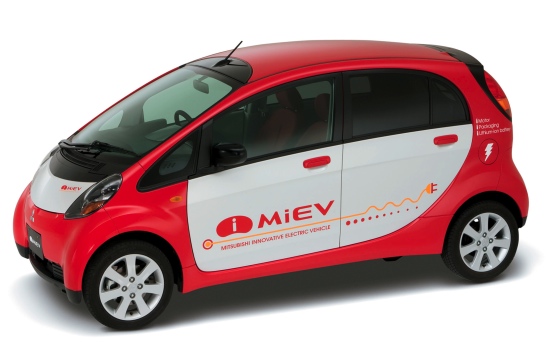
Mitsubishi iMiev

It seems our favorite media darling, the Chevy Volt, will have bit of competition when it comes time for it’s eventual release in 2010. Though we’re not sure if it will make it to the US (like the Smart Car EV), we do know that Mitsubishi’s iMiev will make it to market a year earlier than the Volt and be priced lower.

The iMiev, which we start hearing about earlier in the year, has already been slated by Mitsubishi for commercial sale in Japan in 2009, a full year before the Volt is intended to hit US shores. There are also unconfirmed rumors that the iMiev may also make it to the US after a run of a few years in Japan. However, what’s really interesting about the iMiev right now is that Mitsubishi has just released a price figure of what $37,496 US, which is about $2,500less than we often hear talked about as the price point for the Chevy Volt.

Despite the similarities in pricing and release date, the two cars are very different beasts. The iMiev is based on a current Kei-car produced by Mitsubishi for Japan, and has a 47kW electric motor powered by a 330-volt lithium ion battery pack. The car will have a top speed of 80 mph and an all electric range of about 100 miles. Charging will take place via a normal power outlet and should take about 14 hours to completely charge the battery, though there is all a 220V charge option, which only takes 7 hours.

On the other hand, the Volt will feature a sportier 120kW motor and 100+ mph top speed, but will only have an electric range of 20 or 40 miles (depending on the speculation and model selection), after which is will switch over to your standard dinosaur burning engine like in most cars these days. Chevy claims that most people never drive over 40 miles in a day, but I’m sure these Volts will be burning enough fossil fuels that calling them “electric cars” will leave a bitter taste in some peoples’ mouths. I think series hybrid or plug-in hybrid is much more appropriate.

While you’re getting hyped up for the iMiev, check out this test drive video from Popular Mechanics:

13 Things Your Waiter Won't Ever Tell You


1. Avoid eating out on holidays and Saturday nights. The sheer volume of customers guarantees that most kitchens will be pushed beyond their ability to produce a high-quality dish.

2. There are almost never any sick days in the restaurant business. A busboy with a kid to support isn't going to stay home and miss out on $100 because he's got strep throat. And these are the people handling your food.

3. When customers' dissatisfaction devolves into personal attacks, adulterating food or drink is a convenient way for servers to exact covert vengeance. Waiters can and do spit in people's food.

4. Never say "I'm friends with the owner." Restaurant owners don't have friends. This marks you as a clueless poseur the moment you walk in the door.

5. Treat others as you want to be treated. (Yes, people need to be reminded of this.)

6. Don't snap your fingers to get our attention. Remember, we have shears that cut through bone in the kitchen.

7. Don't order meals that aren't on the menu. You're forcing the chef to cook something he doesn't make on a regular basis. If he makes the same entrée 10,000 times a month, the odds are good that the dish will be a home run every time.

8. Splitting entrées is okay, but don't ask for water, lemon, and sugar so you can make your own lemonade. What's next, grapes so you can press your own wine?

9. If you find a waiter you like, always ask to be seated in his or her section. Tell all your friends so they'll start asking for that server as well. You've just made that waiter look indispensable to the owner. The server will be grateful and take good care of you.

10. If you can't afford to leave a tip, you can't afford to eat in the restaurant. Servers could be giving 20 to 40 percent to the busboys, bartenders, maître d', or hostess.

11. Always examine the check. Sometimes large parties are unaware that a gratuity has been added to the bill, so they tip on top of it. Waiters "facilitate" this error. It's dishonest, it's wrong-and I did it all the time.

12. If you want to hang out, that's fine. But increase the tip to make up for money the server would have made if he or she had had another seating at that table.

13. Never, ever come in 15 minutes before closing time. The cooks are tired and will cook your dinner right away. So while you're chitchatting over salads, your entrées will be languishing under the heat lamp while the dishwasher is spraying industrial-strength, carcinogenic cleaning solvents in their immediate vicinity.

Volkswagen's 235-MPG Bullet-Shaped Hybrid - Updates

You may feel a little like batman when you get behind the wheel of VW’s upcoming hybrid, but your super power will be in the MPGs. Back in May we talked about VW’s plans to build a diesel-electric hybrid based on their One-Liter Car, with a release date of 2010. We have a few updates about their zippy little car.

The electric and diesel propulsion systems together are expected to get a whopping 235 miles per gallon, that much we know. We also hear that the fuel savings is maximized with a few little tricks – the engine shuts off at stop lights, for instance, the body is very light weight (the concept car weighs 640 pounds, with a body made of carbon fiber), and the aerodynamics are superb (the concept car’s drag coefficient is about half that of an average car).

Dimensions are about 11.4 feet long, 4.1 feet wide and 3.3 feet tall – talk about itty bitty! It’s not far off in size from their three-wheeler idea. But apparently it’s safe, as VW reports that the One-Liter Car is as safe as a GT sports car registered for racing, and comes complete with airbags and crunch control. Yeah, but that doesn’t do much to put your mind at ease when you’re essentially sledding down the road at high speeds.

Because the concept car is made of carbon monocoque, VW planned to wait intil the price of the material dropped to a reasonable amount, which they guessed would be in 2012. However, they’ve decided the cost is competitive enough to go ahead and get cracking, though that means the sticker price may fall between $31,750 to $47,622, according to Britain's Car magazine’s “well placed source.”

We’ll see how all these little nuggets given to us change as the car comes closer to release. It sounds like it’ll be a fun and efficient little car, but I have a hard time seeing Americans riding to work together tandem-style.

Bush gives Isreal the OK to bomb Iran

Well, shit.....its about time!!!

read more | digg story

The New Mozart: Blind girl plays any song after one listen

By Chris Laker

A blind five-year-old pianist from South Korea has stunned the music world after a video of her performance received more than 27million hits.

Yoo Ye-eun, who was born blind and adopted in 2002, has never had a formal piano lesson but can play any song after just one listen.

And now her remarkable talent is set to propel her to stardom as clips of her amazing performance have attracted millions of viewers to Korean website Pandora TV. A similar clip on YouTube has so far received two million hits.

Her display on 'Star King', a Korean talent show, earned the youngster £500 in prize money and moved the studio audience to tears.

Moving: Clips featuring Yoo Ye-eun have taken the internet by storm

The video opens with the gifted youngster being lifted up to the piano seat by the show's host, before settling down to play.

Ye-eun's adoptive mother, Park Jung Soon, said: 'She has perfect pitch even though she has never learnt to play. We never taught her.'

In May she performed a duet of 'You Raise me Up' with seven-year-old British singer Connie Talbot, who last year starred in reality show Britain's Got Talent.

After taking part in the national celebrations for Korea Day, the five-year-old's rise to fame continued last week with a performance in front of the Singapore Prime Minister, Lee Hsien Loong.

The youngster has been dubbed 'a five-year-old genius Mozart' and her performances have led to many offers, including one from doctors who tried but failed to restore her sight.

Ye-eun, whose act includes classics from such composers as Mozart, Beethoven and Chopin, practices every day and says her ambition is to become 'a great pianist.'


High Def Widscreen Panoramic View from Mars


This is just incredible!!!!! Very Large picture.....

Click here for HD PIC | digg story

America's 11 Greatest Beach Towns


Want close? Want old-fashioned? Want a town where you can park the car, drag a beach chair and a cooler of beers to the sand, and then shuffle down the boardwalk in flip-flops? Well, look no further. These are 11 great American seaside escapes, from classic fun-in-the-sun California to New England colonial charm.

read more | digg story

Can’t Find a Parking Spot? Check Smartphone

Peter DaSilva for The New York Times

The system uses a wireless sensor embedded in a 4-inch-by-4-inch piece of plastic, fastened to the pavement adjacent to each parking space.


SAN FRANCISCO — The secret to finding the perfect parking spot in congested cities is usually just a matter of luck. But drivers here will get some help from an innocuous tab of plastic that will soon be glued to the streets.

This fall, San Francisco will test 6,000 of its 24,000 metered parking spaces in the nation’s most ambitious trial of a wireless sensor network that will announce which of the spaces are free at any moment.

Can’t Find Parking Spot? Check Smartphone

Peter DaSilva for The New York Times

Tod Dykstra, left, chief of Streetline, and Scott Dykstra glue down sensors.

Drivers will be alerted to empty parking places either by displays on street signs, or by looking at maps on screens of their smartphones. They may even be able to pay for parking by cellphone, and add to the parking meter from their phones without returning to the car.

Solving the parking mess takes on special significance in San Francisco because two years ago a 19-year-old, Boris Albinder, was stabbed to death during a fight over a parking space.

“If the San Francisco experiment works, no one will have to murder anyone over a parking space,” said Donald Shoup, a professor of urban planning at the University of California, Los Angeles, whose work on the pricing of parking spaces and whether more spaces are good for cities has led to a revolution in ideas about relieving congestion.

“It will have a cascade of positive effects on transportation and the economy and environment,” he said. About a dozen major cities are in discussions with technology companies to deploy so-called smart parking systems, though San Francisco is ahead in its efforts.

New York City is not among them. The Bloomberg administration’s plan for easing traffic through a congestion pricing plan died in the State Legislature this spring, though high gas prices are reducing traffic somewhat on their own.

Not that New Yorkers need any reminders of their traffic problems, but a study released in June by Transportation Alternatives, a public transit advocacy group, reported that 28 percent to 45 percent of traffic on some streets in New York City is generated by people circling the blocks.

The study also said that drivers searching for metered parking in just a 15-block area of Columbus Avenue on Manhattan’s Upper West Side drove 366,000 miles a year.

Gavin Newsom, San Francisco’s mayor, said that better parking systems were part of a broader approach to managing congestion without imposing restrictive tolls, as used in London and Singapore to discourage driving in downtown areas.

For Mr. Newsom the largest part of the challenge is replacing the city’s aging infrastructure.

“When I watch the movie ‘Vertigo,’ ” I still recognize every single traffic signal,” said the Mr. Newsom, referring to the 50-year old Alfred Hitchcock film.

SFpark, part of a nearly two-year $95.5 million program intended to clear the city’s arteries, will also make it possible for the city to adjust parking times and prices. For example, parking times could be lengthened in the evening to allow for longer visits to restaurants.

The city’s planners want to ensure that at any time, on-street parking is no more than 85 percent occupied. This strategy is based on research by Mr. Shoup, who has estimated that drivers searching for curbside parking are responsible for as much of 30 percent of the traffic in central business districts.

In one small Los Angeles business district that he studied over the course of a year, cars cruising for parking created the equivalent of 38 trips around the world, burning 47,000 gallons of gasoline and producing 730 tons of carbon dioxide.

To install the market-priced parking system, San Francisco has used a system devised by Streetline, a small technology company that has adapted a wireless sensor technology known as “smart dust” that was pioneered by researchers at the University of California, Berkeley.

It gives city parking officials up-to-date information on whether parking spots are occupied or vacant. The embedded sensors will also be used to relay congestion information to city planners by monitoring the speed of traffic flowing on city streets. The heart of the system is a wirelessly connected sensor embedded in a 4-inch-by-4-inch piece of plastic glued to the pavement adjacent to each parking space.

The device, called a “bump,” is battery operated and intended to last for five and 10 years without service. From the street the bumps form a mesh of wireless Internet signals that funnel data to parking meters on to a central management office near the San Francisco city hall.

Streetline has technology that will display open parking spaces on Web sites that can be accessed through wireless devices like smartphones. They are also developing a low-cost battery-operated street display that will be able to alert drivers to open parking spots nearby.

The San Francisco project is part of a more ambitious sensor network that will use technology for a range of services. It will be possible to monitor air quality as well as deploy noise sensors that act as sentries for everything from gunshots to car crashes. Advocates assert that wireless sensor technology is now so inexpensive and reliable that it is practical to use for essential city services.

“The broader picture is what we’re building is an operating system for the city that allows you to talk to or control all the inanimate objects out there to reduce the cost and improve quality of city services,” said Tod Dykstra, chief executive of Streetline, the company that is supplying the wireless sensor technology to San Francisco.

Mr. Newsom thinks that San Francisco will rally behind the sensor technology and will expand it to all of the city’s on-street and parking garage spaces in 2010.

“There isn’t a person who hasn’t experienced the travails of going around the block multiple times searching for a parking space, using gas and wasting time and generating greenhouse gases,” he said. “It will scale in people’s consciousness to the point that the public will demand more.”

New Backpacks Keep Cow's Farts - Scientists To Study Assgas


Now here is something you’d think you’d only see on The Simpsons. And yet, here it is – scientists are testing out plastic backpacks the capture a cow’s gassy expulsions, to see if this can combat global warming. By capturing the methane expelled by cows, Argentine scientists hope that they’ll be better able to understand the impact the gas has on global warming.

Considering that cow flatulence makes up over 30% of Argentina’s greenhouse emissions, and that methane is >23 times more heat-trapping than CO2, I can see why the scientists interested in pursing this. They’re also changing up cows’ diets to see if that helps them produce less gas, giving them clover and alfalfa rather than grain to help them produce as much as 25% less gas – kind of a major DUH thing to do considering cows are evolved to eat clover and alfalfa and not grain anyway, so a diet of grain is bound to give them a bit of indigestion.

Anyway, the backpacks don’t seem to bother the cows much, and we’ll have to wait and see the results of these odd tests – and wait to see if someone figures out how to run cars on the methane collected from feedlots…and, um, other sources. Personally, I say we all just eat less red meat and skip manufacturing yet more plastic or wasting time on selective breeding.However, I love the fact that cattle emissions is getting the attention it needs, and I won’t bash on this backpack much – and I won’t even get started on the long list of issues to using this on a large scale – because it’s likely not going to be a realistic solution to global warming anyway.

This Colgate Toothpaste Packaging Is Awfully Deceptive

Logan thought this bonus pack of Colgate contained two equally-sized tubes of toothpaste. After all, the boxes are exactly the same size. Yet when he opened the bonus box, he found a smaller box containing a mini tube of toothpaste.

Logan writes:

I bought some toothpaste last night as my wife an I had been surviving on tiny, dentist-issued travel tubes for the past couple weeks. We're lazy, so to save ourselves the trip after the next big tube was gone, I decided to buy a double pack of toothpaste. Thinking that the marginal savings of bundled toothpaste was the way to go, I grabbed a healthy sounding combo and was one may way. When I got home though, I was in for a big surprise. When I pulled the "Bonus" tube out of its box, it was actually in another, smaller box. Whaaaaat? Why the double boxing? Was it for packaging reasons? Or was it to hide the widespread reach and effectiveness of the the product shrink ray?

This isn't the feared Grocery Shrink Ray. This is deception, pure and simple. The weasels running Colgate's marketing team stuck to the law by printing the net weight on both boxes, but they clearly want consumers to assume that the boxes are the same size.

Way to waste an extra box, Colgate!

Rebooting the Body with Ketamine

A family struggles to get an experimental German treatment prohibited in the United States. The treatment will put their son in a coma for five to seven days, during which his body is filled with massive amount of ketamine in an attempt to “reboot” the system.

read more | digg story

Nintendo Introduces Wii Motion Plus


Nintendo's just announced Wii MotionPlus, an accessory for the Wii Remote. The add-on attaches to the bottom of the Wii-mote and more accurately traces motions in 3-D space by better orienting the controller. Hit the jump for the full press release details.

We expect Nintendo to divulge more at its E3 press conference tomorrow.

NINTENDO INTRODUCES THE WII™ MOTIONPLUS
July 14, 2008
Nintendo's upcoming Wii™ MotionPlus accessory for the revolutionary Wii Remote™ controller again redefines game control, by more quickly and accurately reflecting motions in a 3-D space. The Wii MotionPlus accessory attaches to the end of the Wii Remote and, combined with the accelerometer and the sensor bar, allows for more comprehensive tracking of a player's arm position and orientation, providing players with an unmatched level of precision and immersion. Every slight movement players make with their wrist or arm is rendered identically in real time on the screen, providing a true 1:1 response in their game play. The Wii MotionPlus accessory reconfirms Nintendo's commitment to making games intuitive and accessible for everyone. Nintendo will reveal more details about the Wii MotionPlus accessory and other topics Tuesday morning at its E3 media briefing.

Read More:

Bugatti Successor planned


AMSTERDAM, Netherlands — Bugatti is preparing a successor to the 16-cylinder Veyron in 2011 or 2012, but the future model won't take a radically different path, according to CEO Franz-Josef Paefgen.

Paefgen, who heads both Bugatti and Bentley, was interviewed by the Dutch publication AutoVisie. He said that by 2011 or 2012, "there will be a completely new model" to replace the current Veyron, which is adding a targa model in 2009. The newcomer, added Paefgen, "must fit into the Bugatti history but also to the Veyron. A totally different direction is not an option."

Paefgen also told the publication that he wants to take Bugatti back into motorsports (Pierre Veyron was the co-driver of the 1939 Le Mans winner) — but "not with the Veyron."

What this means to you: Paefgen knows his automotive history well and appreciates how much the heritage of Bugatti underpins the brand.

Iphone firing on all cylinders(almost)

Iphone3g_studio_24

It's not the groundbreaking, industry-changing event that the original iPhone was. But the iPhone 3G is a worthy upgrade to Apple's smartphone, and fixes a few flaws that kept many people from buying the first version.

The addition of fast 3G wireless data, GPS and a more flexible, extensible operating system mean the iPhone is now entirely competitive with almost every other smartphone on the market. And its new, lower purchase price will remove the final obstacle to purchase for many people. In short, this phone is about to become very, very popular, as it deserves to be.

Physically, the phone is nearly identical to the previous generation. It measures 2.4 x 4.5 x 0.4 inches, and weighs 4.8 ounces, making it just 0.1 inch wider and 0.3 ounces lighter than the iPhone 1.0. It feels substantially thinner, thanks to tapered edges, which make it sit more comfortably in the hand. Instead of a silver aluminum back, the new iPhone has a plastic backing, available in either glossy black or shiny, iMac white. The screen and 2-megapixel camera are identical to those in the older iPhone, but the external speakers are much improved. Call quality was noticeably clearer in our initial tests.

App Store

The most innovative and compelling feature of the new iPhone has nothing to do with the hardware -- it's a software upgrade. In fact, this upgrade is available for free to current iPhone owners (and as a $10 software upgrade for iPod Touch owners). The App Store contained within the iPhone 2.0 operating system transforms the iPhone/iPod Touch from mere devices into a full-blown platform, massively multiplying their usefulness by providing a wide array of new applications. There are more than 550 apps available in the App Store so far (although more than 100 appear to be public-domain e-books), ranging from useful toys and productivity apps to iPhone games to apps for scientists and science lovers. And Apple has really nailed the customer experience here. Browsing, purchasing and downloading mobile software has never been easier.

Photos: Jonathan Snyder/Wired.com

Iphone3g_studio_12


Fast Data and GPS

One of the biggest shortcomings of the iPhone's first-generation model was its reliance on AT&T's slow EDGE data network. The new 3G data support means that the iPhone can download data 2-3 times faster than the old model. Of course, it still has WiFi support, and based on early reviews, you may want to use WiFi whenever it's possible, because 3G usage will drain the iPhone's batteries quickly.

It's probably not a must-have feature for most users, but the addition of a GPS receiver is a welcome enhancement. The iPhone OS can now use a combination of GPS data and triangulation from WiFi hotspots and cell-tower locations to establish its location. This feature has worked well in our testing so far, and we expect its usefulness to expand as an increasing number of applications start to take advantage of it.

Sign Up and Activation Problems

Thanks in part to heavy demand and insufficient capacity, the phone's launch today did not go smoothly. The iPhone went on sale in dozens of countries worldwide today, and in some cases, there were distribution problems. AT&T's and Apple's servers both suffered from heavy traffic loads, preventing many customers from being able to begin using their phones (greatly irritating some users, and provoking mirth among others). We tried for several hours to activate our iPhone, only succeeding about 2 p.m. Pacific -- five hours after we'd purchased the phone.

The problems seem to have cleared up now, however, and reports suggest that activation is proceeding much more quickly. Part of the activation process must be completed in an Apple or AT&T store, part of it can be done via iTunes. It lacks the innovative simplicity of the original iPhone's hassle-free sign-up process, but on the whole, it's a less onerous sign up than you'll face in most cellphone stores.

Bottom Line

If you already have an iPhone (first generation) or an iPod Touch, this is not a necessary upgrade. Instead, upgrade the operating system via iTunes, and you'll be able to take advantage of the App Store and all the software it contains.

But if you don't have an iPhone, now is a very good time to buy one. The price cut is worth less than Apple's ads would have you believe, since the $200 price ($300 for the 16GB version) is coupled with a two-year cellular service contract. In the U.S., AT&T's iPhone 3G contract will cost $10 more than the old version did ($70 for a package with unlimited data usage and the minimum number of minutes, 450 per month), pretty much erasing any price difference.

But let's put this in context: the handset and service pricing are extremely competitive with other smartphones (including a wide variety of iPhone-like iClones). While the iPhone still has some notable shortcomings -- no replaceable battery, a mere 2 megapixels in the camera, no video recording capabilities -- it is an impressively useful, well-thought-out device, and comes at a reasonable price.

Add in the growing array of software in the iTunes App Store, and you have a device that will get more useful, not less useful, with time. You can't say that about most other phones.

Specs: Apple iPhone 3G
3G wireless data
WiFi
Bluetooth
GPS
2-megapixel camera
iPhone 2.0 OS
3.5-inch multi-touch LCD
320 x 480 pixel display

$200 (8GB) or $300 (16GB), with two-year AT&T contract (prices and carriers will vary in other countries)
apple.com

This day in tech 1850-Dr Gorrie's Ice maker

John Gorrie's ice-making machine got a dramatic debut.
Diagram: U.S. Patent 8,080, May 6, 1851.

1850: Florida physician John Gorrie uses his mechanical ice-maker to astonish the guests at a party. It's America's first public demonstration of ice made by refrigeration.

William Cullen had demonstrated the principle of artificial refrigeration in a University of Glasgow laboratory in 1748, by allowing ethyl ether to boil into a vacuum. American Oliver Evans designed in 1805 -- but never built -- a refrigeration machine that used vapor instead of liquid. Jacob Perkins used Evans' concept for an experimental volatile-liquid, closed-cycle compressor in 1834.

Nonetheless, mid-century cooling in the tropics and subtropics -- and in the temperate summer -- relied on natural ice blocks carved from frozen lakes and rivers in the North, kept in shaded sheds and cellars under layers of sawdust for insulation, and often delivered at great expense by specially fitted ice ships.

Gorrie was born in the tropics, on the Caribbean island of Nevis. He received his medical education in New York state before settling in the Florida cotton-shipping port of Apalachicola. There, he served at various times as mayor, justice of the peace, postmaster and bank president, besides carrying on his medical practice.

It would be another half-century before the causes of the killer diseases malaria and yellow fever were discovered, but Dr. Gorrie knew they relied on heat and moisture to propagate. He urged the draining of swamps and the enforcement of hygiene in the town's food market.

Gorrie also sought to improve the survival rate of his feverish patients by cooling them down. He suspended pans of ice water high in their sickrooms, so the cooled, heavy air would flow downward.

But ice was expensive in the Florida summer and often completely unavailable. Gorrie wanted to make it mechanically. He wrote:
If the air were highly compressed, it would heat up by the energy of compression. If this compressed air were run through metal pipes cooled with water, and if this air cooled to the water temperature was expanded down to atmospheric pressure again, very low temperatures could be obtained, even low enough to freeze water in pans in a refrigerator box.

Gorrie began tinkering with compressor-coolers and had a working model by the mid 1840s. The power source was irrelevant to his invention: It could be driven by wind, water, steam or the brute force of an animal.

He applied for patents in 1848 and had a prototype built in Ohio by the Cincinnati Iron Works. It was described in Scientific American the following year, but Gorrie still had to attract venture capital to fight the existing ice-block industry.

He arranged a dramatic demonstration of his machine for a social, rather than medical, occasion. It was a muggy July in Florida. Ice from the North had been exhausted. Gorrie attended an afternoon reception given by the French consul to honor Bastille Day.

The doctor first complained about drinking warm wine in hot weather, then suddenly announced, "On Bastille Day, France gave her citizens what they wanted. [Consul] Rosan gives his guests what they want, cool wines! Even if it demands a miracle!"

Then he signaled for waiters to enter with bottles of sparkling wine on trays of ice. Mechanically made ice in the sweltering Florida summer: It was a sensation. Smithsonian magazine dubbed that party the "chilly reception."

Gorrie received a British patent a month later and U.S. patent 8,080 on May 6, 1851, but he failed at business. His business partner died, and Gorrie's inefficient, leaky machines were mocked in the press by the ice-shipping establishment. He died in poverty and ill health in 1855, still in his early 50s. It would take Frenchman Ferdinand P.E. Carre's closed, ammonia-absorption system (patented in 1860) to make way for practical, widespread mechanical refrigeration.

Florida has honored Gorrie by placing his statue in the National Statuary Hall collection in the U.S. Capitol. (The other Florida statue is Confederate Gen. Edmund Kirby Smith.)

So, have a happy Bastille Day (or joyeux Fête Nationale), chill out and lift a cold one to the father of refrigeration. You can use the very words spoken 158 years ago: "Let us drink to the man who made the ice: Dr. Gorrie."

Microsoft cuts price of XBOX $50, adds new 60GB model

SEATTLE (AP) -- Microsoft Corp. is trimming the price of its Xbox 360 video game console to make way for a new model with a bigger hard drive.

Starting Sunday, Microsoft's mid-range Xbox 360 console with a 20-gigabyte hard drive will cost $299 in the U.S., down from $350.

Blogs have carried rumors of the decision since June, when photos depicting the $299 price tag were posted to the Internet.

An updated Xbox 360 is set to arrive in stores in early August. The $350 replacement will sport a 60GB hard drive, significantly more space for storing the games, TV shows and movies Microsoft sells on its Xbox Live Marketplace Web site.

Microsoft also is expected to give the Xbox a little extra appeal by streaming movies and TV episodes through a high-speed Internet service offering by Netflix Inc. The long-rumored deal could be announced as early as Monday at a video game conference in Los Angeles.

Microsoft did not adjust prices for its more basic Xbox 360 Arcade version, which has just 256 megabytes of storage and costs $280, or for the Xbox 360 Elite, a $450 model with a 120GB hard drive.

The Redmond, Wash.-based company released its next-generation game console in 2005, a year ahead of competing machines from Nintendo Co. and Sony Corp.

As of the end of May, Microsoft had sold 10.3 million Xboxes in the U.S., according to data from market researchers NPD Group. By comparison, Nintendo had sold 10.2 million Wii consoles, and Sony had sold 4.5 million PlayStation 3 machines.

Nintendo has kept the Wii's price at $250 since its U.S. launch in November 2006, while Microsoft and Sony have made several cuts to console prices in different regions. Currently, PS3 models cost $400 to $500 in the U.S.

First detailed map of the Human Cortex


Cortical core: Scientists used a new type of brain imaging called diffusion spectrum imaging, along with mathematical analysis, to build a map of the cortical architecture of the human brain, shown here. The blue lines represent neural fibers connecting different parts of the brain. To make the map easier to understand, only the strongest connections are shown. Letters indicate anatomic subregions of the brain.
Credit: Indiana University, University of Lausanne, EPFL

The first high-resolution map of the human cortical network reveals that the brain has its own version of Grand Central Station, a central hub that is structurally connected to many other parts of the brain. Scientists generated the map using a new type of brain imaging known as diffusion imaging. The technique maps the largely inaccessible tangle of the brain's white matter--the long, thin fibers that ferry nerve signals between cells. Scientists hope that using the noninvasive method to study neural connections in people with Alzheimer's, schizophrenia, and autism will shed light on how changes in brain architecture are linked to these complex diseases.

"The fact that such a core exists gives rise to many questions we can now ask about it," says Olaf Sporns, a neuroscientist at Indiana University, in Bloomington, and senior author of the study, published this week in PLoS Biology. "What goes on there? And how is it involved in passing messages between different parts of the brain?"

Conventional imaging techniques, such as structural magnetic resonance imaging (MRI), reveal major anatomical features of the brain. But in humans, the brain's finer architecture--the neural projections that connect its different parts--has, until recently, remained hidden. "The brain we've been looking at with conventional MRI or CT scans all these years is not the real brain," says Van Wedeen, a neuroscientist at Massachusetts General Hospital, in Boston, who was also involved in the study. "We're just seeing a shadow of its surfaces."

Diffusion imaging is a new twist on MRI that uses magnetic resonance signals to track the movement of water molecules in the brain.In gray matter, water tends to diffuse multidirectionally. But in white matter, it diffuses along the length of neural wires, called axons, and scientists can use these diffusion measurements to map the fibers.The newest incarnation of diffusion imaging, called diffusion spectrum imaging, allows scientists to perform a very difficult feat: determining the direction of overlapping nerve fibers. "That's very important for noninvasive mapping of brain connectivity," says Wedeen, who developed the technique.

Wedeen and his collaborators used diffusion spectrum imaging to image the brains of five healthy volunteers, generating a wiring map of the entire cortex. To reveal the core of the network, Sporns used a mathematical technique to repeatedly prune away the connection points with the fewest links. "If you do it gradually, you end up with a set of nodes remaining that are highly interconnected," he says.

The most highly connected node, which Sporns dubbed the core, is located at the back of the head, in parts of the brain known as the posterior medial and parietal cerebral cortex. The node lies on the shortest path between many different parts of the neural network. "It's highly connected amongst itself, but also highly central with respect to the rest of the brain," says Sporns. "Network studies in other fields, from the Internet to protein interaction networks, suggest that these kinds of highly connected nodes tend to be very important for determining what the network does as a whole."

Previous functional brain-imaging studies have also highlighted this region: it's one of the most metabolically active parts of the brain, particularly when people are cognitively at rest, meaning that they are awake and alert but not engaging in any particular task. "People refer to this as the resting state, daydreaming, or self-referential processing," says Sporns. As part of the new study, Sporns and his colleagues also used functional magnetic resonance imaging to measure blood flow to different parts of the brain. They found that it correlated with the level of white-matter connectivity in the individual subjects.

The researchers want to use the imaging technique to look at clinical conditions such as schizophrenia, autism, and Alzheimer's disease, all of which have been linked to disturbances in brain architecture. "We would like to know where the disturbances are and whether we can understand something about the clinical condition based on the connectivity," says Sporns.

However, scientists will likely need to improve the technique before they can use it to study patients. Getting enough detail to make the maps requires longer scanning times than are typical in clinical settings. "Right now, this probably isn't practical to look at large populations of patients," says Marco Catani, a clinical neuroscientist at the Institute of Psychiatry, in London, who was not involved in the study.

The researchers are already trying to refine their approach, generating new methods to improve the signal-to-noise ratio of the data they collect. They consider their new map just the first of many drafts. "We're not yet at the level where we can sequence the brain with the same kind of precision with which we could sequence the genome," says Wedeen. "Only when we see the organs of the brain--a few hundred areas of gray matter with distinct functions, and the connections between them--will we have an image of the brain that is comparable to what we expect the structure to be."

Energy from Waves


Catching waves: A U.K.-based company has come up with a simple design for a device that harnesses wave power: a water-filled rubber tube floating just under the ocean’s surface. Waves create bulges inside the tube that travel along it and drive a turbine attached at the other end.
Credit: Engineering and Physical Sciences Research Council, UK

The ocean's waves have enough energy to provide two trillion watts of electricity, according to the Department of Energy's office of Energy Efficiency and Renewable Energy. Extracting that enormous resource of power, however, has proved to be a herculean challenge.

A new device being developed by U.K.-based Checkmate SeaEnergy could help tap a portion of this wave power. The device, aptly named the Anaconda, is a long, water-filled rubber tube closed at both ends. It currently exists as a small laboratory-scale model, but it could eventually be 200 meters long and seven meters in diameter. At such a size, it will be capable of generating one megawatt of power at about 12 cents a kilowatt-hour, which is competitive with electricity costs from other wave-power technologies.

The one-megawatt Anaconda, which will use about 110 tons of rubber, should be lighter and cheaper than other wave-exploiting designs, says John Chaplin, a civil-engineering professor at the University of Southampton, in the United Kingdom, who is testing the lab-scale device. It is also simpler, with fewer moving parts and hinges, which means less maintenance. Since it is a pliant rubber tube, it should be able to survive severe weather conditions. "We don't really know how Anaconda works in big waves yet, but intuitively, it seems likely that it's going to be able to survive big waves," Chaplin says.

The Anaconda will face plenty of competition from other wave-power devices that have already reached commercial-scale deployment. Scotland-based Pelamis Wave Power's snakelike device was the first to provide power to the grid when it was installed off the coast of Orkney, Scotland, in 2004. In October 2007, Pelamis deployed three of its 750-kilowatt devices--770-ton, 120-meter-long chains of metal cylinders--off the coast of Portugal. Other companies, such as Finavera Renewables of Vancouver, AWS Ocean Energy of Scotland, and Ocean Power Technologies of Pennington, NJ, are testing bobbing buoy-type devices. In addition, others are developing technology to exploit tidal energy.

The Anaconda floats horizontally just below the ocean's surface, tethered to the ocean floor at one end, facing oncoming swells, with a turbine attached, at the other. A wave hitting the tube creates a bulge in the water inside. The bulge travels down the tube with a speed that depends on the diameter of the tube, wall thickness, and elasticity of the material, Chaplin says. The tube is designed so that the speed of the bulge is the same as the speed of the wave. The wave travels outside the tube alongside the bulge, making the bulge bigger and bigger, so that it drives the turbine with maximum power.

Embrace the Bear- up your contributions now!

Take It From Graham and Buffett,
These Miserable Markets Are
A Gift From the Financial Gods
July 12, 2008; Page B1
When you bought into the gospel of "stocks for the long run," did you have any idea how long the long run can turn out to be? Exactly 10 years ago, the Standard & Poor's 500-stock Index was at 1164; it closed Friday at 1239. That's an annualized average return of 0.63%. At that rate, it will take you 111 more years to double your money in the stock market.

Meanwhile, this newspaper, and most of Wall Street, has declared that stocks have officially entered a bear market now that the Dow Jones Industrial Average is 20% below its record high of last October. I think that's poppycock. We've been in a bear market for years; the Dow was almost 600 points higher in early 2000 than it is today. What about that 10% yearly return that U.S. stocks supposedly provide with near-certainty? To earn a 10% long-term return, according to Morningstar, you need to have bought at least 19 years ago and held on ever since.


Heath Hinegardner
Could things possibly get worse? I don't know, but I am an optimist -- so I certainly hope things do get worse. Nothing else should satisfy an intelligent investor.

This May, at the Berkshire Hathaway annual meeting, Warren Buffett boiled down what it means to be an intelligent investor into two startling sentences: "If a stock [I own] goes down 50%, I'd look forward to it. In fact, I would offer you a significant sum of money if you could give me the opportunity for all of my stocks to go down 50% over the next month." Knowing he owns good businesses, Mr. Buffett wants prices to go down, not up, so he can buy even more shares more cheaply before the bounce back.

In the last long bear market, 1969 to 1982, stocks returned just 5.6% annually; after inflation, investors lost more than 2% a year. That mauling by the bear made stocks so inexpensive that over the ensuing 18 years they went up 18.5% a year, enough to turn $10,000 into more than $200,000.

The people who so far this year have yanked $39 billion out of U.S. stock funds, and $6 billion out of exchange-traded stock funds, do not understand this. But if you are still in your saving and investing years, a bear market is a gift from the financial gods -- and the longer it lasts, the better off you will be. Instead of running from the bear, you should embrace him.

This new column takes its name from the classic book by Benjamin Graham, who wrote that "the investor's chief problem -- and even his worst enemy -- is likely to be himself." I hope to help you understand the chaotic markets around you, and the even more treacherous enemy within. For, as Mr. Buffett has also pointed out, investing is much like dieting: It is simple, but not easy. Everyone knows what it takes to lose weight. (Eat less, exercise more.) Nothing could be simpler, but few things are harder in a world full of chocolate cake and Cheetos.

Likewise, investing is simple: Diversify, buy and hold, keep costs low. But simple isn't easy in a market seething with "free" online trades, funds that promise to transform losses into gains, and TV pundits who shriek out trading advice as if their underpants were on fire. The real secret to being, or becoming, an intelligent investor is bolstering your self-control.

So, in these columns, I will seek to combine the wisdom we can glean from Graham with the latest insights from psychology, neuroscience and behavioral economics. The result, I hope, will be practical advice that can increase your odds of reaching your financial goals.

For now, bear this in mind: That which does not kill investors makes them stronger. Physiologists have shown that minuscule doses of poison may actually make organisms (including humans) healthier, a phenomenon called hormesis. I do not recommend seasoning your food with cyanide.

But the findings on hormesis do remind us that painstaking investors -- literally, those who can take the pain of a bear market that seems to drop another 1% every day -- will ultimately triumph, by patiently amassing greater and greater equity positions at better and better prices. The ancient King Mithridates of Pontus is said to have made himself immune to poison in constant gradual doses, a tale retold by the poet A.E. Housman:

They put arsenic in his meat
And stared aghast to watch him eat;
They poured strychnine in his cup
And shook to see him drink it up....
I tell the tale that I heard told.
Mithridates, he died old.

Mossberg's 10 things worth checking out on the new Iphone

I’ve spent part of the weekend downloading and trying out dozens of the more than 800 new third-party iPhone applications that launched with the debut of Apple’s (AAPL) “App store.” The store is part of the new iPhone 2.0 operating system, which not only comes with the new iPhone 3G, but is also a free upgrade on older iPhones and a $10 upgrade on the iPod Touch.

These first applications range from serious programs for doctors and pilots to silly parlor tricks that take advantage of the iPhone’s motion sensors. One, called PhoneSaber, merely displays an image of a Star Wars-like light saber and makes varying light saber noises as you wave the phone in the air.

Here are ten apps I think you might enjoy checking out, in no particular order. These aren’t meant as full reviews, just pointers to interesting items. There may be ten others, or 200 others, you think worthier of attention. Feel free to add comments with your own suggestions.

  1. AIM. Finally, a native iPhone program for accessing one of the world’s most widely used instant-messaging networks. It lacks some of the more rarified features of the PC or Mac versions, but does the basic text-chat thing quite well. One downside: because Apple isn’t allowing third-party programs to run constantly in the background, you can’t receive new messages in AIM while doing other things. This will supposedly be remedied by new Apple server technology due later this year.
  2. MotionX-Poker. This is a simple poker game played with dice instead of cards. But it can be mesmerizing, because it makes full use of the iPhone’s graphics engine and motion sensors. You play each hand by shaking the phone to roll gorgeously rendered 3D dice, which even sound like dice. The $5 game comes from Fullpower, a company developing many motion-based programs that was founded by software industry pioneer Philippe Kahn.
  3. TruPhone. This is an Internet phone-calling program that works over the iPhone’s Wi-Fi radio, potentially saving you big money over using the device’s regular cell phone capability, especially when calling internationally. Biggest downside in my initial tests: it sometimes worked and sometimes didn’t.
  4. FileMagnet. One of the frustrating things about the iPhone is that it has no easy way for users to transfer files from their computers and store them on the phone, even though it is capable of viewing many types of files. FileMagnet, which costs $5, places a small program on your computer, and then wirelessly transfers any files you drag into it to the FileMagnet program on the phone. It works with Microsoft Word files, PDF files, images and more. Biggest downsides: it only works on Macs, but I’d bet a similar Windows program will come along soon.
  5. SpeechCloud Voice Dialer. This free program allows you to dial anyone in your contact list by simply saying his or her name.
  6. Movies. This is a free service that lets you find movies in your area, watch the trailers, buy tickets to them, and view a map to the theater.
  7. Remote. This free program, written by Apple itself, allows you to control any copy of iTunes, on any Windows or Mac computer, over a local wireless network. It also works on Apple TV boxes.
  8. Where. One of many new IPhone apps that attempt to provide information based on your location, Where, which is free, aggregates local content from services like Yelp and Eventful, which also have their own iPhone apps.
  9. Pandora. The new iPhone version of the wildly popular Pandora music-streaming program, is also free. It creates personalized radio stations based on artists you like.
  10. MLB.com At Bat. This $5 program lets you track games in progress, which is no big deal. The big deal is that you can actually watch video clips of key plays before the games are over.

Budweiser bought by InBev

Anheuser-Busch Cos. agreed to be acquired by InBev NV for about $52 billion, creating the world's largest beer maker and placing an iconic American company in the hands of a Belgian-Brazilian giant.

The $70-a-share deal marks an abrupt end to what many expected to be a prolonged takeover drama. For weeks, Anheuser showed stiff resistance to a sale. But last week, InBev, based in Leuven, Belgium, drew its St. Louis rival into friendly discussions by increasing its original cash offer by $5 a share.

The companies plan to call the new brewer Anheuser-Busch InBev. Anheuser will have two seats on the board. The board, which will include Anheuser-Busch President and Chief Executive August Busch IV, will have 14 members, up from 12 currently on the InBev board.

[chart]

The deal caps Anheuser's roughly 150 years of independence and will create a global juggernaut. The new company will have net sales of about $36 billion a year, followed in size by London's SABMiller PLC. The two companies have about 300 brands, including Anheuser's Budweiser and Bud Light and InBev's Stella Artois and Beck's.

The agreement is evidence that even though the global mergers-and-acquisitions market has slowed as a result of the credit crisis, the appetite of many corporations for takeovers is still strong. It also shows that banks, despite the losses they have suffered on risky debt they took on in recent years, are willing to open their checkbooks to help fund combinations of strong companies.

The tie-up carries significant risks for InBev. Most of Anheuser's profit comes from the U.S. market, which is growing at a slow clip. Mass-market brewers face rising competition in the U.S. from small-batch "craft" beers, wines and spirits.

InBev and Anheuser don't have much overlap around the globe, so cost cuts from combining staffing and brewing operations may be harder to achieve than in other major beer-industry deals.

The deal with InBev closes the book on an American corporate dynasty. Anheuser and its predecessor companies have been led by members of the Anheuser or Busch families for most of the past 156 years.

Mr. Busch told beer distributors in April, before a formal bid materialized, that a sale wouldn't happen "on my watch." But the Busch family owns a small fraction of the company's stock, and Anheuser's directors were sensitive to their duty to serve public shareholders. Mr. Busch met with InBev CEO Carlos Brito in New York Friday, according to a person familiar with the matter.

Anheuser had few options to evade InBev. It approached its Mexican partner, Grupo Modelo SA, about buying the half of the brewer it doesn't already own, a move that might have made the U.S. brewer too expensive for InBev. But those talks fell through, say people familiar with the matter.

[Image]
Newscom

On June 26, Anheuser's board formally rejected InBev's original proposal of $65 a share, saying it substantially undervalued the dominant U.S. beer maker. However, the board indicated that it would be open to a higher price.

The takeover battle grew increasingly hostile. Last week, InBev began trying to sack Anheuser's board. Meanwhile, Anheuser sued InBev, accusing it of lying about its lending commitments.

The sale price marks a significant premium to where Anheuser shares traded before speculation of a deal emerged earlier this year. Anheuser shares had languished at about $50 a share for about five years. Before the rumors surfaced this spring, the stock's previous high was $54.97, in October 2002. The company's shares closed at $66.50 in 4 p.m. New York Stock Exchange composite trading Friday.

The deal sets up a battle in the U.S. beer market between two foreign giants: Anheuser-Busch InBev and SABMiller. The shift is likely to result in a leaner industry with fewer employees, but consumers probably won't benefit from the price wars they have enjoyed in the past.

The U.S. brewing industry will enter an era "where gaining market share is not going to be nearly as important as running costs out of the system," said Harry Schuhmacher, editor of industry newsletter Beer Business Daily. "It's been a pretty fat industry. Everybody has enjoyed a lot of perks, and there are a lot of people in the industry, probably too many."

The combination of InBev and Anheuser, along with the recently formed MillerCoors LLC, will together control about 80% of beer sales in the U.S., the world's largest beer market in terms of profit. MillerCoors is the recently completed joint venture combining the U.S. and Puerto Rican operations of Miller Brewing, the U.S. unit of SABMiller, and Coors Brewing, the American arm of Molson Coors Brewing Co. of Denver and Montreal. Anheuser controls nearly half the market and MillerCoors about 30%.

The reshaping of the U.S. beer sector in the past year has been driven by lackluster sales growth for mass-market brews such as Miller Lite and Budweiser and the desire by global brewers to gain economies of scale amid rising costs for commodities such as barley, aluminum and glass.

For years, Anheuser and Miller took jabs at each other's products in advertisements. And they often engaged in price wars to try to filch market share from each other. When Anheuser slashed prices in 2005, it was a boon to beer drinkers but reduced profits for the major beer makers.

Lately, the companies have been raising prices, in part to cover higher commodities costs.

A new industry architecture led by InBev, SABMiller and its partner, Molson Coors Brewing, is expected to focus more heavily on cost cutting.

MillerCoors is likely to cut hundreds of jobs in the coming months as Miller and Coors combine sales, marketing and other employee groups, says Benj Steinman, editor of industry newsletter Beer Marketer's Insights.

Meanwhile, Anheuser laid out plans to cut about 1,000 full-time salaried workers this quarter as part of an alternative to an accord with InBev. "You have to imagine InBev will go to that" level of head-count reductions, Mr. Steinman said.

The beer companies also are expected to stop selling certain packages or versions of their beers to trim costs, among other efforts to become more efficient.

InBev's corporate culture is focused heavily on cost controls, so some analysts think the company would take steps to slash Anheuser's hefty marketing budget, which could harm its brands. But Mr. Brito, InBev's chief executive, "is emphatic...that they would be nuts to mess up the business Anheuser has built," said Mr. Steinman. "The smart idea is to keep what's going right at A-B."

The increased consolidation of the U.S. beer industry worries some of the nation's smaller brewers, who fear they may have a harder time gaining distribution. "It narrows the options for small brewers to gain access to market," said Kim Jordan, chief executive of craft brewer New Belgium Brewing Co. of Fort Collins, Colo. "Recently, we've seen more interest among the Anheuser-Busch distributors in our products than ever before," but that might change with InBev running Anheuser.

The combination of Anheuser and InBev won't result in major changes to the lineup of beers sold by Anheuser's distributors. Many of them already sell InBev's European brews, such as Stella Artois, under an import deal between Anheuser and InBev that began last year. But the tie-up between Anheuser and InBev means that InBev's Canadian brands, such as Labatt Blue, will be part of the combined company.


Sunday, July 13, 2008

2009 BMW 3 series refreshed and updated

There have been many imitators over the years, but when you're in the market for a comfortable, everyday car that's as equally at home canyon-carving at triple-digit speeds as it is taking the kids to school, the BMW 3 Series is hard to beat.

Introduced as a 2006 model, the fifth-generation of BMW's iconic 3 Series sport sedan has continued this tradition -- especially after receiving a much-needed horsepower upgrade the following year. But recently, the Munich automaker's rivals have been catching up. Offerings from Mercedes, Infiniti, Cadillac, and Lexus now offer the 3 Series the stiffest competition it's seen in some time.


So for its third year on the market, BMW is giving its bread-and-butter model a healthy list of small improvements to make it even more desirable. Among the changes are (slightly) revised styling, an upgraded interior, simpler iDrive interface, in-car Internet access, a new audio system, and an optional dual-clutch transmission. The automaker's sublime 3.0L inline-six, available in naturally aspirated and twin-turbo forms, remains the same, but for the first time BMW is also giving Americans the option of a diesel powertrain -- and it could turn out to be the best of the bunch.

As before, the 2009 3 Series will be available as a sedan, wagon, coupe, and hardtop-convertible in either 328i and 335i form, utilizing a 3.0L inline-six good for 230 hp, or 300 in twin-turbo form. Styling changes are subtle but numerous and include a new hood with additional character lines, new side mirrors, reshaped taillamps, and a sharper crease running down each side. A revised front end makes the previous version's lines more prominent and adds a larger lower air intake, while the chrome accenting the car's signature kidney grille is less noticeable. Though at a distance the updates are hard to spot, overall the 2009 3 Series has a slightly sharper, more muscular appearance than its predecessor. All models receive LED turn signals and taillights as well.


Inside, BMW's changes are equally restrained, with new colors and materials as well as additional storage. A new stereo includes an 80-gig hard drive, USB input and optional iPod connector, while the nav system sports an 8.8-in. display. In addition the new 3 will be available with ConnectedDrive, the automaker's new EDGE-speed, in-car Internet access system, and now routes planned on the Internet can be fed directly into the 3's nav system, saving the hassle of inputting destinations manually. Like in the 7 unveiled earlier in the week, for 2009 the 3 Series also gains a revised iDrive system with more intuitive menus and drops the basic scroll wheel for a new controller allowing turn, push, and tilt motions. Major functions also can be accessed via four direct-select buttons, and much of the system is now voice-activated.

Along with the carryover engines, the 2009 3 Series sedan and wagon continue to feature a standard six-speed manual and optional automatic, but now buyers of the 335i coupe or convertible can opt for BMW's new seven-speed, dual-clutch DCT transmission as well. Offering lightning-fast shifts and no loss in traction, the DCT helps the 335i post better performance numbers than its 2008 cousin. With gas prices spiraling, the 3 also features new EfficientDynamics technology to reduce fuel consumption, including (on some models) regenerative brakes, an auto start/stop function, and a shift point display -- but whether these gas-saving tweaks will be in U.S.-market cars remains to be seen.

American buyers looking for some relief at the pump will get the chance to try out one of BMW's lauded diesels. For 2009, the automaker is finally offering an oil-burning option in the form of the 335d. A 3.0L twin-turbodiesel inline-six featuring common-rail direct injection, the mill puts out approximately 286 hp and a stunning 428 lb-ft of torque, while reaching 62 mph in a respectable 6.0 sec -- just 0.4 sec behind the topline 335i. Yet despite this, according to BMW the 335d averages 35 mpg, which is 9 mpg better than the twin-turbo gas model, and 7 more than a slower, naturally aspirated 328i.


Having virtually invented the small sport sedan segment 33 years ago, for years BMW's 3 Series has had a target on its back yet (usually) manages to still come out on top. The Munich automaker's rivals aren't about to rest on their laurels, however, with Audi readying a new S4 powered by a supercharged V-6 and Infiniti rumored to be prepping a G37 sedan for next year. Yet while the competition will no doubt continue to try and knock the 3 off its throne, with a host of updates and the new diesel powertrain option, the icon will no doubt keep fighting the good fight over the years to come.


Harley Davidson buys MV Augusta

MILWAUKEE — Harley-Davidson signed an agreement to buy the Italian high-performance-motorcycle maker MV Agusta. The agreement is set to become final in "several weeks," Harley-Davidson said, and will see the legendary U.S. company take a full 100 percent ownership of the privately held MV Agusta Group. The purchase is part of Harley's strategy to expand in Europe.

Harley is paying the equivalent of $109 million; part of the deal is a $70 million payment to satisfy existing bank debt, and there is an additional "contingent payment" based on meeting financial targets. That is set up to be made in 2016 to Claudio Castiglioni, MV Agusta CEO and head of the family that currently owns 95 percent of the Italian company.

MV Agusta produces high-end, high-performance sport motorcycles under the MV Agusta brand and lightweight bikes under the Cagiva brand name. The company has a network of 500 dealers, most of which are in Europe, and sold 5,819 motorcycles in 2007 — but considerably fewer this year so far because of financial problems, Harley-Davidson said.

Harley-Davidson CEO Jim Ziemer said the deal makes sense from his point of view because the two companies "both have great products and close connections with incredibly devoted customers." Castiglioni, for his part, praised "Harley-Davidson's deep understanding of the emotional as well as the business side of motorcycling."

Harley-Davidson will name a new "leadership team" that will continue to run MV Agusta Group from its Varese, Italy, headquarters, keeping chairman Castiglioni and design chief Massimo Tamburini on in their current positions.