Absinthe is a formerly banned spirit drink that is made with Artemisia absinthium (wormwood) and other herbs. Also known as la fée verte (the green fairy), absinthe was originally formulated during the 18th century by the French-born Dr. Pierre Ordinaire in Switzerland as a digestive tonic. During the 19th century absinthe became a very popular drink in France. Often associated with artists and writers, absinthe was consumed by such figures as Edgar Allen Poe, Vincent van Gogh and Ernest Hemingway. After being illegal for many years, true absinthe is once again legal in many countries. There are many different types of absinthe, some much more authentic and of higher quality than others. Absinthe is traditionally prepared and enjoyed according to the absinthe ritual.
Steps
Select a quality bottle of absinthe. Absinthe is made using many different methods and ingredients. There are several standards that help one to determine if a particular brand of absinthe is authentic and of high quality. It is also possible to make absinthe, although this is dangerous and not recommended.
Different brands of absinthe will contain anywhere from negligible amounts of thujone up to about 35 mg/kg thujone. See the Tips below for more about the role of thujone in absinthe. International standards require that alcoholic beverages that contain greater than 25 percent alcohol by volume contain no more than 10 mg/kg thujone, while bitter spirits may contain up to 35 mg/kg thujone. If an absinthe is labeled as a bitter, it will probably contain 10 to 35 mg/kg thujone. Thujone is illegal as a food additive in the United States, but authentic absinthe containing negligible amounts of thujone can be legally sold. Vintage bottles of pre-ban absinthe can be obtained, and it is reputed that some of the lesser quality versions contained inordinately high levels of thujone and harmful adulterants such as copper salts, aniline dye and antimony trichloride, which led to its poor reputation.
Completed louche effect
Quality absinthe will usually show the louche effect. It is desirable for absinthe to gradually demonstrate increasing turbidity (opaqueness) or turn partially translucent as ice water is gradually added to it. This is known as the louche effect. The louched color should demonstrate complexity as well as nuance, and the absinthe should not turn opaque rapidly. However, it must be noted that not all quality absinthe will turn opaque, as the louche effect is primarily produced by the herbs anise and fennel. Absinthe typically tastes like liquorice due to the addition of such herbs. The louche effect is produced by the precipitation of the herbal essential oils.
Pernod Fils has historically been a high-quality absinthe
The absinthe should be made from natural, whole herbal ingredients. The finest absinthe is made with whole, natural herbs and does not contain any artificial ingredients such as artificial colors and flavors. The herbs are merely ground up so that they can be efficiently used during the distillation and extraction processes. The pale-green color of typical high-quality absinthe is imparted by the chlorophyll that is extracted from whole, natural herbs. Absinthe that is bright green may be artificially colored. However, not all quality absinthe has a green color. Quality absinthe may also be clear, orange, or red, but the color should be imparted by natural herbal ingredients such as petite wormwood. Vintage absinthe may have an amber color, as the chlorophyll will have faded over time.
Absinthe with 74 percent alcohol by volume
Quality absinthe has a high alcohol content. The best tasting absinthe falls into the range of 45-68 percent alcohol by volume. Absinthe has traditionally been about 136-proof. A very high alcohol content is not considered to be excessive because absinthe is traditionally diluted with water before drinking and it is meant to be sipped slowly over time, so as not to allow the effects of alcohol to overwhelm the subtle and pleasant effect of the herbs.
Prepare the absinthe for drinking. There are different traditional and non-traditional ways to prepare absinthe. The most popular method is referred to as the absinthe ritual, although there are slight variations on this method. When preparing absinthe, keep in mind that the green fairy is associated with creativity, and is not something to be conformed to. Several methods are described below.
'Absinthe Drinker' by Viktor Oliva
Drink your absinthe. The prepared absinthe can be drunk as desired, perhaps sipped gradually while pondering creative ideas. Oscar Wilde described drinking absinthe as such: "After the first glass, you see things as you wish they were. After the second, you see things as they are not. Finally, you see things as they really are, and that is the most horrible thing in the world."
Absinthe Preparation Methods
Classic French Absinthe Ritual
Pour about one ounce (30ml) of absinthe into a glass. There are various types of glasses that can be used, some of antique or historical design and others of more modern design. French absinthe glasses, such as reservoir pontarlier glasses, are quite suitable for the French absinthe ritual. Different styles of reservoir glasses are available, but every style will have a distinct or bulbous bottom area that indicates the amount of absinthe that is to be initially poured.
Absinthe spoon (various types of absinthe spoons are used)
Lay a flat, perforated absinthe spoon across the rim of the glass, and place a single cube of sugar on the perforated area of the spoon. This is customary but is not necessary. The sugar is traditionally used to balance the bitter taste of the wormwood.
Sugar cube laid on absinthe spoon over glass (various types of glasses can be used)
Dripping ice cold pure water over sugar into absinthe drink
Drip very pure ice cold water into the absinthe from a small pitcher. This very slow and gradual addition of the water forms the heart of the absinthe ritual, and is done with or without the sugar. When using sugar, the cold water is dripped over the sugar and into the drink, causing the sugar to slowly dissolve into the absinthe. Very high quality absinthe can be expertly experienced simply with the ice cold water.
• Three or four ounces of water are added per ounce of absinthe.
• Ice cubes can be added to the pitcher of water if desired, but be sure that they don't fall into the glass of absinthe.
• As the water is added to the absinthe, the absinthe should gradually louche.
• Absinthe fountains were traditionally used to drip the ice cold water into absinthe drinks.
• Brouilleur devices can also be used to automtically drip the water into individual glasses. The brouilleur is placed over the glass, and water, ice cubes, or ice water (as well as sugar if desired) is added to it. The water will gradually drip through the brouilleur into the absinthe. The brouilleur is removed before drinking the prepared absinthe.
Stir the drink with the absinthe spoon after the water has been added. Two or three ice cubes can be added to the finished drink, but this practice may be frowned upon by absinthe purists.
"Glass in a Glass" Method
Drip or trickle the ice cold water into the small glass of absinthe so that it overflows into the larger glass
Place a small glass full of absinthe (containing one ounce of absinthe) inside a larger empty glass.
Drip the cold water into the the small glass, causing the contents of the small glass to overflow into the larger glass. Once the three or four ounces of water have been added, the large glass will contain the absinthe and water mixture, while the small glass will just contain water.
Remove the small glass from the larger glass before drinking the absinthe from the larger glass.
Absinthe Neat
Drink absinthe straight (neat). It may be ideal to taste vintage absinthe neat, as this will enable one to evaluate some of the particular nuances of a particular sample of absinthe.
Keep in mind that this is not customary due to the very high alcohol content of traditional absinthe.
Remember that the louche effect is a very important quality of absinthe, however, and should therefore be experienced when preparing quality absinthe.
Czech or Modern Bohemian Method
Pour a dose of absinthe into a glass, then place a sugar cube on an absinthe spoon or teaspoon.
Soak the sugar in absinthe by dipping it into the absinthe with the spoon or pouring a little absinthe over it.
Flaming absinthe-soaked sugar cube over glass of absinthe
Light the absinthe-soaked sugar on fire for about one minute, allowing the sugar caramelize and melt. If an absinthe spoon is used, the burning, melted sugar should drip into the absinthe.
Dunk the still flaming spoon into the absinthe, which may then ignite.
Add ice cold water to the absinthe to quench the flames and produce the louche effect.
Use this method appropriately. This method is not traditional, but has become popular. Absinthe with a high alcohol content will ignite more readily, but it is certainly not recommended that high-quality absinthe be set aflame.
The primary active botanical constituent in absinthe has been thought until recently to be thujone. However there is debate that the push and pull effect of the many herbs such as valerian root for example which is a depressant and the stimulant effect of other herbs used in its production may simply be at work. Thujone is derived from wormwood, although varieties of wormwood that are grown in certain geographical locales may not contain appreciable or significant amounts of thujone and other botanicals such as common sage contain much higher concentrations. As such, authentic absinthe that is made with grand wormwood need not contain measurable amounts of thujone. Roman or petite wormwood (Artemisia pontica) also contains thujone, and is commonly used in addition to Artemisia absinthium. Artemisia absinthium should be used during the primary distillation of absinthe, while Artemisia pontica may be used to naturally color the distilled absinthe. Thujone can be extracted during the distillation and coloring processes.
Some modern absinthe distilleries produce absinthe that is similar to pre-ban absinthe. As absinthe was banned for such a long time, the art of absinthe production is still being researched and re-learned. As such, some very high quality absinthe is produced using antique pre-ban distillation equipment as well as historical recipes and techniques. Some of the pre-ban absinthe production techniques were apparently quite complex, and are difficult to reproduce.
Purchase absinthe that has been produced by reputable, traditional European distillers. France, Spain and Switzerland produce authentic, high-quality absinthe.
Wormwood and other herbs can be added during different stages of the absinthe production process, and various production methods are utilized. This results in different flavors, variable final absinthe color, and variable concentrations of thujone. As such, different absinthe distillers produce absinthe that contains high levels of thujone, medium to low levels of thujone, and negligible levels of thujone.
When purchasing absinthe and absinthe-related products, be sure to read product labels or follow the advice of trusted absinthe connoisseurs.
If you don't like the licorice taste of traditional absinthe, there are various brands of absinthe that are made without anise and other herbs that impart the licorice flavor to absinthe.
Quality absinthe is made by using herbs during the distillation process. The herbs used during this process are not used to impart the characteristic color to the absinthe. The color is created later during the absinthe production process when herbs are merely soaked in the alcohol that has already been distilled with herbs. This is referred to as an herbal maceration (without subsequent distillation). Lower quality absinthe is essentially made from an herbal maceration, and no herbs are used during the distillation process. Very low quality absinthe may be made using cheap herbal extracts or essences, as well as artificial flavors and colors. Such absinthe may in fact be quite expensive and be labeled with somewhat misleading information. Traditional absinthe recipes call for a maceration of natural, whole wormwood and other herbs such as anise, licorice, hyssop, veronica, fennel, lemon balm, and angelica. An initial maceration may be distilled, then the resulting alcohol may be used for a subsequent maceration that is not distilled.
Wormwood is quite bitter, and the additional herbs are used to improve and mask the bitter taste of absinthe. Quality absinthe is also distilled using certain methods to produce a less bitter product. Like fine cognac, the "heart" of the distillation should be used for the finest absinthe, while the "heads" and "tailings" of the distillation (the beginning and the end of the distillation process) are used to make lower-quality absinthe ordinaire or are used to process (soak) the herbal maceration. However, authentic absinthe should have a somewhat bitter taste, as this bitter taste is an indication that wormwood has been used.
Absinthe that contains high levels of thujone may be harmful and is more than likely "bathtub" or homemade variety and not the authentic item. Thujone is toxic, especially when high concentrations are consumed. Thujone is a convulsant and binds to gamma-aminobutyric acid A (GABAA) receptors in the central nervous system. The level of thujone in European absinthe is regulated, and such set levels are not thought to be harmful. Absinthe is not an illegal drug, although thujone is regulated due to its potential toxicity. It is not recommended that one drink more than three or four servings of absinthe in one sitting. The acute intake of absinthe is not thought to be harmful, but chronic, long-term consumption may cause harm as with any other alcohol.
Never drink absinthe just because it contains thujone. The GABA-type brain receptors that thujone acts upon are also acted upon or influenced by antioxidant polyphenol flavonoids. These flavonoids are not toxic like thujone, and are found in non-toxic herbs such as chamomile and valerian.
Absinthe that is labeled as a "bitter" may contain a relatively large amount of thujone, perhaps up to 35 mg/kg.
Never consume wormwood extract or oil, as these are very toxic and can be lethal.
Absinthe has a high alcohol content.
Always drink alcoholic beverages responsibly. Do not drive or operate heavy machinery while your judgment is impaired.
Be passionate about what you do, moonlight and invest the income, invest first, spend less! Easy as pie
When you think “millionaire,” what image comes to mind? For many of us, it’s a flashy Wall Street banker type who flies a private jet, collects cars and lives the kind of decadent lifestyle that would make Donald Trump proud.
But many modern millionaires live in middle-class neighborhoods, work full-time and shop in discount stores like the rest of us. What motivates them isn’t material possessions but the choices that money can bring: “For the rich, it’s not about getting more stuff. It’s about having the freedom to make almost any decision you want,” says T. Harv Eker, author of Secrets of the Millionaire Mind. Wealth means you can send your child to any school or quit a job you don’t like. According to the Spectrem Wealth Study, an annual survey of America’s wealthy, there are more people living the good life than ever before—the number of millionaires nearly doubled in the last decade. And the rich are getting richer. To make it onto the Forbes 400 list of the richest Americans, a mere billionaire no longer makes the cut. This year you needed a net worth of at least $1.3 billion.
some incredible beasts have been constructed in the name of research and below are 5 of the most immediately intriguing. there are plenty more out there which will be highlighted in the near future as i’m making this a series of sorts. let me know if you have any in mind for the next collection.
on to the brilliance…
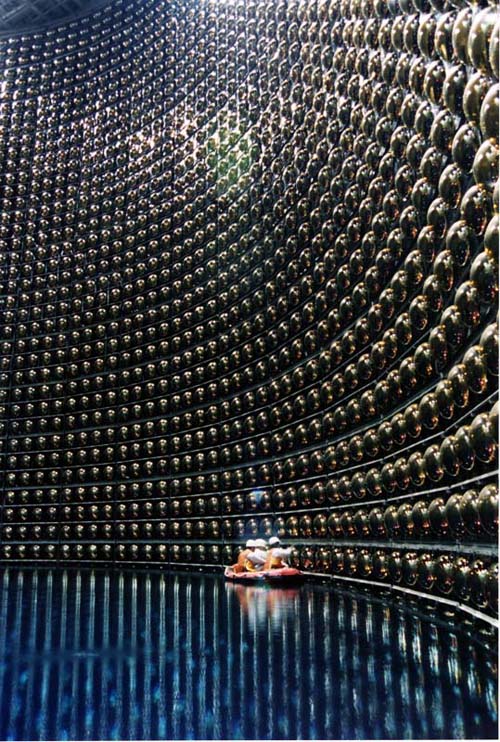
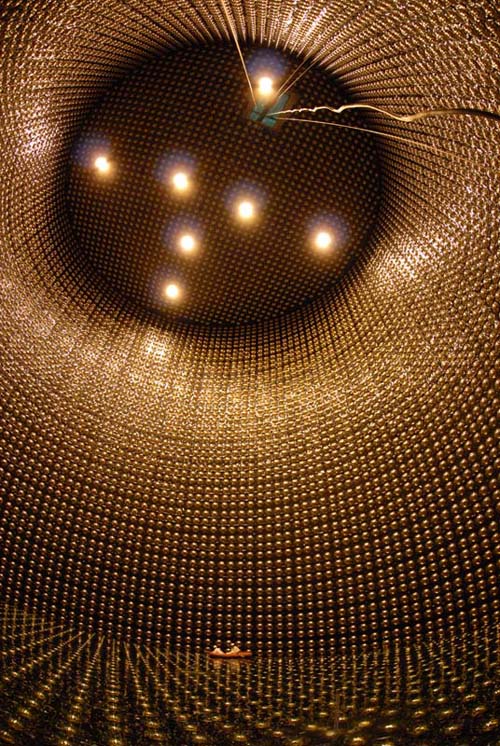
1. super kamiokande detector, kamioka observatory, japan
an old favourite on the intertubes, this 50′000 ton cylindrical ‘ring-imaging water cerenkov detector’ can be found at the kamioka mozumi mine in japan - 1′000m underground. clever people built the machine to detect neutrinos, proton decay and cosmic rays: this is done using the 12′000-ish photomultiplier tubes (extremely sensitive light detectors) visible on all walls of the ‘ultra-purified water-filled’ tank. to offer further explanation would reveal my scientific ineptitude. instead, go here for a nicely simplified explanation and here for some incredible hi-res photos large enough to incapacitate the average pc.
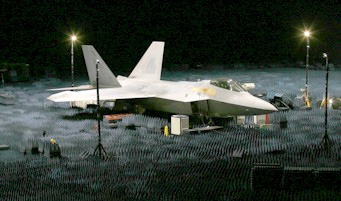
2. benefield anechoic facility, california, usa
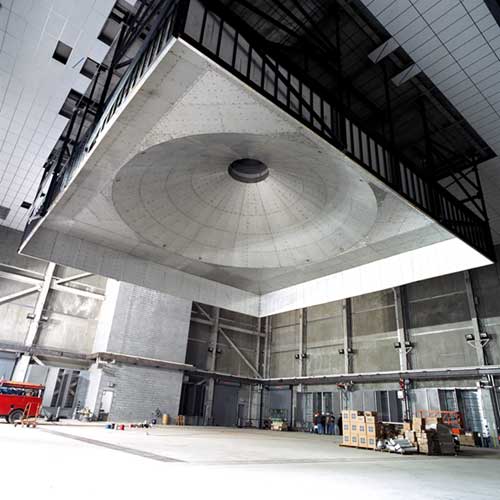
first of all (in case you don’t know) an anechoic chamber is a room which has been filled with sound absorbing materials in order to minimise all reflections from internal surfaces, thus making the space echo-less. more commonly these rooms are used to test and research sound equipment due to the lack of any such interference affecting the equipment’s output. the benefield anechoic facility you see above is the largest anechoic chamber on earth and, rather than using acoustically absorbent materials, is filled with radiation absorbent materials in the form of 816′000 foam cones designed to minimise the reflection of radio frequency signals. to read more, look here.
3. the z machine, sandia national laboratory, new mexico, usa
the z machine is the largest x-ray generator on earth and is believed by many as the key to understanding controlled fusion.
‘the z machine uses a short burst of intense electricity - only a few 10 billionths of a second long - that forces an ionized gas to implode. the process is called a z-pinch because the pulse creates a magnetic field that squeezes particles in the vertical direction, which math books usually label as the “z-axis.” at the center of the z-pinch, in the space of a small soup can, gas particles race at each other at a million miles an hour. the collisions result in X-rays and extremely high temperatures.’
in 2006 the machine unexpectedly produced plasmas with temperatures in excess of 3.6 billion °f. that’s hotter than the core of our sun.
a very brief video tour…
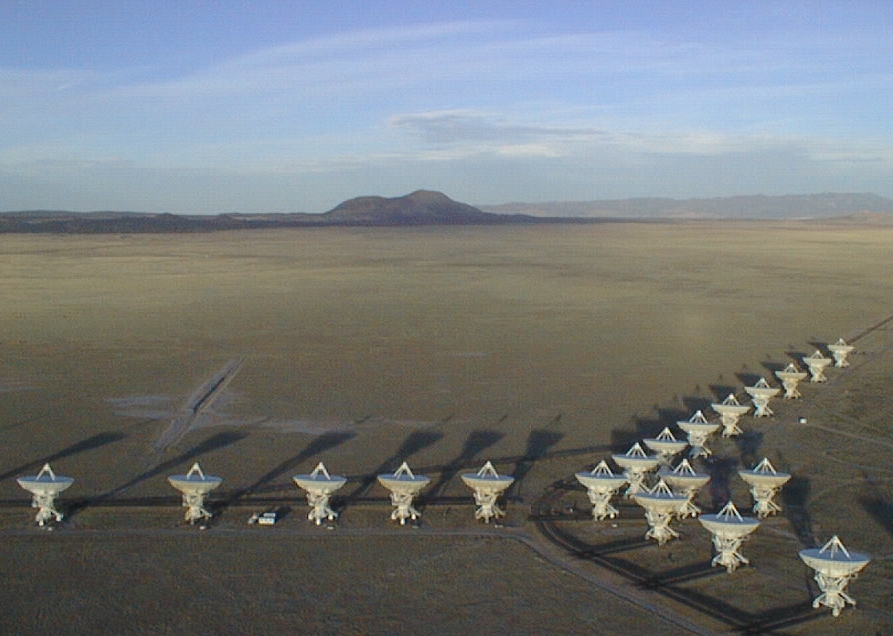
4. very large array, new mexico, usa
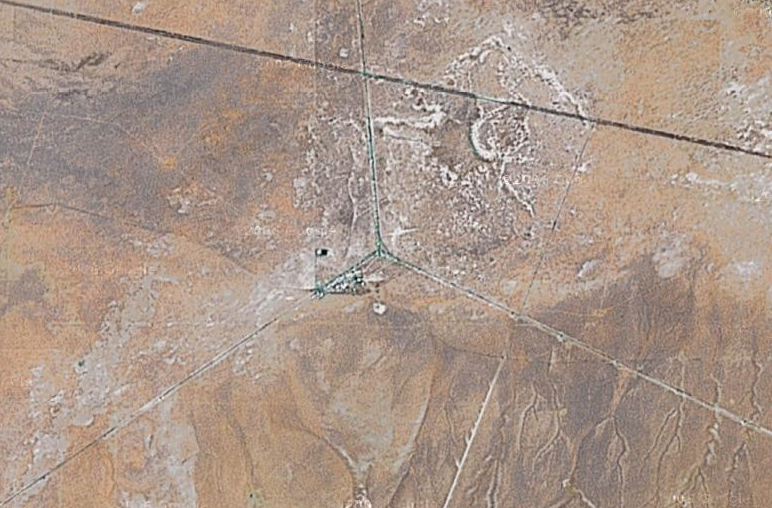
arranged on an enormous y-shaped set of tracks on the plains of san augustin is the ‘very large array’, a collection of 27 radio antennas used primarily by astronomers around the world. each antenna weighs 230 tons and can be moved by way of the 3 13 mile long tracks, giving a total of 4 different configurations, the data from all 27 antenna can then be combined to give the resolution of an antenna whopping 22 miles across. the 2nd picture, from google maps, gives you some idea of the scale of the observatory.
the direct link to the vla on google maps is here. the vla website is here.
5. large hadron collider, cern, switzerland/france
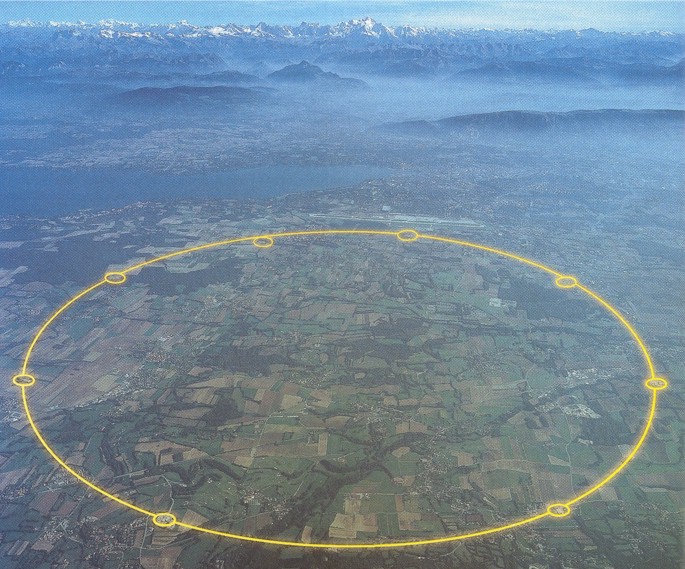
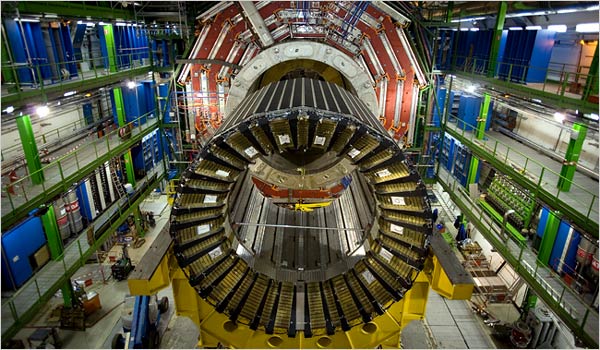
the large hadron collider, when completed very soon, will be the largest particle collider on earth, one of the intentions being to recreate the slightly hot conditions that occured immediately after the big bang, in turn resulting in the observation of the ‘god particle‘. the huge circle in the 1st photo is the location of the lhc tunnel, located approximately 100m below ground and measuring 27km in circumference. in the tunnel are 2 parallel tubes, each carrying protons in opposite directions at near the speed of light using the surrounding superconducting magnets. to carry on with this explanation could take days and a lot of mistakes so you should continue reading about this mammoth machine here.
6. large helical device, gifu, japan
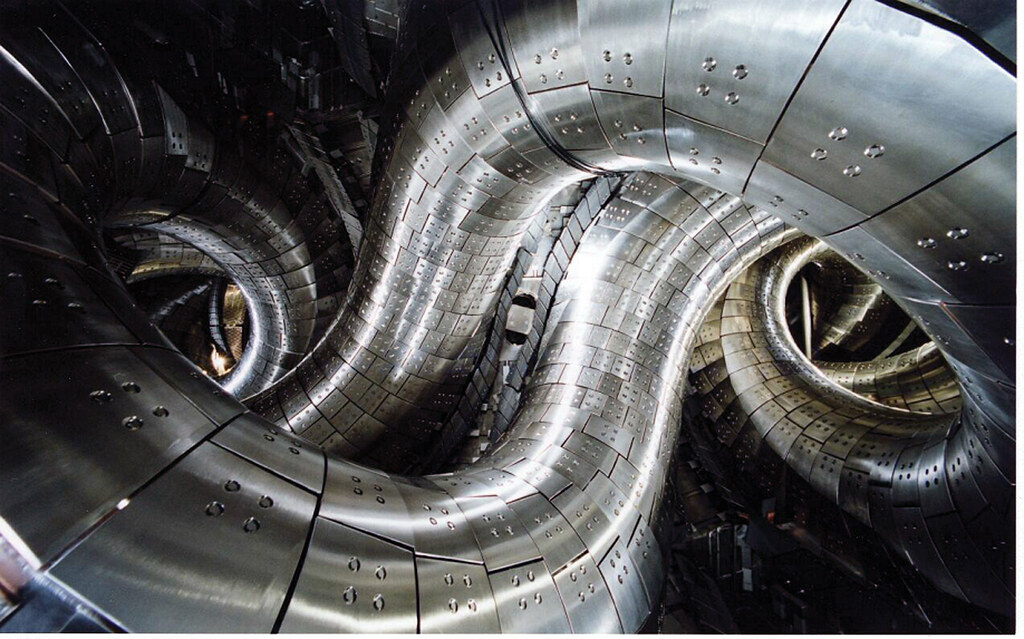
the phenomenal photo above shows superconducting coils within the large helical device in japan, a machine which holds the title of ‘largest superconducting stellarator in the world’. these huge winding coils are used to generate magnetic fields strong enough to confine a plasma in the centre which needs to be heated to the point where a controlled nuclear fusion reaction will occur - 100 million degrees.
you can read more about the device here. a mammoth version of the photo is here.
7. odeillo solar furnace, odeillo, france
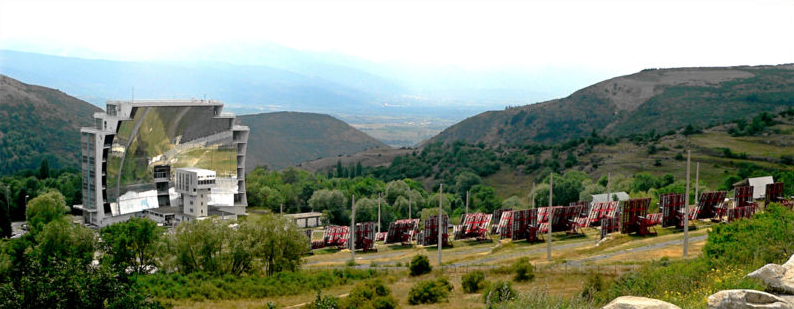
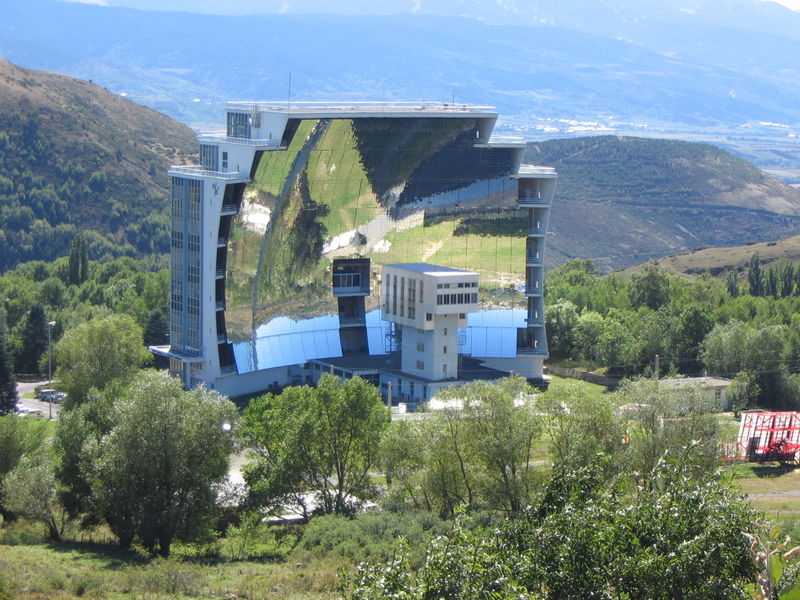
built in 1969, this brilliantly shiny oddity is the 8-storey high odeillo solar furnace in france: at present the largest on the planet. the 63 smaller mirrors on the hillside reflect the sun onto the huge parabolic reflector you see in the photos, this in turn reflecting the solar radiation very precisely onto a point just 18 metres in front of the parabola. using this method, temperatures can reach an unbelievably hot 3400°C. the incredible amount of heat generated by the furnace is used for research in many areas including high temperature solar engineering (advanced solar power systems, solar chemistry, etc.), photo-physics and chemistry applied physics. the official site is here.
8. atf fire research laboratory, maryland, usa
measuring a whopping 60ft x 60ft, this is the largest calorimetry hood on earth and is an essential part of the atf fire research laboratory. the hood needs to be this large in order to monitor and measure the heat output created by burning buildings underneath it. full scale houses have been specifically built, placed under the hood and destroyed in the name of research on a regular basis since the state-of-the-art facility was opened in 2003, and that’s just one of the 3 hoods in a lab which is so impressive that it’s visited by experts the world over.
9. ligo observatories, louisiana & washington, usa
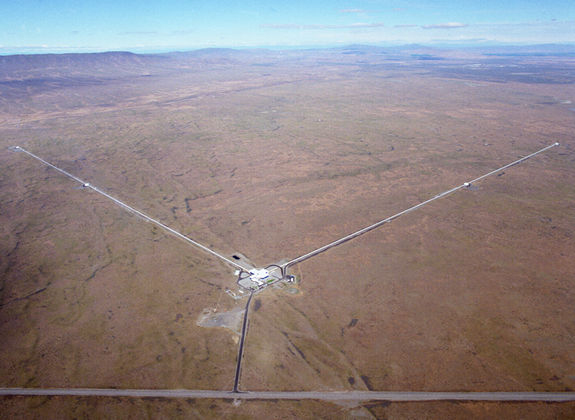
the photo above shows ligo’s hanford observatory, one of 2 main facilities used by ligo to detect ‘ripples’ or gravitational waves in space-time. both of the observatories have an enormous l-shaped interferometer, each arm measuring 4km in length, with a mirror at each end. laser light enters the ‘arms’ from the corner of the l-shape and then bounces back and forth between each mirror a set number of times. the reason for this is better explained in the clip below.
for a simple explanation about both gravitational waves and ligo itself, watch the clip. to see the hanford observatory on google maps, click here. the ligo website is here.
10. arecibo observatory, arecibo, puerto rico
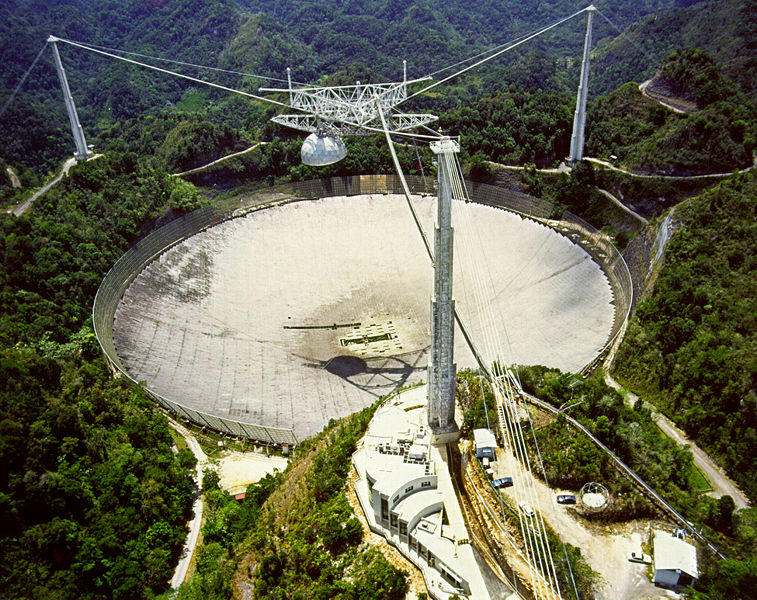
the arecibo observatory in puerto rico contains the largest curved focusing dish on earth and is used for 3 main research purposes: radio astronomy, aeronomy and radar astronomy observations of solar system objects. the dish has been set in a depression between some hills and, to compensate for its fixed position, the receiver can be repositioned as it sits 450ft above ground. the observatory’s incredible appearance resulted in a cameo in goldeneye’s final scene.
the official arecibo site can be found here. also, the gigantic structure can be seen clearly on google maps here.
A machine that builds itself? Adrian Bowyer, leading researcher at the University of Bath, shows us that this seemingly fantastic idea is not far from becoming reality. The self-replicating rapid prototyper, or “RepRap,” could have dramatic effects on people in developing countries.
Apple's got a second release that just hit the wires: A Mac Pro with two intel 45nm Quad-Core Xeons at up to 3.2GHz each. An 8-core config is standard. The front side bus is humming along at 1600MHz now, and RAM at 800MHZ. The computer also comes standard with ATI HD 2600 XT graphics with 256MB of video memory, but can be upgraded to support NVIDIA GeForce 8800GT with 512MB of video RAM or a Quadro FX 5600 with 1.5GB of memory. Support for four video cards at once means the Pro can drive eight 30-inch cinema displays at once, like before. Comes with the aluminum keyboard that debuted with the iMac. And eight cores for $2799 ain't bad. From what they're telling us, it could be one of the fastest desktops out there, but we'll wait for Ars or PC World to verify that for us. [Mac Pro]
Apple Introduces New Mac Pro
Fastest Mac Ever - Eight Processor Cores Standard
CUPERTINO, Calif., Jan. 8 /PRNewswire-FirstCall/ -- Apple(R) today introduced the new Mac(R) Pro with eight processor cores and a new system architecture that delivers up to twice the performance of its predecessor*. The new Mac Pro combines two of Intel's new 45 nanometer Quad-Core Xeon processors running up to 3.2 GHz, powerful new graphics and up to 4TB of internal storage to offer the ideal system for creative professionals, 3D digital content creators and scientists. The standard 8-core configuration starts at just $2,799. "The new Mac Pro is the fastest Mac we've ever made," said Philip Schiller, Apple's senior vice president of Worldwide Product Marketing. "With 3.2 GHz 8-core Xeon processing, a 1600 MHz front side bus and 800 MHz memory, the new Mac Pro uses the fastest Intel Xeon architecture on the market." The new Mac Pro features the latest Quad-Core Intel Xeon 5400 series processors based on state-of-the-art 45nm Intel Core microarchitecture running up to 3.2 GHz, each with 12MB of L2 cache per processor for breakthrough performance and power efficiency. With a new high-bandwidth hardware architecture, dual-independent 1600 MHz front side buses and up to 32GB of 800 MHz DDR2 ECC FB-DIMM memory, the new Mac Pro achieves a 61 percent increase in memory throughput**. Every Mac Pro comes standard with the ATI Radeon HD 2600 XT graphics card with 256MB of video memory. The Mac Pro includes a new PCI Express 2.0 graphics slot that delivers up to double the bandwidth compared to the previous generation, and supports the latest generation of graphics cards from NVIDIA, such as the NVIDIA GeForce 8800 GT with 512MB of video memory, or NVIDIA Quadro FX 5600 with 1.5GB of video memory and a 3-D stereo port for stereo-in-a-window applications. With support for up to four graphics cards, the new Mac Pro can drive up to eight 30-inch displays at once for advanced visualization and large display walls. The Mac Pro is the most expandable Mac ever, featuring four internal hard drive bays with direct-attach, cable-free installation of four 1TB Serial ATA hard drives, totaling 4TB of internal storage and support for two SuperDrives. With optional 15000 rpm SAS drives that can deliver up to 250MB/s of RAID 5 disk I/O performance, the Mac Pro is ideal for film and video editors. Combined with SATA or SAS drives, using an optional Mac Pro RAID card offers the ultimate data protection and disk I/O performance on the Mac Pro. The Mac Pro is easily and conveniently accessible in front and back so users can connect external devices with five USB 2.0, two FireWire(R) 400, two FireWire 800, optical and analog audio in and out, dual Gigabit Ethernet ports and a headphone jack. Every Mac Pro includes Leopard(TM), the sixth major release of the world's most advanced operating system. Leopard is packed with more than 300 new features and introduces a brand new desktop with Stacks, a new way to easily access files from the Dock; a redesigned Finder that lets users quickly browse and share files between multiple Macs; Quick Look, a new way to instantly see files without opening an application; Spaces, an intuitive new feature used to create groups of applications and instantly switch between them; and Time Machine(TM), an effortless way to automatically back up everything on a Mac. Featuring an improved scheduler and other multi-core technology, Leopard is a perfect companion to the Mac Pro, making applications faster and helping application developers take advantage of multi-core systems. The new ultra-thin aluminum Apple Keyboard now ships with every Mac Pro and built-in Bluetooth 2.0 makes it easy to reduce cable clutter with the optional Apple Wireless Keyboard and Apple Wireless Mouse.
Pricing & Availability The new Mac Pro is shipping today and will be available through the Apple Store(R) (http://www.apple.com), Apple's retail stores and Apple Authorized Resellers.
The standard 8-core Mac Pro, with a suggested retail price of $2,799 (US), includes: -- two 2.8 GHz Quad-Core Intel Xeon processors with dual-independent 1600 MHz front side buses; -- 2GB of 800 MHz DDR2 ECC fully-buffered DIMM memory, expandable up to 32GB; -- ATI Radeon HD 2600 XT with 256MB of GDDR3 memory; -- 320GB Serial ATA 3Gb/s hard drive running at 7200 rpm; -- 16x SuperDrive(TM) with double-layer support (DVD+/-R DL/DVD+/-RW/CD-RW); -- two PCI Express 2.0 slots and two PCI Express slots; -- Bluetooth 2.0+EDR; and -- ships with Apple Keyboard and Mighty Mouse.
In addition to the standard configuration, the Mac Pro offers numerous build-to-order options including: one 2.8 GHz, two 3.0 GHz, or two 3.2 GHz Quad-Core Intel Xeon processors; up to 32GB of 800 MHz DDR2 fully-buffered ECC memory; up to four 1TB Serial ATA hard drives running at 7200 rpm or up to four 300GB SAS drives running at 15000 rpm; Mac Pro RAID card; up to two 16x SuperDrives with double-layer support; NVIDIA GeForce 8800 GT or NVIDIA Quadro FX 5600 graphics cards; AirPort Extreme 802.11n; Apple USB Modem; Apple wireless Aluminum Keyboard; Apple wireless Mighty Mouse; and Mac OS X Server Leopard. Complete build-to-order options and pricing are available at http://www.apple.com/macpro.
*Based on estimated results comparing a preproduction 2.8 GHz 8-core Mac Pro with a 2.66 GHz Quad-Core Mac Pro running professional applications like Maya, modo and Logic(R) Pro.
**Testing conducted by Apple in December 2007 using a preproduction 2.8 GHz 8-core Mac Pro with a 2.66 GHz quad-core Mac Pro. All systems were configured with 4GB of RAM. Results are based on the STREAM v. 5.6 benchmark (http://www.cs.virginia.edu/stream/ref.html) using OMP support for multiprocessor-compiled builds. All systems were configured with 8GB of RAM. Performance tests are conducted using specific computer systems and reflect the approximate performance of Mac Pro.
.
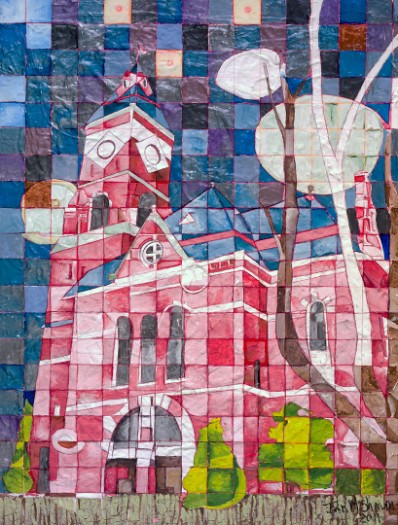
All you art collectors out there. Here is a chance to get a Giclee copy of some of Ian M Sherwin work. Ian is planning on doing a whole series of Marblehead, Massachusetts paintings. His work is amazing.



 Completed louche effect
 It is desirable for absinthe to gradually demonstrate increasing turbidity (opaqueness) or turn partially translucent as ice water is gradually added to it. This is known as the louche effect. The louched color should demonstrate complexity as well as nuance, and the absinthe should not turn opaque rapidly. However, it must be noted that not all quality absinthe will turn opaque, as the louche effect is primarily produced by the herbs anise and fennel. Absinthe typically tastes like liquorice due to the addition of such herbs. The louche effect is produced by the precipitation of the herbal essential oils.







 .
.

 Posts
Posts

