Zazzle Shop

Screen printing

Tuesday, November 20, 2007

Amazon's Kindle wireless reading device $399


  • Revolutionary electronic-paper display provides a sharp, high-resolution screen that looks and reads like real paper.
  • Simple to use: no computer, no cables, no syncing.
  • Wireless connectivity enables you to shop the Kindle Store directly from your Kindle—whether you’re in the back of a taxi, at the airport, or in bed.
  • Buy a book and it is auto-delivered wirelessly in less than one minute.
  • More than 88,000 books available, including 100 of 112 current New York Times® Best Sellers.
  • New York Times® Best Sellers and all New Releases $9.99, unless marked otherwise.
  • Free book samples. Download and read first chapters for free before you decide to buy.
  • Top U.S. newspapers including The New York Times, Wall Street Journal, and Washington Post; top magazines including TIME, Atlantic Monthly, and Forbes—all auto-delivered wirelessly.
  • Top international newspapers from France, Germany, and Ireland; Le Monde, Frankfurter Allgemeine, and The Irish Times.
  • More than 250 top blogs from the worlds of business, technology, sports, entertainment, and politics, including BoingBoing, Slashdot, TechCrunch, ESPN's Bill Simmons, The Onion, Michelle Malkin, and The Huffington Post.
  • Lighter and thinner than a typical paperback; weighs only 10.3 ounces.
  • Holds over 200 titles.
  • Long battery life. Leave wireless on and recharge approximately every other day. Turn wireless off and read for a week or more before recharging. Fully recharges in 2 hours.
  • Unlike WiFi, Kindle utilizes the same high-speed data network (EVDO) as advanced cell phones—so you never have to locate a hotspot.
  • No monthly wireless bills, service plans, or commitments—we take care of the wireless delivery so you can simply click, buy, and read.
  • Includes free wireless access to the planet's most exhaustive and up-to-date encyclopedia—Wikipedia.org.
  • Email your Word documents and pictures (.JPG, .GIF, .BMP, .PNG) to Kindle for easy on-the-go viewing.

The Simmons Homestead Inn - Hyannis Port, Cape Cod


Bill's Collection of
Single Malt Scotch Whisky

If you thought the collection of almost five dozen red sports cars was a bit much, wait till you check out the collection of several hundred different single malts I've been stowing away for the past several years. And yes, Scotch Whisky doesn't have an 'e' in it like its American counterparts.


Actually not all these whiskies are are Scotch, and a few are not single malts.

To be called Scotch Whisky, they must be distilled and aged in Scotland. I currently have seven single malts from Ireland, two from Japan, one from Wales, one from Canada and three from the United States. These can be called 'single malts' as they are distilled from a barley malt, but can't be called 'Scotch.' I also have two 'single grains' which are made from a grain other than barley. One is from the United States and one from Ireland. They can be called 'single grains,' but not single malts and certainly not Scotch though they taste about the same.

Then I have several whiskies that aren't really single malts. They are called vatted malts which means they are all made up from single malt scotch, but contain more than one malt in the final bottling. In fact, Chivas makes one called A Century of Malts. It is comprised of drips and drabs from one hundred different single malts. Others like Sheep Dip, Pig's nose and Hog's Head are generally made up from three to six different single malts.

But don't confuse vatted malts with blended Scotches. To be called a Scotch, there must be a minimum of 20% single malt. The rest can be any distilled product, generally grain alcohol which is just a chemical. High end Scotches can be over 50%, but the rest is just that clear stuff that gives you hangovers. Single malts can never hurt the head.

In fact, single malt Scotch has very little damaging effect on the body. It is classified as a 'clear liquid.' This means it passes right through the the liver, kidney and the rest of the body doing absolutely no harm. This doesn't mean that it won't get into your bloodstream and get you drunk, just that there won't be any lasting damage. Doctors will, if pushed, reluctantly admit to this.

Then there is the psychological thing that if it really tastes like medicine, it must be actually doing you some good. Ahh, nice thought. This is one of the reasons my favorite Scotches come from the Hebrides Island of Islay. Here they use peat rather than wood when heating the malting floor. The peat has already absorbed the saltiness of the sea and then gives off it's own smoky peaty flavor. Gives these Scotches that 'healthy' medicine flavor. You just know that Single Malts have to be healthy. Don't ya?

Enough of the excuses for drinking Single Malts.

Because Scotland produces the best barley in the world, it is the grain of choice for making their whisky. First the barley is spread over tin floors in the malting house and fires are lit under them. These rooms are open to the air, so this is where the island malts pick up their salt or sea weed flavorings. Then when properly baked, the barley goes into a big tub with water added, and they make a beer out of it. Technically it's called a wort, but the distillers call it beer. Scotland has a very varied terrain and climate, so there is a great difference in the water found in the many locations that Scotch is made. This adds to the flavor of the malt and to it's uniqueness. Also, when the whisky comes out of the barrel it is at cask strength, which can run up to 130 proof or so. In the final bottling, the local water is used to reduce it to a more manageable 80-86 proof. Again, the water has a great influence on the final taste.

Then the wort is distilled into pot stills and turned into an alcohol. Once the distiller feels that it's time has arrived, the fairly clear liquid is put into oak barrels to age. Here is where the distiller's art comes to bear. The casks are always oak, but that is where all similarity ends. All casks are certainly not alike by any means. A brand new cask will impart strong vanilla flavors. A cask that has held other malts will impart a hint of that flavor. Islay malts primarily use old American bourbon casks, some even briefly charred. Macallan uses casks that held sherry. Others use casks that have been used to age Ports, Madeira's, and other wine products. And many use several different casks in the aging process. My everyday Scotch is Balvenie Doublewood, a 12 year old. First they take their ten year old Founder's Reserve out of the cask it was aged in, and put it in a sherry cask for two more years. This adds a sweet touch to the taste and to the finish. It is only while in the cask that whisky ages, once in the bottle it is the same forever. So, time and barrel make the huge differences that make most every Scotch taste unique. The wood also breathes, and expands and contracts with temperature changes. This releases some flavor and inhales other flavors. The uniqueness of each malt whisky is pretty much directly related to the cask in which it ages.

The various regions in Scotland produce a varied array of single malts. Each distillery has it's own way of doing things, a different supply of water that can run from soft to hard to glacial run-off. What the water flows over imparts a taste of it's own. The soil, rock, peat and other natural additives it picks up along the way.

Scotch from the Lowlands is generally milder, ones from the Islands sea like and peaty. Ones from the Highlands are heathery and full bodied. The majority of malts come from the Northern Highland area surrounding the river Spey. These are the Speyside whiskies that are the best known, and the ones generally used in blended Scotches as well. This is what makes this whole adventure rewarding. And, pleasurable.

Each one of the single malts that I have simply taste uniquely themselves. That's why they are fun to collect, and more fun to sample. I am not becoming an alcoholic, simply a more competent and educated researcher. The collection grows by belonging to a couple of 'Scotch of the Month' clubs, by checking out the monthly wholesale catalogs put out by the importers, and by making all guests at the Inn that come from the UK bring me a malt that is not available here in the Colonies. It works!

Here are the malts presently on the shelves in the kitchen, living room and everywhere.

There are currently 524 different Single Malts in the collection as of October 20, 2007.


Scotches sorted by regions

Scotches sorted by distillery

ToadHall Cars - in Hyannis, Cape Cod

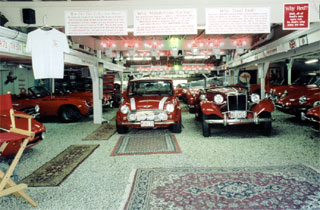
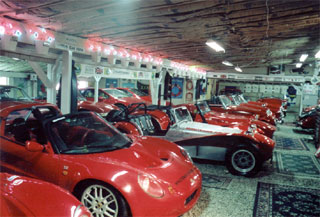
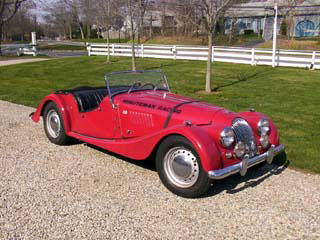
A great private collection of over 50 Classic Sports Cars, mostly English with some Japanese and European ones thrown in. There are a dozen Lotuses, half a dozen MGs, Triumphs and Jaguars, and a bunch of Austin Healeys, TVRs, Datsuns, and Ferrari, Mazda, Morgan, AC, Daimler, Sunbeam, Mini Cooper, and more. Mostly old, some new.


And, of Course, they are all red.


Toad Hall kinda started out with a few sports cars housed in a shed behind the Simmons Homestead Inn in Hyannis Port on Cape Cod. Over the past dozen years the number of sheds and cars grew and grew. Finally when there were some three dozen cars, the sheds all got tied together and enclosed. Now there are more than 50 inside and another bunch outside that at least can get driven around. Most are classics from the 50s to the 80s. Most are British Sports Cars, all are red. There are several cars of which less than a dozen are in the States, but the rest simply will bring back happy memories to the older folks. The cars are all nicely restored, and they are all handsome drivers, that is if you can get them out of a now rather crowded garage. The Toad Hall Collection is part of the Simmons Homestead Inn, and everyone who has visited it has had a really great experience. It's now one of the largest private collections of Classic Sports Cars around.


If you remember back in your childhood, or maybe more recently, you probably read the book or saw the Walt Disney movie THE WIND IN THE WILLOWS by Kenneth Grahame, written back in 1908. About a bunch of animal characters in England in the late 1800s. The leading guy was Toad, Lord of Toad Hall. He was totally fascinated by the then new motorcar. And, all of Toad's cars were red too. This same fascination is carried forward today at the Toad Hall Classic Sports Car Collection at the Simmons Homestead Inn.

This collection of Classic Sports Cars, like Triumph or MG is the private collection of Bill Putman, Innkeeper of Sorts at the Simmons Homestead Inn. Being a part of the Inn, it's open daily from 11 A.M. till 5 P.M. year round. There are also videos going about Vintage Race Cars and Vintage Races. Then there is an added benefit if you are staying as a guest at the Simmons Homestead Inn. You can get in most anytime you want. Bring a camera if you want. This is a place to enjoy. Toad kinda started this car nut thing, and Bill is just carrying it on today in his honor.


The cars all run if you can get them out of the garage. Place has gotten a bit crowded over the years as it grew out of control. Oh well. You can get a preview by going up to the top and clicking on the various marques.

You can also go to the directions page and find out how to get here. Toad Hall and the Simmons Homestead Inn are in Hyannis Port, just outside of Hyannis smack in the middle of Cape Cod.

Also feel free to call us at 1-508-778-4934 or e-mail us at ToadHallCars@aol.com Toad Hall is a great place to spend some time and really enjoy these classic red little critters.


TOAD HALL is open Daily 11 to 5
Adults $8, Kids 10-16 $4, 9 and under free
Bring a camera, wander around and enjoy
Bored wives can sit in the chairs
and play with the cats at no cost.

http://www.toadhallcars.com/

The 10 Most Insane Medical Practices in History


article image


Have you ever been left with the impression after a thorough poking, prodding and testicular cupping at the doctor's office that perhaps they don't always know what's best? The thought is usually pushed from your mind, after all these people had to go through years of school and thousands of dollars of their wealthy parents' money to get where they are! If you can't trust them about your health, who can you trust?

Here's the thing though, doctors have a long storied background of not knowing what the hell they're doing. History is filled with stories of hilarious medical ineptitude, and in all likeliness, today's medical practices will be similarly snorted at 100 years down the road. In other words, if you're looking to justify your medical phobia so you can rationalize not getting that ever-growing lump on your neck checked out, you're in the right place.


#10.

Children's Soothing Syrups


In the 19th century, people were simply too busy churning butter, waxing their moustaches or changing in and out of 15 layers of undergarments every time they went to take a piss to be bothered with disobedient children. To aide the stressed 19th-century mother, a series of "soothing syrups," lozenges and powders were created, all which were carefully formulated to ensure they were safe for use by those most vulnerable members of the family. Oh, no, wait. Actually, they pumped each bottle full of as many narcotics as it could hold.


For instance, each ounce of Mrs. Winslow's Soothing Syrup contained 65 mg of pure morphine.


Based on our experiences teething and experimenting with pure morphine, that seems like a lot. Finally in 1910 the New York Times decided the whole narcotic-babysitter concept was probably bad in the long run, and ran an article pointing out that these soothing syrups contained, "...morphin sulphate, chloroform, morphine hydrochloride, codeine, heroin, powdered opium, cannabis indica," and sometimes several of them in combination.


You can't say the soothing syrups weren't effective, as long as you didn't mind your toddler being strung out on the midnight oil or, you know, dead. That's right, the terrible 2s weren't just a cutesy euphemism back then. Kids were not only at their brattiest but also often died, in many cases after their parents tried to cure the aforementioned brattiness with narcotic concoctions that would give Lindsay Lohan a nose bleed.


#9.

The Curative Powers of Mercury


Mercury is pretty neat stuff. The shiny silvery liquid has fascinated humans for millennia (there's evidence people used it as early as 1500 BC) and will undoubtedly continue to fascinate far into the future when shape-shifting Robert Patrick clones overtake the planet. How could something so awesome not be good for you?

That was the thinking for centuries, when Mercury was used to treat pretty much anything and everything. Scraped your knee? Just rub a little mercury on it. Having some problems with regularity? Forget fiber, time to get some mercury up in there! If you lived more than 100 years ago, you simply weren't considered healthy if you weren't leaking silver from at least one orifice

Mercury, as we now know, is toxic as hell. Symptoms of mercury poisoning include chest pains, heart and lung problems, coughing, tremors, violent muscle spasms, psychotic reactions, delirium, hallucinations, suicidal tendencies, restless spleen syndrome, testicular twisting and anal implosion. OK, we just made the last few up, but they barely looked out of place on that horror show list of symptoms did they?


It's a testament to just how cool a substance Mercury is that people kept trying to cure shit with it for 1,000 years after everybody who ingested it dropped dead. "Yes my Lord, I'm afraid another member of your court has perished. The autopsy showed it was Silver Liver Syndrome. Not even the gallons of wicked-awesome Mercury we fed him could bring him back to health.


There was a silver lining, though, as it helped to fight the spread of STDs. Mercury was used as a cure for syphilis and to its credit, the "cure" usually resulted in one less person with syphilis in the world. It's generally believed Mozart was poisoned by mercury-based syphilis cures, which contradicts the film Amadeus in which he was killed by writing too much music someh


#8.

Calm Your Cough with Heroin


In the late 19th century people apparently took cough suppression seriously. We're talking "I'm-going-to-take-me- some-heroin-to-calm-this-cough" level serious, here. We know Victorians were sticklers for social etiquette and wheezing your head off was probably considered frightfully rude, but we can't imagine tying off and shooting some horse in the middle of a dinner party would go over terribly well, either.


Well you probably don't need us to tell you how addictive and destructive a drug heroin really is, but just in case ... Heroin? Might want to avoid that stuff. On the upside, it actually does suppress coughs, so if you do decide to become a junkie at least you'll save on buying Halls.


Heroin, by the way, was originally developed by Bayer. You know, those friendly folks behind harmless old aspirin.


Oh, and while we're taking on the man, we should also mention that Bayer used to be called IG Farben, a pharmaceutical and chemical conglomerate that allegedly sponsored experiments by Nazi torturers. How is this not at the center of every single Tylenol ad campaign: the fast acting pain reliever that has never sponsored Nazi torture camp


#7.
Electrical Impotence Cures


Men have been desperately searching for solutions to their malfunctioning members since Grok the caveman clubbed a cavewoman, drug her to his cave only to drag her back out again a half hour later with an embarrassed look on his face and muttering excuses about how tired he is. In the late 19th century, the wonders of electricity became to be known to the common person. Surely this marvelous new technology could be used to heat things up in the boudoir, right?

Electrified beds, elaborate cock shocking electric belts and other strange devices were advertised as being able to return "male power" and prowess by making your penis rise to electrified attention like Frankenstein's 6-inch-tall monster.


What's fascinating is that you can find ads for more than one brand of electric dick-shock belt. That seems to indicate that the dick-shock belt industry somehow survived the negative word of mouth from the first dick-shock belt.


By "word of mouth," we mean the incoherent screams of the first customer which could presumably be heard in the next town.


#6.

Lobotomies


Imagine if you will. You're sitting on your psychiatrist's couch, pouring your tortured heart out about how depressed you are. He listens, jotting notes on a piece of paper and nodding intently. "I think I have the solution to your depression," he says as he produces a 10-inch-long ice pick. "I'm going to jam this into your eye socket, then put it into your brain using this mallet over here. Then, I'll wiggle it around so that it shreds part of your brain. Then you won't be depressed any more. Just lie still."

Congratulations hypothetical version of yourself living in the 1940s, you've just been lobotomized! Lobotomies were a popular fad for the first half of the 20th century and were floated as a "cure" for pretty much any mental issue you can name, from conditions as serious as schizophrenia to something as mild as depression or anxiety


The inventor of the lobotomy was given a Nobel Prize for it in 1949. Doctors claimed the "ice-pick-to-the- freaking-eye" method of lobotomy would be as quick and easy as a trip to the dentist. By 1960, parents were getting them for their moody teenage children.

This practice didn't hang around as long as some on our list, but still some 70,000 people were lobotomized before somebody figured out that driving a spike into the brain probably was not the answer to all of life's problems.


Urine Therapy


You can tell just by the title of the entry that we're not heading anywhere good with this one. Yup, throughout history there are those who believed the key to good health (and terrible body odor) was wallowing in one's own excretions. It was said to cure an endless list of ailments and promote good health if drank, was applied to the skin and yes some even used it to give themselves (turn away now weak-of-heart) a nice bracing urine enema.


Perhaps the best part of this is that while most of the practices listed in this article have long since been dismissed as lunacy, urine therapy lives on to today (for your own sanity don't do a Google search for it). That's right, of all the crackpot theories listed here the one that endured is the one where people drink and bathe in piss.


There's absolutely no evidence that urine therapy can cure a damn thing (and it comes with the added bonus of you getting to smell like the underside of a bridge or a downtown subway car). No, even the thing with peeing on jellyfish stings isn't true. On the bright side, armed with the new knowledge we've provided you, you can now try to pass those DVDs your girlfriend found in your closet off as medical instruction videos.


#4.

Bloodletting


Bloodletting was one of the most enduring and popular medical practices in history, originated by the Greeks and used up until the 19th century for, well, basically everything. If you were feeling under the weather back in the day there's a good chance it was because you just had too much damn blood.


Now, a person having too much blood may sound about as absurd as a person breathing too much air or you coming home to find too many naked supermodels in your bed. But, that's just because you don't know about the four humours. Don't worry, we won't hold your ignorance against you. Basically the theory was that the body was filled with four fluids (blood, phlegm, yellow bile and black bile) called humours and that any imbalance in the four was the root of all illness. Apparently blood can be a bit of a space hog and thus often some had to be bled out to make room for more fun stuff like phlegm and black bile (a.k.a. diarrhea), or so the theory went.


If you're wondering whether or not it works, the next time you're on your death bed with the flu, drag yourself out of bed and go downtown and give anywhere up to 4 quarts of blood; that's bloodletting for you, except you usually didn't get orange juice and a cookie after. Now, there is a chance you'll feel a bit better as you take a delirious blood loss inspired trip through the clouds on a golden unicorn, but we can assure you your flu probably won't be cured.


#3.

Hard Core Diet Remedies


While fuller figures have been popular for most of history, during the 20th century thin was in for women (which explains why it's known today as the "no fat chicks" century. Well, at least by us). This need to be slim led to the creation of countless "diet pills" that promised to help you melt away those pounds and inches.

While a lot of the pills actually did help with weight loss, they also often caused fevers, heart troubles, blindness, death and birth defects. They couldn't have been all bad though, as in the 1950s and '60s women who took diet pills liked them so darn much they just couldn't seem to stop taking them. Of course, it might have had something to do with the fact that the diet pills of the '50s and '60s were in actuality bottles of pure crank. But hey, what's getting addicted to amphetamines when being ready for bathing suit season hangs in the balance?


Oh, and since we just can't resist grossing you fine readers out, there have long existed stories that in the 1920s and '30s capsules filled with dehydrated tapeworms or tapeworm eggs were sold as diet pills.


There's some debate over whether these actually existed, but it seems like it could be true as various advertisements for the wormy pills have survived. Besides, if there was a market for the nut shock belt ...


#2.

Trepanation


Trepanation is a fancy word for drilling holes in your head. This is actually the oldest surgical procedure known to man as humans have been intentionally knocking holes in their skulls dating back to the time of cavemen, giving hope to anyone who's had to watch the sitcom starring the Geico cavemen that all of them might die in a trepanation experiment horribly gone wrong in an upcoming episode.


Historically trepanation was most commonly used as treatment for seizures and migraines. Surprise, surprise. Having a gaping hole drilled in your skull (usually without anesthesia) did very little to help people's headaches or brain issues. Trepanation was also used as an extreme form of cosmetic/experimental body modification amongst several societies such as the Incans and Mayans. These societies also got largely wiped out, then a few hundred years later suffered the indignity of having an insulting Mel Gibson movie made about them, so it didn't really work out that well.


Oh, and yes, a few brilliant individuals still practice trepanation to this day. To give you an idea of the oh-so-solid ground today's trepanation supporters' beliefs are built on, the biggest modern proponent of trepanation is a "Doctor" Bart Hughes. We put doctor in quotations marks because he never actually finished medical school. That's right kids, you, too, can be a college dropout and yet still go onto a career convincing people around the world to do incredibly retarded things, so reach for those stars.

#1.

Female Hysteria Cures


Women and their mood swings, right guys? Right? You know what we're saying. Now, if you happen to be female don't be offended, there's no shame in admitting to the occasional bit of moodiness as according to 19th century doctors it's a symptom of a deadly serious medical condition (along with other symptoms such as nervousness, irritability and the dreaded "tendency to cause trouble"). That's right ladies, you may be a victim of female hysteria and not even know it.


So, how exactly do you cure a so-called "condition" that coincidentally was diagnosed almost entirely to women who dared disobey their Victorian husbands? Glad you asked. The prescription for female hysteria was usually a good spot of doctor administered vaginal massage until the woman achieved "hysterical paroxysm."


Yes that's right, the cure for female hysteria was a doctor's hand down your bloomers until you weren't only thinking of England but screaming its name. Is it any wonder the list of symptoms for female hysteria was so long, literally any ailment could fit the diagnosis? In those sexually repressed times visiting the doctor's office must have been like a trip to Disneyland for most women.


Doctors of the day on the other hand were apparently, I don't know, gay or something since they actually objected to women's frequent desire to be "cured" by their magic fingers. Their solution to alleviate hand strain? They invented the vibrator, and thus this article comes to a happy ending.

Nathan Birch also writes the sickeningly cute comic strip Zoology.

Turkey Day Chismillionare style

ISS from Space Shuttle Endeavour

Pigeon Point Lighthouse


37°10' 55" N, 122°23' 37" W


Once per year at the Pigeon Point Lighthouse they shut down the weak insipid modern (presumably electric) light and switch over the the 5 kerosene lamps and fresnel lens of the original, as it was 135 years ago.

Last night was the night, and it's really quite a sight. When they fire it up there's really a collective sense of "whoa!" from the audience (which was WAY bigger than I expected - I probably had to park a mile away and I was there an hour early).

Capturing a shot like this is tricky because the lens itself actually rotates, which looks great but is tough for long exposures. But for the first 5 minutes they leave it static to indulge all of the photographers who turn out and want this shot (this highly unique and one-of-a-kind shot of course). When they switched to this light my camera still had about a minute of noise reduction to do on my final test shot to get the exposure right, so I missed the first minute. Then I started this shot which was about 2 minutes long, followed by 2 minutes of noise reduction again. So by the time I had my shot it was too late for a do-over. So this is it, I only got to take one photo and this is what I got, so I hope it worked out.

It's also noteworthy that the fog last night was insane, even for a San Francisco local. On the drive home there were times when I couldn't see the road in front of me, only the orange reflectors in the middle of the road (for about 60ft). It worked out beautifully for viewing the lighthouse, though I also found that if I backed away much further than this I'd lose sight of the lighthouse itself. The unfortunately consequence of all the fog was that it was almost impossible to keep the lens and camera dry, so the lesson learned was to always keep towels with you when shooting the California coast.

And in case you're wondering, that is the moon in the upper left.

Nikon D40 | Sigma 10-20@10mm | f/7.1 | 114s | ISO200 | Tripod

Nissan GT-R pricing and ordering process announced

The certification process begins today with a letter from the automaker being sent to its 1,076 U.S. dealers outlining precisely what is required for certification. Dealers have a scant three weeks to agree to proceed through the certification process.

Higher-volume Nissan dealers who also sell a good number of Z cars will get preference.

Certified dealers also must commit to a top dealership executive serving as the GT-R salesperson, preferably with transactions taking place privately outside of the showroom, and a service manager designated just for GT-R customers. The dealership also must have certified master technicians with special GT-R training, and invest in a specially equipped service bay.

Earlier this week at the Los Angeles auto show, Nissan announced the price of the GT-R at $69,850 for the base model, and $71,900 for the Premium trim. Both prices include delivery charges.

Pre-orders begin at the first of the year, and the 2009 GT-R will officially go on sale in June.

What this means to you: If you want a GT-R — and who doesn't? — find a dealer who sells a lot of Zs and be on their doorstep January 1. — Kelly Toepke, News Editor

Purple Violets available today- first film released Exclusively on Itunes

Download here

Monday, November 19, 2007

Acton based Magnemotion developing urban Maglev trains


Maglev Transportation


MagneMotion Inc. is an industry leader in the development of magnetic levitation transportation technologies.

MagneMotion's Maglev System (M³) addresses the following objectives:

  • Cut travel time in half
  • Cut operating cost in half
  • Cut guide-way cost in half
  • Reduce environmental impact
  • Provide excellent ride quality
  • Create a safe and secure transportation system

For a summary on how these objectives are accomplished, please see the paper, Linear Synchronous Motor Propulsion of Small Transit Vehicles, presented by MagneMotion's Dr. Richard Thornton to the 2004 ASME/IEEE Joint Rail Conference.

Drones to Replace Human Squadron in Afghanistan?

The Air Force is touting the success of its newest armed drones flying over Afghanistan, saying that the the MQ-9 Reapers will even take over eventually for manned aircraft squadron, reports Defense Daily

As a sign of the Reapers' potential significance to the U.S. Air Force, Lt. Gen. Gary North, the Air Force's top general in the region, said last week, as more Air Force MQ-9s arrive, they will eventually supplant a U.S. squadron of manned attack aircraft. But he offered no timeline on when this will happen... [He's made similar promises before -- ed.]

The MQ-9 has got almost all of the tenets of a manned airplane currently deployed, with some advantages, said North. It can stay up longer on a sortie than a manned counterpart like the A-10 ground-attack aircraft or F-15E and F-16 fighter jets.

Further, it doesn't cost as much gas to fly them, the general said. And I have got the persistent stare capability.

However, it does not carry a gun like its manned counterparts, he said.

The Reaper's impact on the battlefield is frankly yet to be determined in a larger scale because the aircraft has only been in combat about six weeks, North said.

Yet this is already clear: "As an attack platform, it allows me to do several things, he said. "Number one, I can take and airplane out and fly it for up to 20 hours. I can range the battlespace at more than three times the speed of the Predator. I can carry six munitions on the airplane."

"The beauty of it is," he continued, "that when the weapons are gone, you can keep that airplane up for a long time and use it for that persistent stare."

Apple fixes Leopard Bugs

Apple has released its first round of Leopard improvements and bug fixes. The OS X 10.5.1 update weighs in at 110MB and can be grabbed through Software Update or directly from the Apple site.

Unlike some of its software updates, Apple actually provides a good bit of detail about what’s new in the first Leopard revision. Among the notable fixes is a change in the way the Finder handles moving files to external drives, addressing a nasty bug that could lead to data loss if the transfer was interrupted. For more information, see our earlier coverage.

Those of you with mixed OS setups will be happy to know that networking improvements in this Leopard update fix a bug where Windows shared folders would show up as read-only when connected via SMB.

Time Machine also gets some import fixes. An issue where files restored using Time Machine would end up in the backup hierarchy rather than the folders to which they belong, has been resolved.

Other improvements include fixing issues with the Firewall, Airport, iCal, Mail, Printing and more.

The update also includes the security fixes mentioned in our coverage of the Tiger update.

Carbon Nano Tubes- width of human hair has the strength to hold a 737- YES


Superstrong Carbon-Nanotube Fibers

Researchers have developed a process to make carbon-nanotube fibers that are potentially strong enough to stop bullets.

Carbon nanotubes spun to form long yarnlike fibers could outperform even the strongest bullet-proof materials on the market, but turning nanotubes into such materials has proved to be a challenge. Now researchers say that they have improved the method of making the fibers: they can pull them from a hot furnace faster, make the nanotubes line up better, and vastly improve their strength. While the carbon-nanotube fibers can still be made only in small batches--and only in short lengths, experts say--the fibers show great promise for ultrastrong, resilient materials, with possible applications from body armor to oil drilling.


Chismillionare's Monday Deal of the week


Fujitronic 10 Cups Multi-Function Electric Rice Cooker - FR-810 $29.99

New Frontier Demolition


New Frontier Demolition! - video powered by Metacafe

Friday, November 16, 2007

Lohan Mug Shot

Thimbu, Bhutan


Fidelity growth and Income annuities

  • These funds are cheaper fee wise than normal annuities, offer potential upside growth of the equity markets, and you still have access to your money unlike a standard fixed annuity.

  • The downside is they are designed to exhaust after a set period. Say you need retirement income for thirty years. The fund is designed to pay off in that time meaning you will have zero left at that point. If you life longer than that you will need to have other resources.

Get lifetime income and growth opportunity in one convenient investment solution.

Fidelity Growth and Guaranteed Income1, our new variable annuity, can give you the financial security you’re looking for in retirement by offering you guaranteed2 lifetime income, tax-deferred growth potential, and income that is protected from down markets. Plus, you will have flexibility in case you need access to your money.

This will win a grammy before Kanye wins anything

Cow Power

corn plus cows gives poop which gives electricity!

CVPS Cow Power

This day in tech 1904- vacuum tube invented

British electrical engineer John Ambrose Fleming invented the thermionic valve.
Photo: Hulton-Deutsch Collection / Corbis

1904: British engineer John Ambrose Fleming invents and patents the thermionic valve, the first vacuum tube. With this advance, the age of modern wireless electronics is born.

Although the Supreme Court eventually invalidated Fleming's U.S. patent -- ruling that the technology he used for his invention was already known -- he remains the acknowledged inventor of the vacuum tube, a diode (having two electrodes) that would have far-reaching applications. The tube was standard equipment in radio receivers, radar sets, early television sets and other forms of electronic communication for at least half a century, until it was replaced by solid-state electronics in the mid-20th century.

It's a dapper Van Damme Friday